Planning a Kenya safari from Germany involves more than picking a park. You need to sort out the eTA, understand flight connections, translate costs into euros, and decide whether a German-speaking guide matters to you. This TouringInsights Kenya safari planning for German speakers guide covers those practical points, written for first-time planners who want straight answers instead of sales talk.
What Does TouringInsights Kenya Safari Planning for German Speakers Include?
This TouringInsights Kenya safari planning for German speakers guide walks through the eTA process, flight routes from Germany, realistic costs in euros, safety, packing, and the honest truth about guide language. Read the section that matters most to you, or work through them in order if this is your first Kenya trip.
Do German Citizens Need a Visa or eTA for Kenya?
Yes. As of 2026, German passport holders must apply for an Electronic Travel Authorization (eTA) before flying to Kenya. The old visa-on-arrival system is no longer available for tourism.
The eTA is an online application done through the official Kenyan government portal. You will need your passport, a recent photo, a return flight booking, and proof of accommodation. The fee is roughly USD 30 to USD 50. Approval usually takes up to a few days, but apply at least two weeks before departure to be safe.
The eTA is not a visa sticker in your passport. It is linked electronically to your passport number. Print a copy of the approval and keep it with your travel documents.
Is There a Direct Flight from Germany to Nairobi?
Yes, on at least one carrier. Lufthansa operates daily nonstop flights from Frankfurt to Nairobi, and it is the most consistent direct option for German travelers. Condor flies from Frankfurt to Mombasa on a seasonal basis, which suits a beach-first trip better than a Nairobi safari start, since it does not serve Nairobi. Kenya Airways serves Europe mainly through Amsterdam, so do not assume a direct Frankfurt to Nairobi option is available. Check current routings before booking, since a connection through Amsterdam or another hub is often needed.
From Munich, you will likely connect via Frankfurt, Amsterdam, or Zurich. Flight time from Frankfurt to Nairobi is about eight hours. From Munich with a connection, plan for ten to twelve hours total.
Book early if you travel in July or August. Demand is high because German school holidays overlap with peak safari season.
How Much Does a Kenya Safari Cost in Euros?
Safari prices vary more than most first-time planners expect. The biggest cost drivers are accommodation quality, park location, and whether you book a private or shared safari. Our Kenya safari cost guide breaks these numbers down season by season if you want more detail.
Here is a realistic range for 2026, in euros per person per day, including park fees, transport in a safari vehicle, guide, meals, and accommodation. International flights are not included.
| Safari type | Cost per person per day (EUR) | What you get |
|---|---|---|
| Budget camping or basic lodge | 120 to 200 | Shared vehicle, basic tented camp, group of 6 to 8 guests |
| Mid-range lodge or tented camp | 250 to 450 | Private or small-group vehicle, en-suite rooms, good game viewing |
| Luxury lodge or private conservancy | 500 to 900 | Private vehicle, exclusive conservancy, high-end guiding and food |
| Ultra-luxury and exclusive-use | 900 to 1,500 plus | Private villa or camp, dedicated guide, fly-in options |
A typical 7 night safari in the Masai Mara, Amboseli, and Lake Nakuru costs roughly 2,000 to 4,000 euros per person in the mid-range category. Luxury versions can easily pass 6,000 euros per person.
The cheapest rates appear in the low season, especially April and May. Those months are wet, roads can be muddy, and some camps close. If you want lower prices without terrible weather, consider November, which offers greener scenery and fewer crowds.
When Is the Best Time to Go on Safari in Kenya from Germany?
The best time for game viewing is the dry season from late June to October. Animals gather around permanent water sources, and vegetation is thinner. This is also when the Great Migration crosses the Mara River, which draws the biggest crowds. Our best time to visit the Masai Mara guide covers month-by-month conditions in more depth.
For German travelers, July to October is a double-edged sword. The weather is excellent, but summer school holidays in Germany run from late July to early September. Prices at marquee parks like the Masai Mara jump by 30 to 50 percent, and camps book out months ahead.
If you can travel outside school holidays, consider January and February. The weather is warm and dry, calving season brings predators out in the open, and the parks are quieter. June is another good option. The dry season is beginning, crowds have not peaked, and migration herds are moving north.
Avoid April and May for a first safari. Heavy rains make some roads impassable, and many airstrips cannot handle flights.
What Vaccinations Are Required or Recommended for German Travelers to Kenya?
No vaccine is mandatory for Kenya unless you arrive from a country with yellow fever risk. That does not apply to travelers flying directly from Germany. Still, Kenyan health authorities may ask for proof of yellow fever vaccination if you have visited a risk country within a few days before arrival.
Recommended vaccinations include hepatitis A, typhoid, and tetanus. Malaria is present in Kenya, including Nairobi. Most travelers take prophylactic tablets. Ask your doctor at home, not a travel website, for current guidance. Carry insect repellent and consider sleeping under a mosquito net where provided.
Medical facilities in Nairobi are decent, but rural clinics are basic. Travel insurance with medical evacuation is strongly recommended. German public health insurance rarely covers treatment abroad, and evacuation can cost tens of thousands of euros.
Do Kenyan Safari Guides Speak German?
This is a question that rarely gets a straight answer online. Here is the honest version.
Most Kenyan guides speak English well. You do not need German to enjoy a standard safari. If your English is functional, you will understand the guide. If it is not, the experience will suffer.
German-speaking guides exist but are not the norm. They are more common at German-owned lodges and in the Masai Mara, where German tourism has a longer history. When booking, ask the operator directly whether the guide is fluent in German or just conversational. Some operators promise German support but deliver a guide with basic German and no vocabulary for birds or animal behavior.
If you want German language support, your safest bet is a German travel agency that works with Kenyan partners who employ German-speaking guides. A private safari with a dedicated German guide costs extra, often 100 to 200 euros per day on top of the regular rate.
If your group has children or older travelers who do not speak English, book a private safari with a German guide. Do not rely on a shared group tour with mixed nationalities.
Is Kenya Safe for German Tourists Traveling Independently?
Kenya is generally safe for tourists who follow common sense. Violent crime against visitors is rare, but petty theft happens. Keep valuables out of sight, do not walk alone at night in Nairobi, and use hotel safes for passports.
Self-driving is possible but not recommended for a first safari. Roads in parks are rough, and a breakdown far from help can ruin a trip. Hiring a vehicle with a professional driver-guide is safer and often cheaper than you think.
Independent travel means booking accommodation, park entries, and transport yourself. It offers more flexibility but more responsibility. If you are confident in your planning skills, it can work. If not, a guided itinerary removes most of the stress.
How Many Days Are Needed for a Proper Kenya Safari?
For a first-time visitor, plan at least 7 nights on safari. That gives you time to see four or five parks without rushing. A common route is:
- 2 nights at Amboseli for elephants and Mount Kilimanjaro views
- 1 night at Lake Nakuru or Ol Pejeta for rhinos
- 3 or 4 nights in the Masai Mara for big cats and the migration
Add 2 to 3 nights at the coast if you want a beach extension. Diani Beach is the most popular option, but it is a short flight from Nairobi plus a transfer.
A 10 to 12 night total trip is comfortable. Less than 7 nights forces you to choose between parks, and you will spend too much time driving.
Can a Kenya Safari Be Combined with a Beach Holiday?
Yes, this is a classic combination and it works well. After dusty game drives, a few days on the Indian Ocean coast is a good way to end the trip.
Fly from an inland airstrip to Mombasa or Diani rather than driving, since the road transfer from the Mara to the coast takes two full days. The 7 night safari plus 3 night beach combo is popular with German travelers because it fits neatly into two weeks. See our Diani Beach guide for details on beach options, tides, and what to expect.
What Should German Travelers Pack for a Kenya Safari?
Pack light, but bring layers. Mornings on game drives are cold, often below 15 degrees Celsius. Midday heat can pass 30 degrees. A light fleece, a sun hat, sunglasses, and a bandana for dust are essential.
Long trousers and long-sleeved shirts protect against insects and sun. Neutral colors like khaki, beige, and olive blend in better. Avoid bright white and blue, which attract tsetse flies in some areas.
A good camera with a zoom lens of at least 200mm is worth bringing. Power outlets in Kenya use the British-style three-pin socket, so pack an adapter. Many camps have charging stations, but bring a power bank for game drives. For a full list, see our Kenya packing list.
Is Travel Insurance Necessary for a Kenya Trip from Germany?
Yes. Travel insurance is not just a nice extra. It is essential.
Kenyan hospitals expect payment before or at the time of treatment. German health insurance will not cover this. Look for a policy that includes medical evacuation by air, because trauma care is stronger in Nairobi than in rural areas, and you may need a medevac flight to get there.
Insurance also covers trip cancellation, which matters when you book a safari worth thousands of euros months ahead. Compare policies carefully. Some exclude off-road driving or certain adventure activities.
What Is the Best Way to Book a Kenya Safari from Germany?
You have three realistic paths: book through a German travel agency, book with a local Kenyan operator, or build your own trip.
German agencies like Tourlane or Globetrotter Select handle everything, including flights and ground arrangements. They are good if you want a single point of contact and a German-speaking consultant. The downside is price. You often pay a premium of 15 to 30 percent for the convenience.
Local Kenyan operators offer better value. A 7 day private safari with a reputable Nairobi-based operator usually costs 20 to 30 percent less than the same trip booked through a German agency. Communication is in English. If German matters to you, confirm the guide language before paying.
Self-planned safaris involve booking parks, camps, and transport yourself. This works for seasoned travelers. For a first safari, it is risky because logistics get complicated. Park fees, conservancy rules, and internal flights do not always book easily online.
Whichever route you choose, read reviews, ask for a detailed itinerary, and never pay the full amount before arrival. A deposit of 30 to 40 percent is normal.
What Are Quieter Alternatives to the Main Masai Mara Reserve?
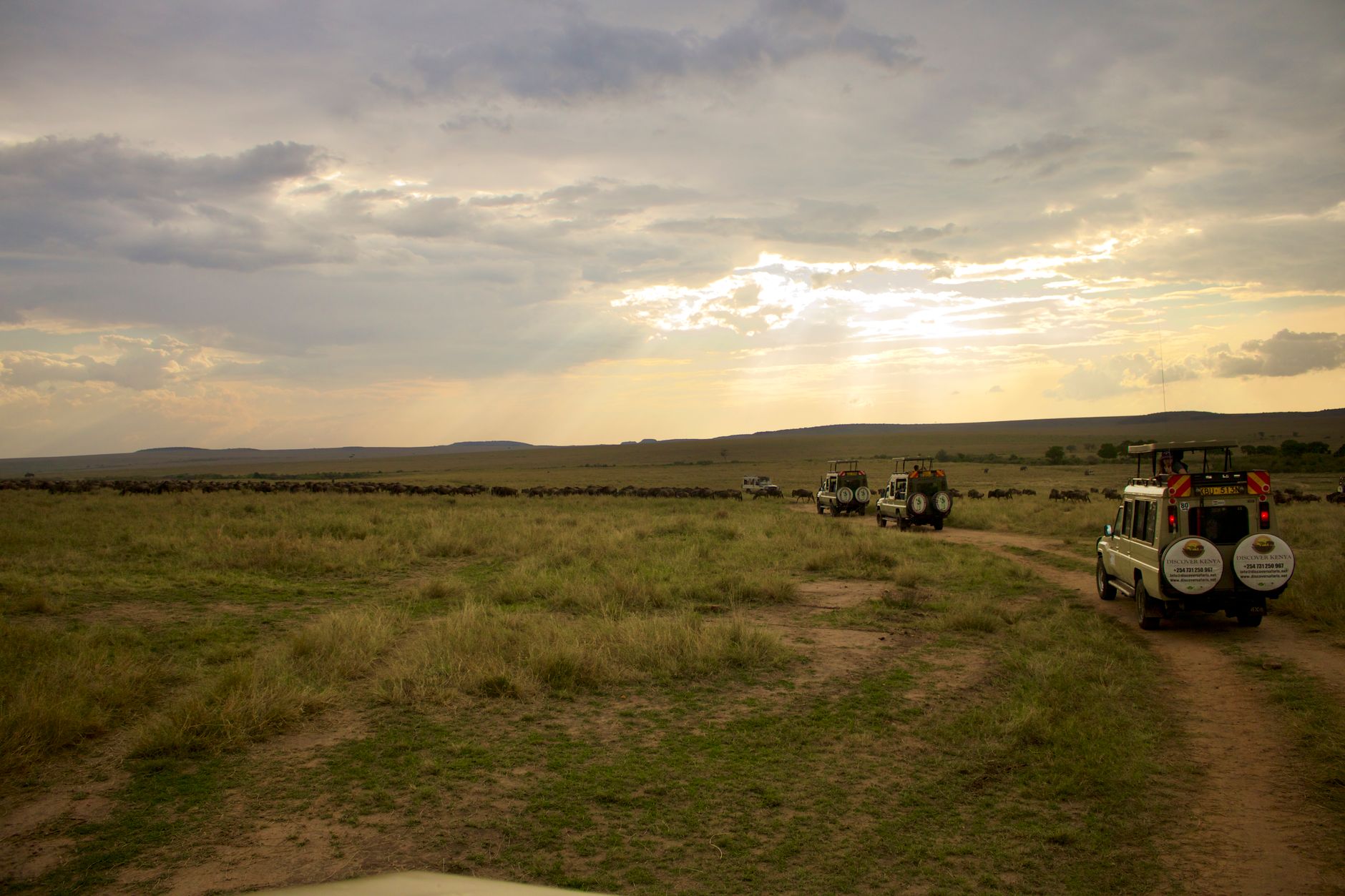
The Masai Mara National Reserve is spectacular but crowded during peak season. Vehicles line up around lion kills, and the reserve has no density limits.
If you want the same wildlife without the traffic, look at private conservancies bordering the Mara. Mara Naboisho, Olare Motorogi, and Mara North allow fewer vehicles per square kilometer. Game drives are more exclusive, and night drives are allowed in some conservancies, which is prohibited in the reserve. Our Masai Mara guide covers the reserve and conservancy differences in more depth.
Further north, Ol Pejeta Conservancy is known for rhino viewing and has a strong conservation story. Lewa Wildlife Conservancy is more remote and pairs well with the Laikipia plateau.
These conservancies cost more than the national reserve, often 100 to 200 euros more per person per day. You pay for exclusivity and a more personal experience. For many travelers, that difference is worth it.
How Does the Great Migration Affect Planning for German Travelers?
The Great Migration is the movement of over a million wildebeest and zebra between Tanzania’s Serengeti and Kenya’s Masai Mara. The timing varies by rainfall, but the herds typically reach the Mara in July or August and stay until October.
Crossing points on the Mara River are unpredictable. No one can tell you the exact day a crossing will happen. If seeing a river crossing is your priority, book a minimum of 4 nights in the Mara and work with a guide who checks river activity daily.
If you want to avoid the crowds entirely, visit the Mara in January or February. The migration is in Tanzania then, but the resident wildlife in the Mara is still excellent. You will see lions, elephants, and leopards without sharing a viewpoint with twenty other vehicles.
Ready to Start Planning?
Good preparation is what separates a smooth Kenya trip from a stressful one. Give yourself time to compare a few options before you commit to an itinerary.
Compare safari operators before you commit to one itinerary. Browse packages on FindMySafari, compare options at Valley Safaris, or explore itineraries from Trunktrails Safaris. These platforms list vetted operators and let you compare prices and routes side by side.
Ask for a sample itinerary, confirm the guide language in writing, and read recent reviews before you pay a deposit. Kenya is a wonderful country to explore, and good planning makes all the difference.
Where Can You Find More Safari Planning Resources?
- Masai Mara Great Migration guide from Trunktrails Safaris
- Kenya tour packages from Valley Safaris
- Diani Beach guide on FindMySafari
- Diani Beach guide from Trunktrails Safaris