Amboseli’s most famous tuskers keep dying of old age. Tim in 2020. Tolstoy in 2022. One Ton and Craig within months of each other in 2026. Every loss narrows an already tiny gene pool for elephants with tusks that nearly touch the ground. But one younger bull carries that same bloodline forward. His name is Tee-Jay, and conservationists at Big Life Foundation believe he could become Amboseli’s next true super tusker. This piece looks at Tee-Jay’s family line, the amboseli tusker family elephants he descends from, and Constable Daniel Kutata, the ranger who has followed his growth for most of both their lives.
Who Is Tee-Jay?
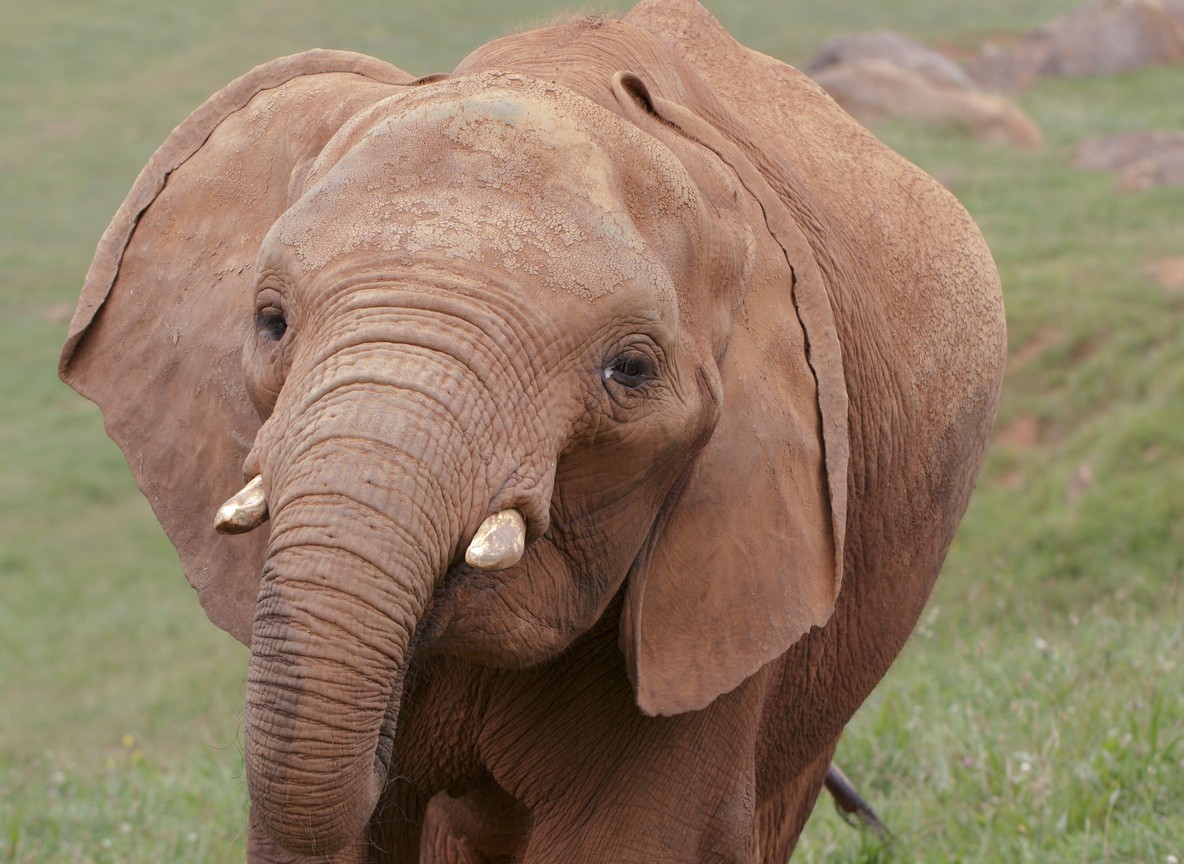
Tee-Jay is a bull in his mid-to-late thirties, part of the small circle of Amboseli elephants with genetics for exceptionally heavy tusks. Guides and researchers already rank him among the ecosystem’s most promising young males. His tusks are thick and still growing, since bull elephants add ivory mass throughout their lives. Big Life Foundation and the Amboseli Trust for Elephants track him closely, the same way they tracked Tim, Tolstoy, Craig, and One Ton before him. A Big Life Foundation feature published in July 2026 laid out his family tree and introduced readers to the ranger who has shadowed his territory since Tee-Jay was a calf.
For travelers, that story adds a new layer to an Amboseli safari. Spotting a young bull with unusual tusk growth is no longer just a lucky photo. It is a chance to watch conservation history happen in real time, decades before anyone can say for certain whether Tee-Jay will match his relatives.
The Family Line: Tim, Tolstoy, and the Genes Behind a Super Tusker
Tee-Jay is a nephew of Tim, the beloved bull who died naturally in Amboseli in February 2020 at around 51 years old. He is also a great-nephew of Tolstoy, born in 1971, who died in 2022 from an abscessed molar rather than injury or conflict. Tolstoy belonged to the “T family,” a lineage studied by Amboseli researchers since the early 1970s. That long study record is exactly why scientists can trace Tee-Jay’s bloodline with confidence. Super tuskers are defined as bulls whose tusks each weigh roughly 45 kg (100 lb) or more. Fewer than 30 are believed to survive across all of Africa today. A calf born into the T family carries better odds of reaching that size than almost any other elephant in East Africa.
Constable Daniel Kutata: The Ranger Who Has Watched Tee-Jay Grow Up
Constable Daniel Kutata is a Big Life Foundation ranger with a reputation for reading elephant behavior. Colleagues say he can identify individual elephants by their footprints alone, without needing a visual sighting. Kutata is Maasai, drawn from the same community land Tee-Jay ranges across, and he has patrolled that territory for years of the bull’s life. That kind of continuity matters. A ranger who recognizes one bull’s temperament, favorite swamp, and usual travel routes can spot trouble faster than any camera trap. Big Life credits rangers like Kutata with keeping the Amboseli-Tsavo corridor free of elephant poaching for extended stretches at a time.
How Big Life Foundation Protects Amboseli’s Elephant Families
Big Life Foundation runs 381 trained rangers across 45 units in the Greater Amboseli ecosystem, working from 32 permanent outposts and 11 mobile posts. Nearly all its rangers are Maasai, recruited from the same communities whose grazing land overlaps elephant range. That model gives rangers like Kutata local knowledge no outside patrol could match. Foot and vehicle patrols run daily, backed by field cameras, GPS tracking, and community intelligence networks. The approach treats conservation as a partnership with the people living alongside elephants, not a fence built around them.
Rangers do more than watch for poachers. They mediate conflict when elephants raid crops or block a footpath into town, and they log sightings that feed straight into research databases used by the Amboseli Trust for Elephants. A single ranger unit might cover territory the size of a small national park. Without that daily coverage, a young bull like Tee-Jay could wander into snare lines or unprotected farmland well outside any park boundary, since elephants ignore maps.
Why the Amboseli-Tsavo Corridor Matters for Tee-Jay’s Future
Tee-Jay does not live inside a single fenced reserve. Like Tim and Tolstoy before him, he moves through a wider landscape linking Amboseli National Park, surrounding group ranches, and the Chyulu Hills toward Tsavo. That freedom of movement is what let Tolstoy’s generation grow tusks so large in the first place. A bull needs decades of undisturbed feeding and safe travel corridors to reach full tusk size, and elephants keep adding ivory mass their entire lives. Losing even one stretch of that corridor to fencing or unplanned settlement could cut off a young bull before his genetics have a chance to show. Community conservancies bordering the park, many of them Maasai-run and Big Life-supported, are what keep that corridor open today.
Tee-Jay, Tim, and Tolstoy: Three Generations Compared
Comparing Tee-Jay to his uncle and great-uncle shows how the same bloodline keeps producing exceptional bulls, generation after generation.
| Detail | Tee-Jay | Tim | Tolstoy |
|---|---|---|---|
| Birth year (approx.) | Late 1980s | 1969 | 1971 |
| Status | Alive, monitored | Died Feb 2020 | Died 2022 |
| Age at death / current age | Mid-to-late 30s | Around 51 | Around 51 |
| Cause of death | N/A | Natural causes | Natural causes, abscessed molar |
| Relation to Tee-Jay | N/A | Uncle | Great-uncle |
| Known for | Rising tusk growth, strong genetics | Tusks sweeping near the ground | Founding member of the “T family” line |
| Tracked by | Big Life Foundation, ATE | Amboseli Trust for Elephants | Amboseli Trust for Elephants since early 1970s |
Where Tee-Jay Ranges, and Where You Might See Him
Tee-Jay moves across Amboseli National Park and the community conservancies bordering it, following the same swamp-to-woodland pattern most Amboseli bulls use. None of these figures guarantee a sighting, since elephants set their own schedule.
| Detail | Figure |
|---|---|
| Amboseli National Park size | approx. 392 km2 |
| Nairobi to Amboseli distance | approx. 215-240 km, 4-4.5 hr drive |
| Amboseli non-resident entry fee (indicative, 2026) | approx. USD 60-90 adult per 24 hr |
| Nearest airstrip | Amboseli Airport, inside the park |
| Big Life Foundation ranger force | 381 rangers, 45 units, Greater Amboseli ecosystem |
| Recognized super tuskers, wider Amboseli-Tsavo area | fewer than 30 across Africa |
| Key swamps for elephant viewing | Enkongo Narok, Olokenya |
Camps near Kimana Gate and Ol Tukai sit closest to the swamps where big bulls feed each morning. Ask your guide whether Tee-Jay or other named bulls have been seen recently before booking a specific camp for elephant photography.
Explorer Notes
Ask your guide to point out Tee-Jay by name rather than just “a big bull.” Amboseli’s guiding community shares sightings constantly, and most camps know which bulls are active in a given week. Arrive at the swamps early, before 8am if you can manage it, since elephants feed there before retreating to shade as the day heats up. A longer camera lens helps, since the biggest bulls are often the calmest around vehicles but still deserve distance. If you spot a bull with unusually thick or long tusks, note the location and time and mention it to your guide or camp. Casual sightings like that feed directly into the same monitoring records rangers like Kutata rely on.
What to Read Next
- Amboseli: Super Tuskers, Elephant Herds, and Kilimanjaro Views
- One Ton: What the Death of Another Amboseli Super Tusker Means for the Herd
- Best Time to Visit Amboseli for Elephants
FAQ
Who is Tee-Jay the elephant in Amboseli? Tee-Jay is a young bull in his mid-to-late thirties, tracked by Big Life Foundation and the Amboseli Trust for Elephants as a strong candidate to become Amboseli’s next super tusker.
How is Tee-Jay related to Tim and Tolstoy? Tee-Jay is a nephew of Tim, who died naturally in 2020, and a great-nephew of Tolstoy, a founding member of the long-studied “T family” line who died in 2022.
Who is ranger Daniel Kutata? Constable Daniel Kutata is a Big Life Foundation ranger known for identifying elephants by their footprints. He is Maasai and has patrolled Tee-Jay’s home range for years.
How many super tuskers are left in Kenya? Fewer than 30 are believed to survive across all of Africa, making every bull from a proven bloodline like Tee-Jay’s especially valuable to conservationists.
Where can I see Tee-Jay or similar bulls in Amboseli? Camps near Kimana Gate and Ol Tukai sit closest to the swamps at Enkongo Narok and Olokenya, where big bulls feed most mornings, though sightings of any named bull are never guaranteed.
Tee-Jay’s story is still being written, one patrol and one dry season at a time. If it has you thinking about seeing Amboseli’s elephant families in person, check the Tour Packages page for itineraries built around early swamp game drives, when the big bulls are easiest to find.