Every sunrise in the Masai Mara, a handful of balloons rise over the savanna. The images are unforgettable. Before you book your spot in the basket, it pays to ask hard questions. Masai Mara hot air balloon safety depends on the operator, the pilot, the weather, and how well you follow instructions. This guide gives you a balanced look at the risks and the protections that are genuinely in place.
What should you know about Masai Mara hot air balloon safety?
A Masai Mara hot air balloon safari is generally considered safe when operated by a licensed company. That means a qualified pilot, maintained equipment, a passenger briefing, and strict weather limits. It is not risk-free. Take-offs and landings can be abrupt, and operator screening, instructions, and cancellation decisions are essential safety controls.
Kenya’s Civil Aviation Authority (KCAA) sets operating rules for commercial balloon operators. Licensed operators need approved pilot training, maintenance programs, and operating manuals. In the Masai Mara, balloon safaris usually launch from the reserve itself or from private conservancies like Naboisho, Olare Motorogi, and Mara North. The open terrain gives pilots room to find a clear landing spot, which matters in an aircraft that moves with the wind.
Serious balloon accidents in Kenya are rare, but they have happened. When an incident occurs, the KCAA investigates. For travelers, the practical takeaway is simple: ask about the operator’s safety record, not just the price.
How do operators and pilots manage balloon safari safety?
Safety depends on several checks working together. These include a licensed and experienced pilot, an airworthy balloon, and a pre-flight equipment inspection. Local weather assessment, a passenger briefing, and a clear landing procedure matter too. Ask operators about licensing, maintenance, insurance, and emergency procedures.
A balloon does not steer like a car. The pilot uses wind at different altitudes to control direction, so local knowledge of the Mara’s morning airflow is valuable. The same company may have several pilots, so ask how many flights your assigned pilot has completed. A licensed balloon pilot in Kenya should hold a current pilot license and class rating.
You do not need to become an aviation inspector. You do need to ask who flies this balloon, and what happens if something fails. A responsible operator will answer directly and calmly. A vague answer is a warning sign.
When are balloon flights cancelled because of weather?
Balloon flights normally launch around sunrise because winds are often calmer. Still, the pilot has the final decision. Flights may be delayed or cancelled for strong winds, rain, storms, poor visibility, or unstable conditions. Some operator information cites 15 knots as a no-fly threshold, but passengers should rely on the pilot’s current local assessment rather than a fixed number.
The Mara has two rainy seasons: the long rains from about March to May, and the short rains around November. A cancelled flight is more likely during those windows. Dry months, especially July to October, tend to bring clearer mornings. Still, safari weather is local, and a storm can form overnight even in the dry season.
Responsible operators have a clear cancellation policy. If the flight cannot run, you should be offered a reschedule or a refund. Confirm that policy before you pay. Road conditions during the rains also affect the drive to the launch site. Our Kenya safari rainy-season weather advice goes deeper into seasonal planning.
| Balloon flight facts | Typical published guidance (indicative) |
|---|---|
| Flight duration | 45 to 60 minutes |
| Launch window | Around sunrise, often 6:00 to 7:00 a.m. depending on season |
| Minimum age | About 3 to 4 years, varies by operator |
| Wind limit | Around 15 knots is often cited as a no-fly threshold |
| Basket capacity | Usually 8 to 16 passengers depending on basket design |
| Weight disclosure | Required in advance; basket balance matters |
What happens during take-off, flight, and landing?
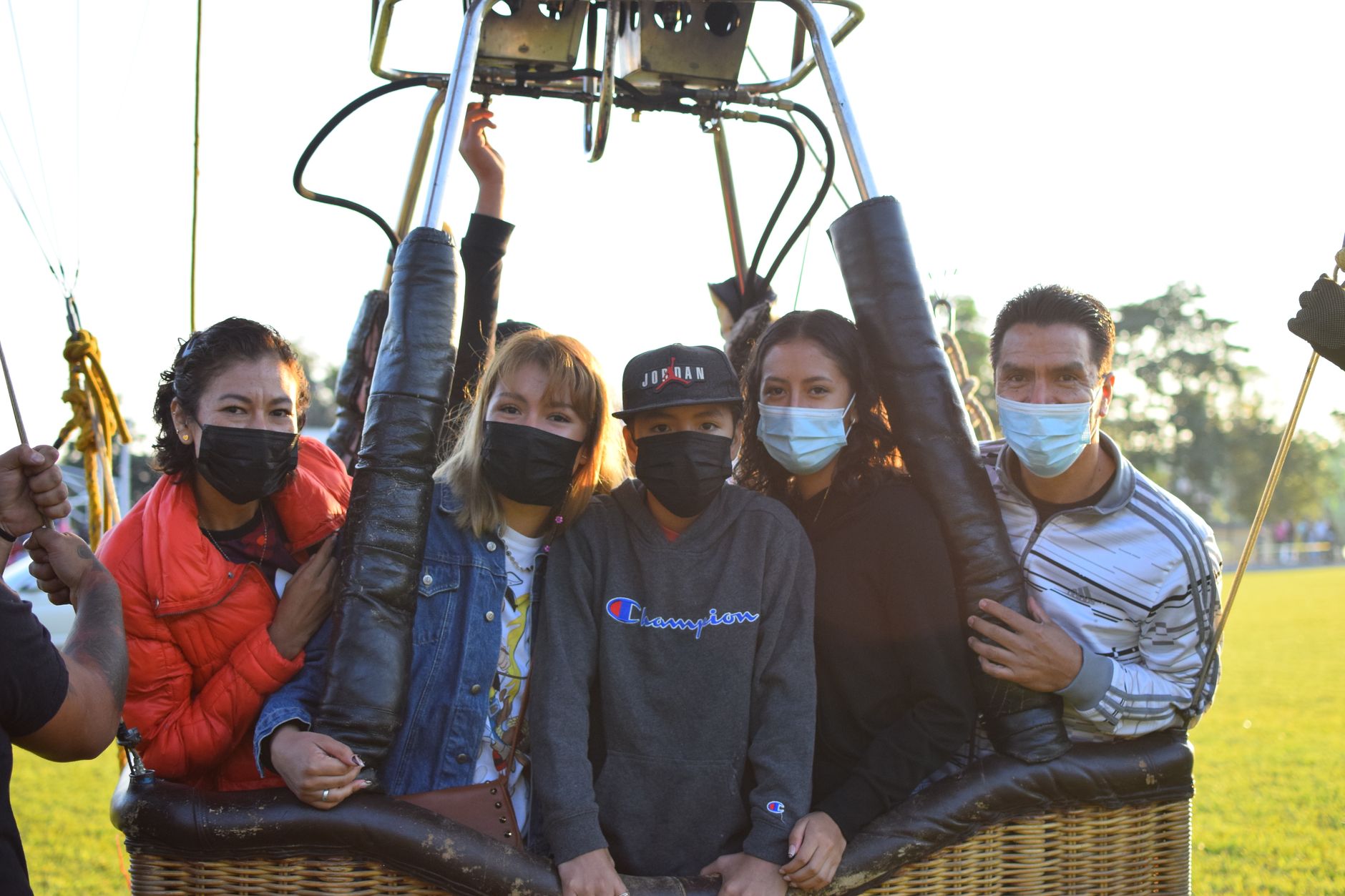
Passengers usually board a basket before inflation, or while it is positioned for launch. They remain inside during the flight and follow the pilot’s instructions for landing. The basket may tip onto its side or drag briefly after touchdown. Passengers should bend their knees, face inward, hold the handles, and wait for permission to exit.
Take-off can feel surprisingly gentle. The balloon lifts a little, the basket steadies, and the treetops drop away. During the flight, you stand in a compartment divided by cloth walls, and you do not sit down for most of the ride. The burner makes a loud roar each time the pilot fires it. That is normal.
The landing is the most physical moment. Strong winds are rare at dawn, but even a calm morning can bring a firm bump. The pilot will call out a landing position, so listen and follow it. If the basket tips, it is designed to take the impact, and a braced passenger protects themself. Wait until the pilot says it is safe to climb out.
Are there age, health, mobility, and weight restrictions?
Minimum ages vary by operator. Published guidance commonly excludes very young children, with some companies setting limits around three or four years. Pregnancy and serious heart, back, neck, knee, hip, or bone conditions may make ballooning unsuitable. Heavier passengers should disclose their weight in advance because basket capacity and balance matter.
This is the area where honesty matters most. A hot air balloon basket has a side door used for boarding. You step in, grab a handle, and stand for the flight. If you cannot stand comfortably for an hour, a balloon safari is likely not right for you. If you have had recent surgery, a herniated disc, or an ankle problem, the landing jar can make it worse. Many operators decline passengers in medical risk categories. This is not to be difficult. It is because the basket makes injured limbs hard to support.
Pregnant women are usually discouraged because a landing impact can harm the baby. The child questions are about more than age. A young child must be able to follow instructions and hold on. Our Kenya safari child age restrictions guide explains how land operators handle similar concerns.
What should passengers do to stay safe?
Wear layered clothing and closed, sturdy shoes. Secure cameras and loose items, stay inside the basket, avoid leaning over the edge, and listen to the pilot throughout the flight. During landing, hold the safety handles and adopt the instructed bent-knee position, and do not leave until the pilot gives the all-clear.
A balloon flight is a group activity, and your behavior affects everyone. A scarf blowing out of the basket can wrap around a burner line. Keep your weight inside the basket and your hands on the handles when the pilot asks.
Use the pre-flight briefing to ask what you should do if you feel unwell or scared. There is no shame in feeling anxious, and the pilot can explain what happens next. After landing, wait for the ground crew to secure the envelope and get you out safely. If you realize a balloon is not for you, tell your guide early. You can usually opt out of safari activities before the launch without losing the whole trip.
How do you choose a reputable Masai Mara balloon operator?
Choose an operator that clearly explains pilot qualifications, aviation licensing, and equipment maintenance. Also check passenger limits, weather cancellation terms, insurance, and landing procedures. Ask which company will operate the flight rather than relying only on a booking intermediary.
Start with the company flying you, not the middleman. Your safari camp or lodge may offer a balloon package. Ask for the operating company’s name and confirm it is licensed by the Kenya Civil Aviation Authority. Ask about the pilot’s experience, the age of the equipment, and what insurance covers passengers.
Reputable operators are transparent about these details, and they have a clear policy on weather. If it is too windy, the flight does not go, and you are not charged. Vague answers are a red flag. Start with the operator’s documentation before you worry about the sunrise photos.
Many operators fly over both the national reserve and private conservancies like Naboisho and Mara North. Conservancy flights often cost more but offer a quieter, less crowded experience.
What about wildlife, environmental, and conservation concerns?
A balloon is usually quieter and less intrusive than a safari vehicle. Even so, wildlife can react to its shadow, sound, or low altitude. Responsible flights maintain appropriate height, avoid repeated disturbance, and follow reserve or conservancy rules. Balloon tourism supports local employment and conservation, but low-impact does not mean zero-impact.
Balloons glide rather than roar, and at cruising height they disturb much less than a convoy of vehicles. But wildlife still sees a moving shadow and a strange shape overhead. Pilots are expected to keep a respectful height over animals, especially when the migration herds are in the Masai Mara. That is typically from around July to October. Calving happens earlier in the year, in the southern Serengeti’s Ndutu area in Tanzania, generally from December to March. The herds then move north toward the Mara.
The money from balloon safaris matters. It funds park and conservancy fees, supports local jobs, and gives communities a reason to protect land rather than convert it. Still, no tourism activity is zero-impact. For a full look at the landscape, our Masai Mara guide covers the reserve and the conservancies.
What questions do travelers ask about Masai Mara balloon safety?
Is a hot air balloon safari in Masai Mara safe?
Yes, it is generally safe when run by a properly licensed operator using maintained equipment and an experienced pilot. Passenger briefings and conservative weather decisions add another layer of protection. The main practical risks are abrupt take-offs or landings, changing wind, and unsuitable medical or mobility conditions.
What happens if the weather is bad for a Masai Mara balloon safari?
The flight may be delayed, cancelled, rescheduled, or refunded according to the operator’s terms. This applies whenever wind, rain, storms, or visibility make flying unsuitable. A cancellation is not a service failure. Refusing to fly is part of responsible balloon safety.
Are children allowed on a Masai Mara hot air balloon?
Minimum ages vary, but published operator guidance commonly excludes children below approximately three or four years. Some companies also use basket-height requirements. Confirm the exact rule with the operating company, since age, height, and behavior can all affect acceptance.
Can pregnant women go on a Masai Mara balloon safari?
Most operators do not recommend balloon flights during pregnancy. Boarding can be physically demanding, and landings may involve sudden impact. Anyone considering it should get medical advice, though many companies will decline the booking regardless.
What happens when a hot air balloon lands in the Masai Mara?
The basket can touch down firmly, tip onto its side, or move along the ground briefly before stopping. Passengers should follow the pilot’s landing position, hold the handles, stay inside, and wait for the signal before exiting.
Where can you compare Masai Mara balloon safari packages?
Balloon safaris are often sold as an add-on to a trip, so it pays to compare operators before you commit. To browse current packages and compare safari operators, visit FindMySafari, Valley Safaris, or Trunktrails Safaris. These partners can help you compare safety track records and package details.
Make your choice based on the operator, the pilot, and the terms, not the price alone. Our best time to visit page can help you fit the balloon safari into a well-timed itinerary.
Where can you find more safari planning resources?
- Maasai Mara interactive map from SafariPure
- Masai Mara Great Migration guide from Trunktrails Safaris
- Interactive Maasai Mara map from Valley Safaris
- Masai Mara destination guide on FindMySafari