Lake Nakuru National Park has a well earned reputation among birders, and its checklist can feel overwhelming. A practical Lake Nakuru safari bird checklist focuses on species you are likely to see, not just the full park list. This article outlines 50 target species, grouped by the places where you will search for them.
Which Birds Should Be on Your Lake Nakuru Safari Bird Checklist?
A useful Lake Nakuru safari bird checklist should include greater and lesser flamingos, African fish eagle, great white pelican, yellow-billed stork, marabou stork, black-winged stilt, and pied avocet. It should also include grey crowned crane, African spoonbill, common ostrich, augur buzzard, martial eagle, grey-crested helmetshrike, and Abyssinian thrush. The park has more than 450 recorded species, but sightings vary by habitat and season.
The table below lists 50 birds you can realistically target on a safari. It is not the full park list. It is a working checklist.
| Habitat / location | Target species |
|---|---|
| Main lakeshore | Greater flamingo, lesser flamingo, great white pelican, yellow-billed stork, marabou stork, African spoonbill, sacred ibis, black-winged stilt, pied avocet, blacksmith lapwing |
| Open water and fringe | White-faced whistling duck, yellow-billed duck, Hottentot teal, Cape teal, Egyptian goose, grey heron, little egret, great egret, reed cormorant, African darter |
| Reed beds and marshes | Hadada ibis, glossy ibis, purple heron, little grebe, common moorhen, red-knobbed coot, hamerkop, grey crowned crane, black-headed heron, spur-winged lapwing |
| Acacia woodland and scrub | Grey-crested helmetshrike, green wood hoopoe, white-browed robin-chat, Abyssinian thrush, African paradise flycatcher, common bulbul, superb starling, Rüppell’s long-tailed starling, red-cheeked cordon-bleu, bronze mannikin |
| Cliffs, grassland, and plains | Common ostrich, Kori bustard, martial eagle, augur buzzard, African harrier-hawk, black-shouldered kite, pallid harrier, steppe buzzard, common kestrel, African fish eagle |
This Lake Nakuru safari bird checklist is a starting point. The most useful version changes with water level and season, so treat each row as a habitat clue rather than a guarantee.
What Is the Best Time for Birdwatching at Lake Nakuru?
For the broadest birding experience, plan between November and April, when migratory birds and breeding activity can add variety. For easier viewing of waterbirds and general wildlife, dry periods such as July to September and January to March can be productive because lower water levels may concentrate birds near the shore. Early morning is usually the most active period.
November to April brings Palearctic migrants to Lake Nakuru, including common sandpipers, wood sandpipers, and barn swallows, along with increasing numbers of Abdim’s storks. This is also a good window for breeding displays. In contrast, the dry months make waterbodies smaller and birds more predictable around the remaining water.
Be honest about the trade-offs. Rain can improve habitat for some species, but it can also make roads slippery inside the park. If you travel in the wet season, check our Kenya safari rainy-season road advice before you leave.
Where in Lake Nakuru National Park Should You Look for Birds?
Use different habitats instead of relying only on the lakeshore. The southern shore is productive for flamingos and pelicans, the eastern shore often concentrates waterfowl, Baboon Cliff offers views of lake birds and soaring raptors, Lion Hill suits raptor watching, and Makalia Falls and nearby woodland are better for forest and small passerine species.
The park rewards a slow circuit. Spend time at the lakeshore viewpoints, then move inland to acacia woodland, grassland, and the higher slopes around Lion Hill. Makalia Falls is often quieter than the main lake edge and can produce fish eagles and mixed flocks. Your guide will adjust the route based on recent water levels.
If you are comparing Lake Nakuru with another Rift Valley lake, our Lake Nakuru versus Naivasha safari comparison explains the main birding differences.
Where Can I See Flamingos at Lake Nakuru?
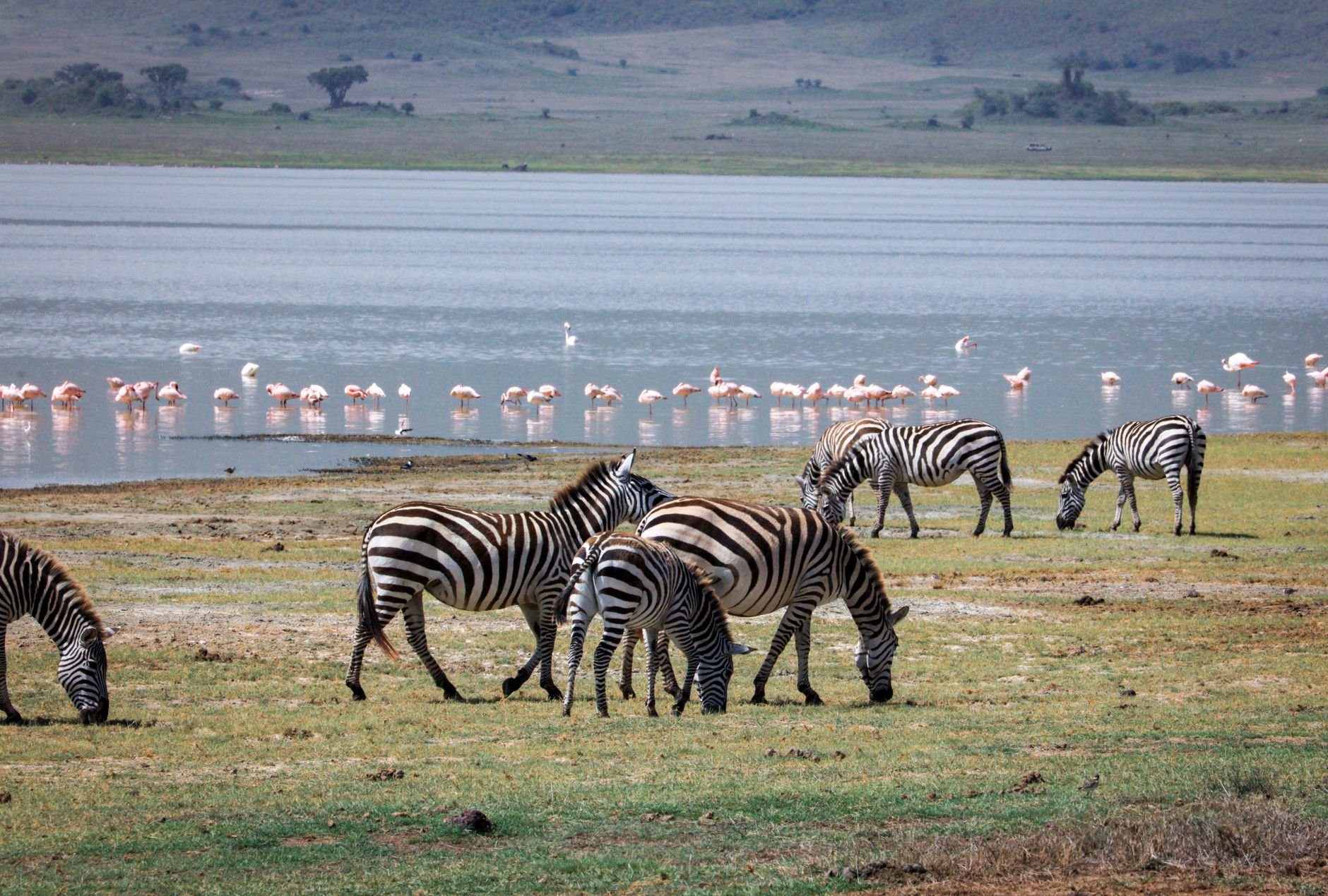
Lake Nakuru’s headline waterbirds include greater and lesser flamingos, great white pelicans, black-winged stilts, pied avocets, grebes, herons, egrets, ibises, storks, cormorants, and several duck species. Flamingo numbers are not guaranteed: water level, food availability, algae conditions, and disturbance can shift concentrations around the lake, so treat any fixed flamingo location as seasonal rather than permanent.
In recent years, Lake Nakuru’s water level has risen at times, and flamingos have moved to other Rift Valley lakes. When flamingos are present, the southern lake shore is usually a reliable area. Ask your driver or guide for the current location before you commit time to one viewpoint. Lesser flamingos are the more common species when large flocks appear, while greater flamingos are usually scattered.
Other Lake Nakuru waterbirds are more predictable. Great white pelicans often gather in groups along the shore, and black-winged stilts and pied avocets feed in shallow water throughout the year. African fish eagles perch in shoreline acacias, especially near the lake edge and Makalia Falls. If you are planning a route that includes both Lake Nakuru and a rhino conservancy, our Lake Nakuru versus Ol Pejeta comparison helps you decide how to split your days.
Which Raptors, Woodland Birds, and Grassland Species Are Easy to Miss?
Look beyond the soda lake for Lake Nakuru’s less obvious birds. Acacia woodland, forest edges, cliffs, and grassland can produce African fish eagle, martial eagle, augur buzzard, pallid harrier, and grey-crested helmetshrike. You may also find green wood hoopoe, white-browed robin-chat, Abyssinian thrush, francolins, bustards, coucals, and common ostrich. Quiet, slow drives improve chances with shy woodland species.
Raptors are a highlight. Martial eagles use large trees and cliff ledges, while augur buzzards and black-shouldered kites patrol open ground. During migration, pallid harriers and steppe buzzards pass through. In the woodland, listen for the dry rattle of grey-crested helmetshrikes and the call of green wood hoopoes. The grassland also supports Kori bustards, although they are often seen from a distance.
When you stop at Baboon Cliff or Lion Hill, scan the lake below and the escarpment edges. These viewpoints are strong places to pick out soaring raptors and waterbirds in the same binocular view.
What Gear and Safari Tips Should You Pack for Lake Nakuru Birding?
Bring 8x or 10x binoculars, a field guide or birding app, a notebook or phone checklist, sun protection, water, and neutral layered clothing. A camera with a telephoto lens helps with distant shorebirds, but binoculars matter more for identification. Start near sunrise, scan slowly, keep voices low, and record habitat and behavior rather than only names.
A compact regional guide such as Birds of East Africa or an app with calls is more useful than a heavy global field guide. If you are new to Kenya birding, start with a simple checklist and add species as you confirm them. The park gate usually has a bird checklist sheet, but carrying your own helps you track sightings without losing time.
The most important habit is patience. Many birds sit still in dense acacia and only reveal themselves when a vehicle stays quiet. Ask your guide to switch off the engine at promising spots. For broader packing advice, our Kenya safari packing list covers clothing, camera gear, and other essentials.
Frequently Asked Questions
What birds can you see at Lake Nakuru?
Visitors may see greater and lesser flamingos, pelicans, African fish eagles, storks, herons, egrets, cormorants, black-winged stilts, pied avocets, ducks, raptors, ostriches, woodland birds, and grassland species. The park has more than 450 recorded bird species, although no single safari will produce the full list.
How many bird species are found in Lake Nakuru National Park?
Lake Nakuru National Park is commonly described as having more than 450 recorded bird species. The exact species seen on a visit depends on rainfall, water levels, migration, habitat, and the route taken through the park.
What is the best time to see birds at Lake Nakuru?
November to April is a strong period for migrants and breeding activity, while July to September and January to March can offer good visibility and concentrated waterbirds during drier conditions. For any season, early morning is generally the best time because birds are most active.
Where can I see flamingos at Lake Nakuru?
The southern lakeshore is often recommended for flamingos, but their distribution changes with lake conditions, food, and water levels. Ask the driver or guide for the latest concentration rather than expecting flamingos to remain in one fixed area throughout the year.
What should I bring for birdwatching at Lake Nakuru?
Pack binoculars, a regional bird guide or identification app, a notebook or phone checklist, water, sun protection, and comfortable neutral colored layers. A telephoto lens is useful for photography, but binoculars and patience are more important for identifying distant or small birds.
How Can You Compare Operators for a Lake Nakuru Safari?
Once your checklist is ready, the next step is finding an operator who can build a route that matches your birding goals. Compare Kenya safari operators such as FindMySafari, browse packages from Valley Safaris, or explore options with Trunktrails Safaris to see which lodge, vehicle, and guide fit your plan. A good operator will tell you the day’s birding conditions before you enter the park.
Where Can You Find More Safari Planning Resources?
- Best time to visit Kenya map from SafariPure
- Lake Nakuru safari guide from Trunktrails Safaris
- Rift Valley lakes map from Valley Safaris
- Big Five safari collection on FindMySafari