On June 23, 2026, Jikaze Police Post officers and Kenya Wildlife Service rangers ran a joint operation in Laikipia County. Three suspects landed in custody. Six elephant tusks came off the market before a sale. Touring Insights covers safari planning, not crime reporting. But this case sits right where our readers actually travel. Here is what happened, what Kenyan law does to convicted traffickers, and what the numbers say about ivory trafficking today.
What Happened at Jikaze Police Post
The operation was intelligence-led, according to reporting from the-star.co.ke. Officers had a tip before they moved, not a lucky roadside stop. National Police Service and KWS teams ran an undercover approach together. They intercepted the three suspects before the tusks could reach a buyer further down the chain.
All six tusks were secured as evidence. Case files were still being finalized for arraignment as of the reporting date. That is standard procedure for a wildlife case that needs to survive Kenya’s evidentiary rules in court. A National Police Service statement after the arrests called poaching a serious threat that “decimates endangered species, disrupts ecosystems, and undermines vital conservation efforts.”
| Detail | Figure |
|---|---|
| Date | June 23, 2026 |
| Location | Jikaze area, Laikipia County |
| Items recovered | 6 elephant tusks |
| Suspects arrested | 3 |
| Lead agencies | Jikaze Police Post, Kenya Wildlife Service, National Police Service |
| Operation type | Intelligence-led, multi-agency, undercover |
| Case status (as reported) | Case file being finalized for arraignment |
Why Laikipia’s Elephants Are Still Worth Killing For
Laikipia County covers roughly 9,700 km2 between Mount Kenya and the Aberdares. Much of it sits unfenced, shared between conservancies, ranches, and community land. That openness is good for wildlife movement. It is harder for security, since elephants cross property lines rangers cannot patrol as tightly as inside a fenced sanctuary.
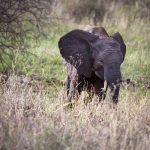
The Laikipia-Samburu ecosystem holds Kenya’s second-largest elephant population. Its last full aerial survey, in 2017, counted around 7,300 animals. More recent reporting puts the number ranging mainly outside formally protected land at roughly 5,400, the largest such population in the country. A herd this size, spread across open terrain, stays an obvious target for trafficking networks even as overall numbers recover.
There is real progress here too. In 2022, the Samburu-Laikipia ecosystem recorded zero elephants lost to poaching, a first in over two decades of monitoring. The Jikaze arrests show the pressure has not disappeared. Interception is simply catching more of it before a kill happens.
What Kenya’s Law Does to Convicted Ivory Traffickers
Kenya rewrote its wildlife penalties in the Wildlife Conservation and Management Act 2013. Old fines topped out around KES 10,000 for ivory possession, cheap enough to treat as a business cost. That changed. Killing or dealing in ivory from an endangered species like the elephant now carries a minimum fine of KES 20 million, more than $150,000 at prevailing exchange rates. Courts can add life imprisonment on top.
Simple possession without a valid permit still carries a minimum fine of KES 1 million, roughly $7,700, plus possible prison time. These are minimums, not caps. Courts can and do impose harsher sentences depending on the quantity involved and a defendant’s record.
Laikipia Elephant Tusk Poaching Raid in Context: The Data
One arrest does not tell you whether trafficking is rising or falling nationally. Court-monitoring data gives a clearer, more mixed picture. Kenyan courts saw roughly 2,037 kg of ivory seized across 71 incidents in 2023. That fell to about 1,521 kg across 45 incidents in 2024. The drop looks encouraging on its own. Factor in reduced monitoring capacity after the Kenya Wildlife Task Force was disbanded in late 2024 over funding shortfalls, and the trend gets harder to read as pure improvement.
Demand has not gone away either. Reported black market prices for raw ivory in East Asian markets range widely, from roughly $400 to $1,500 per kilogram depending on grade and location. That is still high enough to make six tusks a meaningful payday for a trafficking network.
| Metric | Figure |
|---|---|
| Kenya’s national elephant population estimate | approx. 36,000 |
| Laikipia-Samburu ecosystem elephant population (2017 aerial count) | approx. 7,300 |
| Elephants ranging mainly outside protected land (2025 estimate) | approx. 5,400 |
| Poaching-free year, Samburu-Laikipia ecosystem | 2022 (first in 20+ years of monitoring) |
| National ivory seizures, 2023 vs. 2024 (court-monitoring data) | 2,037 kg / 71 incidents vs. 1,521 kg / 45 incidents |
| Minimum fine, ivory possession | KES 1 million (approx. $7,700) |
| Minimum fine, killing/dealing endangered species ivory | KES 20 million (approx. $150,000+) or life imprisonment |
| Reported black market ivory price (East Asia) | $400-1,500 per kg (indicative, varies by grade) |
How a Tusk Actually Moves From Bush to Black Market
A poached tusk rarely travels straight from Laikipia to an overseas buyer. It usually passes through several hands first: a local courier, a regional middleman, then a border crossing before an export route. Kenyan investigators have flagged Lunga Lunga, the border town on the highway linking Mombasa and Dar es Salaam, as an increasingly active node in this chain since 2023.
The traffic runs both directions across that border. In January 2026, officers arrested two Tanzanian nationals near the Namanga crossing. They had 110 kg of ivory and a weighing scale in their vehicles. That is evidence traffickers move product across the Kenya-Tanzania frontier depending on where buyers are active that month. Six tusks intercepted at Jikaze is one small piece of a much larger, cross-border supply chain.
What This Means If You’re Planning a Laikipia Safari
None of this should keep you off a Laikipia itinerary. The county’s conservancies run some of the most visible, well-funded anti-poaching operations in East Africa. That is precisely because they hold major wildlife populations worth protecting. Ol Pejeta, Lewa, and Loisaba all run ranger patrols, aerial monitoring, and community intelligence networks. Those networks feed the same kind of tip-offs that led to the Jikaze arrests.
Camps such as Sweetwaters Serena inside Ol Pejeta, Kicheche Laikipia Camp, and Loisaba Tented Camp sit within or beside these protected areas. Many let guests meet rangers directly, on a game drive or through a dedicated security demonstration.
| Detail | Figure |
|---|---|
| Laikipia Plateau size | approx. 9,700 km2 |
| Distance, Nairobi to Nanyuki (Laikipia hub) | approx. 200 km, 3-3.5 hrs by road; approx. 45 min flight |
| Ol Pejeta Conservancy size | approx. 364 km2 |
| Lewa Wildlife Conservancy size | approx. 250 km2 |
| Loisaba Conservancy size | approx. 230 km2 (58,000 acres) |
| Indicative conservancy entry fee (non-resident, per day) | $90-100 (varies by conservancy, confirm before travel) |
Explorer Notes
Guides in Laikipia often know more about a case like this than any news article does. Ranger networks and community scouts talk to each other across conservancy lines. Ask your guide how conservancies share intelligence with police posts like Jikaze. You usually get a specific answer about radio protocols or shared patrol schedules, not a vague summary. If you spot a fresh KWS or ranger checkpoint on a Laikipia road that was not there last visit, that is normal. It is often tied to an active investigation, not a sign of trouble nearby. Several Laikipia conservancies will now brief guests on wildlife crime as part of a game drive, if asked directly, treating it as conservation education rather than a subject to avoid. Community scouts drawn from land bordering the conservancies are frequently the first line of intelligence in cases like this one, worth asking about if you want to understand how modern anti-poaching work actually runs day to day.
FAQ
What happened in the Laikipia elephant tusk poaching raid? On June 23, 2026, Jikaze Police Post officers and KWS rangers ran a joint intelligence-led operation in Laikipia County. They arrested three suspects and recovered six elephant tusks before the ivory reached a buyer.
What penalties does Kenya impose for ivory trafficking? Under the Wildlife Conservation and Management Act 2013, killing or dealing in ivory from an endangered species carries a minimum fine of KES 20 million or life imprisonment. Simple possession without a permit carries a minimum fine of KES 1 million.
Is elephant poaching rising or falling in Kenya? Court-monitoring data shows national ivory seizures fell from 2,037 kg across 71 incidents in 2023 to 1,521 kg across 45 incidents in 2024. Reduced monitoring capacity makes that trend hard to read as a clear improvement, though.
How many elephants live in the Laikipia-Samburu ecosystem? The last full aerial count, in 2017, put the population at roughly 7,300, the second largest in Kenya. More recent reporting estimates around 5,400 elephants range mainly outside formally protected land, the largest such population in the country.
Is it safe to visit Laikipia given ongoing poaching activity? Yes. Laikipia’s major conservancies, including Ol Pejeta, Lewa, and Loisaba, run funded ranger patrols, aerial monitoring, and community intelligence networks, the same coordination that led to the Jikaze arrests. Visitor safety and wildlife security run on separate tracks.
Cases like the Jikaze raid are a reminder that Laikipia’s conservancies are working landscapes, actively defended, not passive backdrops. If you want to build a trip through Laikipia with an operator who can brief you on the current security and conservation picture, visit our Tour Packages page or ask a partner operator to add a ranger-led conservation stop to your itinerary.
Further reading
More safari planning resources
- Ol Pejeta and Sweetwaters safari package from Valley Safaris
- Is Kenya safe to visit? on Touring Insights
- Big Five safari collection on FindMySafari
- Map of Samburu from Valley Safaris
Related guides: Nine Kilograms of Ivory Near Kakuma: Inside Kenya’s Border Anti-Trafficking Fight.