Kenya safari rhino conservation visits are not one experience. A morning at Ol Pejeta Conservancy can end with a guarded meeting with the world’s last two northern white rhinos. Head to Sera Rhino Sanctuary instead, and you may track black rhino on foot with community rangers. This guide compares the six top sites so you can choose the one that fits your route, budget, and tolerance for rough roads.
The most practical choices fall into two groups. Ol Pejeta and Sera are the best known. Lewa Wildlife Conservancy, Solio Ranch, Nairobi National Park, and Lake Nakuru National Park broaden the list for travelers with different plans and time limits.
What Are the Best Places for Rhino Conservation Visits in Kenya?
Ol Pejeta stands out for rhino conservation visits, with black and southern white rhinos, a dedicated northern white rhino encounter, and ranger-led conservation activities. Sera Rhino Sanctuary offers the most distinctive walking experience, while Lewa and Solio add high-quality rhino viewing within established conservancy models.
All six sites are worth visiting, but not for the same reasons. A first-time safari traveler may prefer Ol Pejeta for reliable sightings and a clear conservation story. A repeat visitor who wants wilderness might choose Sera. A photographer building a northern Kenya route might combine Lewa and Solio.
| Site | Rhino species | Why visit | Typical visit length |
|---|---|---|---|
| Ol Pejeta Conservancy | Black rhino, southern white rhino, last two northern white rhino | Reliable viewing and ranger-led conservation visit | Day visit or stay one to two nights |
| Sera Rhino Sanctuary | Black rhino | On-foot tracking with community rangers | Two nights minimum often required |
| Lewa Wildlife Conservancy | Black rhino, some southern white rhino | Private conservancy with strong ranger and community programs | Two nights or more |
| Solio Ranch | Black and southern white rhino | Strong white rhino viewing | Day visit possible |
| Nairobi National Park | Black and southern white rhino | Half-day rhino sightings near the center of Nairobi | Half day or one night |
| Lake Nakuru National Park | Black and southern white rhino | Rift Valley landscapes with forest and lake edges | Day visit or overnight |
Do not treat the table as a guarantee. Rhino sightings are still wild animal encounters. The access notes and minimum stays also change with the season, so confirm the details when you ask for a quote.
What Should You See at Ol Pejeta Conservancy?
Ol Pejeta combines dependable black rhino viewing with a guided visit to Najin and Fatu, the world’s last two northern white rhinos. Visitors may also learn about monitoring, armed protection, veterinary work, and community programs, making the conservancy more than a conventional game-drive destination.
Most people start at Ol Pejeta because it packs so much into one visit. The northern white rhino visit is structured and supervised, not a casual game drive. Your group watches from a vehicle. A ranger tells the story of the two remaining females and the loss of the last male, and explains the assisted reproduction research that may one day help the subspecies recover.
Ol Pejeta also protects black rhino and southern white rhino. Early morning drives are usually the most productive for finding them. Some guests add a ranger-led tracking walk, but that is separate from the vehicle-based conservation visit. For more advice on how to plan the day, see our Ol Pejeta Conservancy guide.
Where Can You Track Rhinos on Foot in Kenya?
Sera Rhino Sanctuary in Samburu is a community-managed black rhino sanctuary where visitors can track rhinos on foot with trained guides. The experience is remote and usually requires a flight to Samburu, a drive of roughly two hours, and a two-night stay to access the sanctuary.
Sera is the most direct answer to that question. The sanctuary sits inside the Namunyak Community Conservancy, and it is run by local people rather than a private company. Visitors walk with trained guides and rangers. You watch black rhino from a distance, read fresh tracks, learn how rangers identify individuals, and understand why community support matters to rhino protection.
The trade-off is comfort. Sera is remote, the roads are rough, and the walking can be physically demanding. Accommodation tends to be simpler than at high-end private conservancies. In exchange, you get one of the most unusual wildlife experiences in Kenya. If you are already planning northern Kenya, extend a four-day Samburu safari itinerary to include Sera.
What Rhino Species and Conservation Work Will You Encounter?
Kenya’s main visitor experiences involve critically endangered black rhinos, southern white rhinos, and the two remaining northern white rhinos at Ol Pejeta. Conservation visits can explain individual identification, ranger patrols, habitat management, breeding research, veterinary care, and how tourism revenue supports nearby communities.
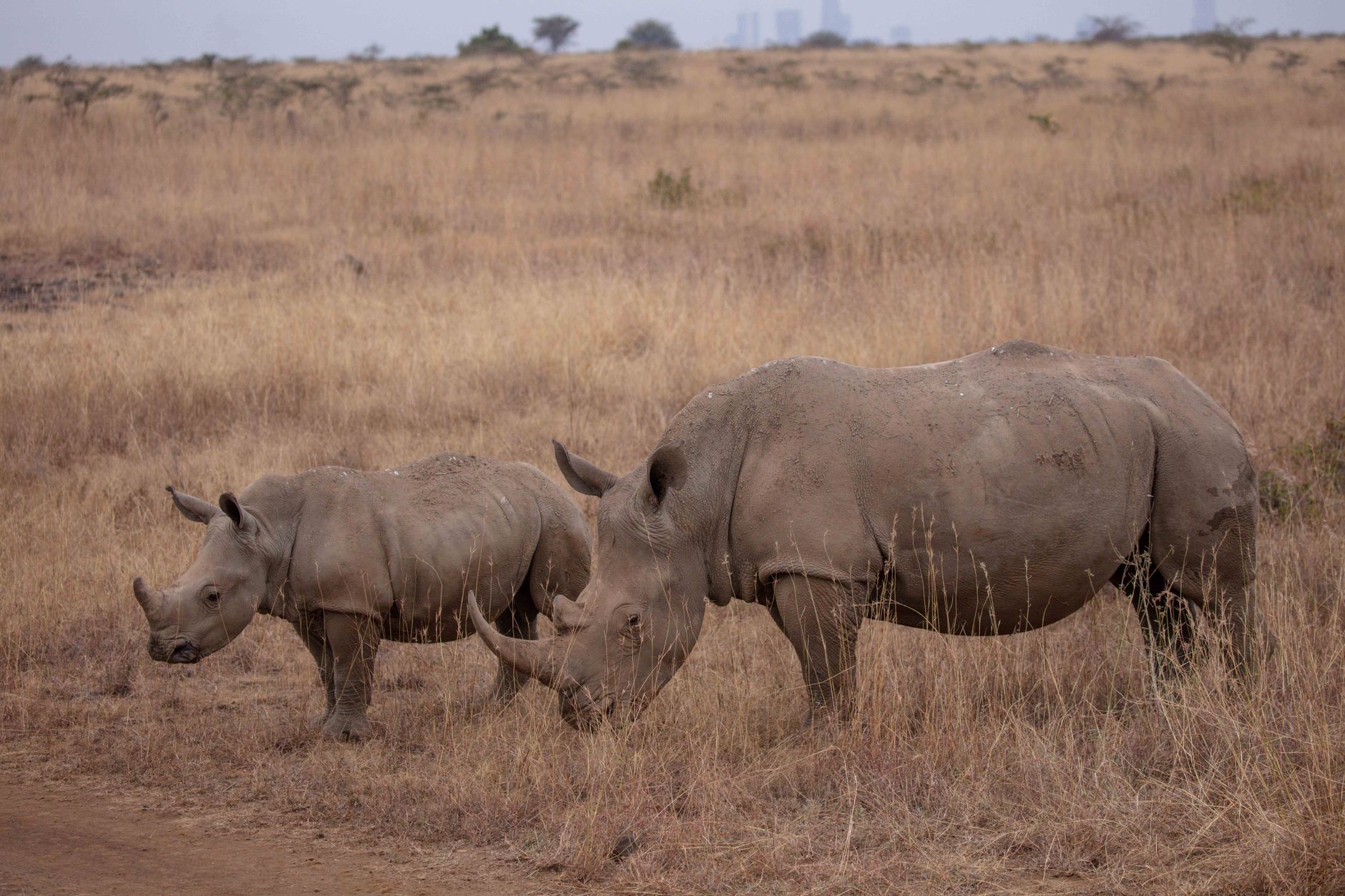
Knowing the difference between the three makes a visit more rewarding. Black rhino are browsers, so they eat leaves and branches and often hide in bushy country. Southern white rhino are grazers, so they feed on open grassland. The northern white rhino is a separate subspecies. The two females at Ol Pejeta are the only individuals left, which is why their care receives so much attention.
On a conservation-focused visit, guides explain how each site tracks individual rhino, monitors health, patrols against poaching, and manages habitat. At Lewa, the conservation story involves a long-running ranger program on a private reserve. At Solio, the focus is often on successful white rhino breeding. At Nairobi and Lake Nakuru, rhino have been brought back inside public national parks where visitors can see them without a long journey. For a separate Rift Valley route, see our Lake Nakuru guide.
When Is the Best Time for a Kenya Rhino Safari?
June to October and January to March generally offer easier rhino viewing because dry conditions reduce vegetation and concentrate wildlife near water. Green-season visits run from November to December and March to May. They bring fuller landscapes and strong photography, but thicker cover and occasional rain can make sightings less predictable.
The dry season is your safest bet. From June to October the grass lies flat, water sources shrink, and rhino come to more open areas. January to March is a second dry window. The wetter months of November, December, and March through May bring green cover and thunderstorms. That can make game drives beautiful but sightings slower. For photography, an overcast green-season morning often gives better light than a dusty dry-season day.
How Do You Plan Transport, Stays and Conservation Activities?
Ol Pejeta is reachable from Nairobi by roughly four hours on the road or by a short flight followed by a road transfer. Sera is more demanding, requiring a bush flight and extended stay, while multi-conservancy itineraries may use light aircraft between destinations. Confirm permits, walking requirements, age limits, conservation fees, and booking lead times before arrival.
Start with your base. Ol Pejeta lies near Nanyuki in Laikipia, and many travelers reach it by road from Nairobi in about four hours. Sera needs a flight into Samburu country, then a long drive. Lewa and Solio are also northern options, often combined with light aircraft hops. Nairobi National Park is an easy half-day add-on at the start or end of a trip. Lake Nakuru fits well into a Rift Valley loop.
Accommodation rules vary. Ol Pejeta has lodges and camps that can arrange a rhino encounter, but day visitor numbers are limited. Sera often asks for a two-night stay because the journey is long. Private conservancies like Lewa may require minimum stays during busy seasons.
Budget for more than a standard park fee. Rhino conservancies charge dedicated conservation fees, separate from the daily lodge rate. Ask for a written breakdown before booking. For a wider view of vehicle, guide, accommodation, and park costs, use this Kenya safari budget breakdown as your baseline.
Walking activities also have age and fitness limits. Confirm these before you pay. If you are planning a family trip, ask the operator whether children can walk on safari before you commit to a walking experience.
What Do Travellers Ask About Kenya Safari Rhino Conservation Visits?
The short answers below cover where to go, when to visit, and what your money supports. Most rhino visits work well with a two-night stay at a conservancy lodge. A day trip from Nairobi is possible at Ol Pejeta and Nairobi National Park. Use them to narrow the choice before you ask an operator for a detailed quote.
These are the questions people ask most when planning Kenya safari rhino conservation visits.
Where Can I See Rhinos in Kenya?
Ol Pejeta Conservancy is the most accessible choice for reliable rhino viewing, including black rhinos, southern white rhinos, and the last two northern white rhinos. Other important locations include Sera Rhino Sanctuary, Lewa Wildlife Conservancy, and Solio Ranch.
Can You Visit the Last Two Northern White Rhinos in Kenya?
Yes. Najin and Fatu live at Ol Pejeta Conservancy, where approved visitors can see them during a dedicated conservation experience. The visit is supervised and focuses on their protection, reproductive research, and the wider effort to prevent the subspecies from disappearing.
Where Can You Track Rhinos on Foot in Kenya?
Sera Rhino Sanctuary in northern Kenya is known for guided on-foot tracking of black rhinos. Ol Pejeta also offers guided rhino monitoring and tracking experiences, but access, availability, safety rules, and minimum-stay requirements vary by activity.
What Is the Best Time to See Rhinos in Kenya?
The dry seasons, especially June to October and January to March, usually provide the easiest viewing conditions. The wetter months can still be rewarding for green scenery and photography, although dense vegetation and rain may make animals harder to locate.
How Much Does a Rhino Conservation Safari in Kenya Cost?
A rhino conservation safari is normally priced as one daily rate that covers the lodge, vehicle, guide, meals, and conservancy fees. Lodge grade and season vary widely. The final cost can range from a few hundred US dollars per person per day to well over a thousand. Private conservancies almost always cost more than public national parks. Ask each operator for a written line-item breakdown, then compare like for like.
How Do Kenya Rhino Conservancies Support Conservation?
Conservancies use visitor income to help fund ranger protection, wildlife monitoring, veterinary support, habitat management, and community development. Community-led models such as Sera also connect tourism revenue with local stewardship and long-term protection of wildlife.
How Do You Compare Safari Operators for a Rhino-Focused Trip?
For a rhino-focused Kenya safari, the right operator matters as much as the right site. Look for one that knows the conservancy, accepts walking limits, and is frank about costs and booking lead times. The three marketplaces below let you compare itineraries side by side before you commit.
Start with FindMySafari, Valley Safaris, and Trunktrails Safaris to compare safari operators and browse packages. Ask each for a written itinerary that names the conservancy, the rhino activity, the walking rules, and every fee. The best plan tells you honestly what you will see, what your money supports, and what could go wrong.
Where Can You Find More Safari Planning Resources?
- Kenya national parks map from SafariPure
- Ol Pejeta Conservancy guide from Trunktrails Safaris
- Ol Pejeta and Sweetwaters safari package from Valley Safaris
- Big Five safari collection on FindMySafari