Planning a Kenya safari starts with a simple fork in the road. You can book a private vehicle and guide for your own party, or you can join a shared group safari and split the day with other travellers. The Kenya safari private guide versus group choice shapes your daily experiences, your budget, and the way you see wildlife. This guide compares both formats in practical terms, using conditions you will actually meet in Kenya’s parks and conservancies.
Kenya Safari Private Guide Versus Group: What Is the Real Difference?
A private Kenya safari gives your party exclusive use of the vehicle and guide, so you control departure times, routes, stops, and time at sightings. A group safari shares the vehicle with other travellers, usually follows a fixed itinerary, and divides costs across the passengers. Both can reach Kenya’s major parks, but only private travel gives consistent control over the day.
On a group trip, the driver-guide has to balance what six or eight people want. One passenger may want to leave a crowded leopard sighting; another may want to wait until the cat moves. On a private safari, your guide answers only to your party. That matters on game drives that run from first light until mid-morning. It also matters on long transfers between parks, where a private group can stop for photographs, stretch, or adjust the route. If you want to see how shared costs work on one popular route, read about Masai Mara shared safari costs.
How Much Does a Private or Group Kenya Safari Cost?
Group safaris commonly cost about $180 to $250 per person per day, while private trips often begin around $300 to $450 per person per day, depending on season, accommodation, and route. The gap narrows when four to six people share a private vehicle because the fixed guide and vehicle cost is divided among more travellers.
Here is an indicative look at the comparison:
| Factor | Group safari (shared vehicle) | Private safari (exclusive vehicle) |
|---|---|---|
| Cost per person per day | $180-$250 (indicative) | $300-$450 (indicative) |
| Passengers in vehicle | Often 6 to 8 travellers | Your party only |
| Daily schedule | Fixed and shared | You choose departures and stops |
| Time at sightings | Limited by group decisions | Controlled by your party |
| Conservancy access | Depends on itinerary and fees | Depends on operator and fees |
| Best fit | Solo travellers and tight budgets | Families, couples, photographers, small groups |
These ranges are before park entry fees, conservancy fees, and tips. They also change with camp standard, high season versus low season, and distance travelled. The Kenya safari cost per person is usually the main reason travellers consider a shared vehicle.
Private trips look expensive for two people because the guide and vehicle cost is split only two ways. Once you add a second couple, or parents travelling with teenage children, the cost per person often falls closer to a mid-range group package. For any group of four to six, the private option deserves a serious quote. You can compare the broader picture in our Kenya safari cost breakdown. For the Mara specifically, the fees you pay can change the total. See our breakdown of Masai Mara private conservancy fees before you compare.
Which Option Gives Better Wildlife Sightings?
A private safari does not guarantee more animals, but it usually gives better control over wildlife viewing. Your guide can wait longer for a leopard, change direction when elephants become active, or leave a crowded sighting without negotiating with strangers. Group safaris can deliver excellent sightings, especially with a skilled guide, but the group must share decisions and viewing angles.
Kenya’s wildlife is not on a schedule. A leopard may stay hidden for an hour and then appear for two minutes. A herd of elephants may cross the road just after your group decides to move for lunch. The private advantage is time and positioning. Your guide can park at the best angle, keep the engine off, and wait. Photographers benefit the most because you can ask the guide to move the vehicle or hold position without consulting anyone else.
On a group game drive, you may still get world-class sightings, especially in the Masai Mara during the migration. But you will compete for window space and may move on before the scene develops. For a deeper look at that reserve, read our Masai Mara safari guide.
Which Safari Is Better for Families, Couples and Solo Travellers?
Private safaris usually suit families, couples, photographers, and travellers with specific interests because the vehicle can match their pace and needs. Group safaris are often the better fit for solo travellers and budget-conscious couples who value a lower price and meeting other visitors. Families should also check age rules, luggage limits, and whether children can manage long shared game drives.
Travelling with children changes everything. A private safari lets you split a long drive into shorter segments, carry extra snacks, and skip a sighting that does not interest a seven-year-old. A group safari may have a strict departure time and limited patience for bathroom stops. Couples on a honeymoon often choose private to protect the calm of the bush. Solo travellers, by contrast, often find group safaris more affordable and more social. You share breakfast tables, sundowners, and game-drive stories with people from around the world. Group trips also remove the single supplement that many lodges charge for solo private travel.
How Do Flexibility, Photography and Daily Schedules Compare?
Private vehicles offer the strongest flexibility: you can choose earlier starts, extend a sighting, alter lunch stops, and position for photography without asking other passengers. Group vehicles normally operate to a shared timetable, so the guide balances different interests and may leave a sighting sooner. This matters most during predator encounters, golden-hour photography, and long travel days.
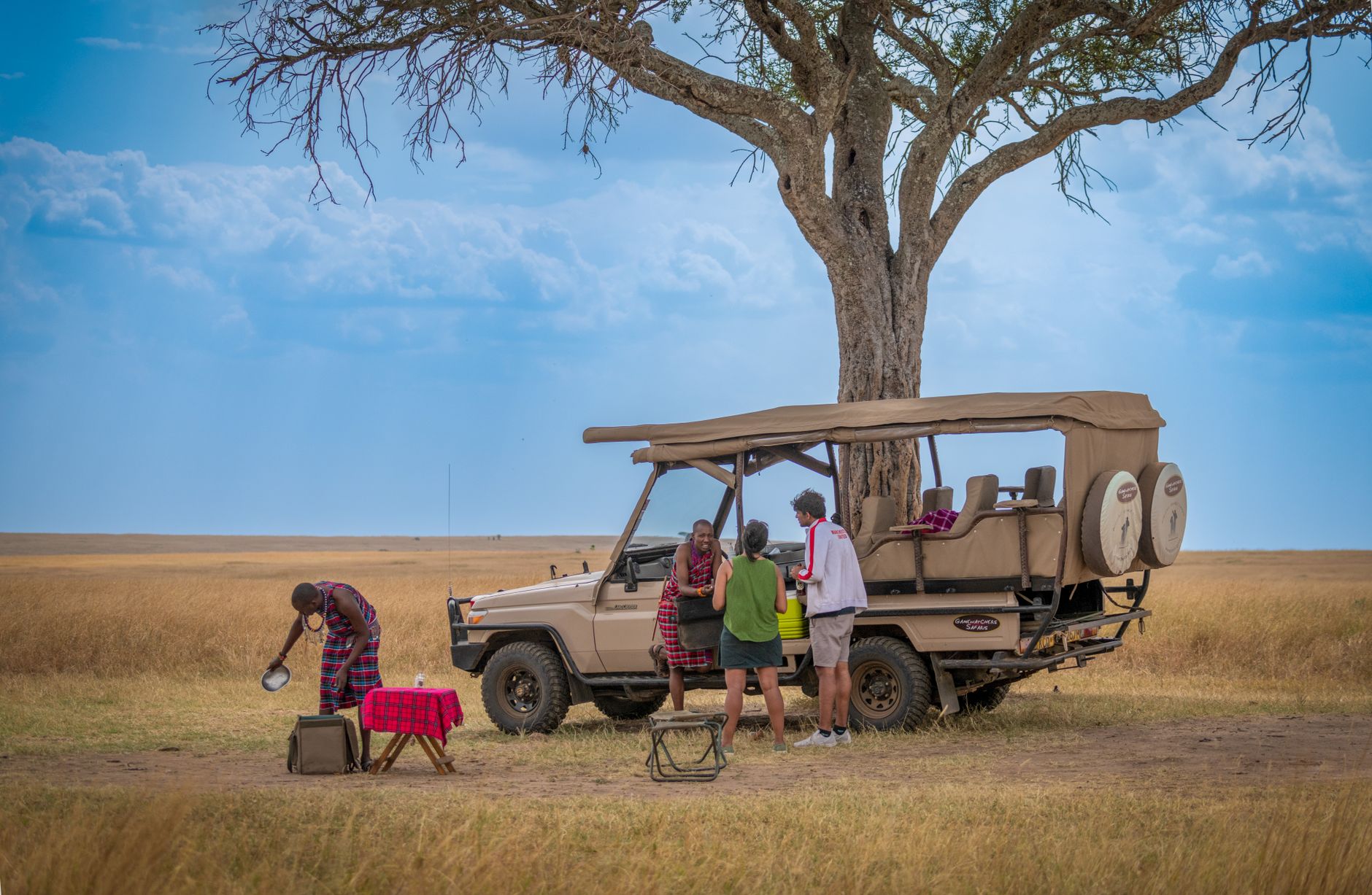
A private safari vehicle is worth more than the brand of 4×4. The key is the roof, the seats, and the way the guide drives. On a private trip you can leave camp before sunrise without waking anyone else. You can skip a visit to a cultural village if your group would rather follow a lion. You can also use the pop-up roof with more confidence because each passenger has a clear line of sight.
On a group vehicle, those choices belong to the majority. It is still possible to take fine photographs from a shared jeep, especially if you sit beside a window. But you cannot control when the vehicle stops or which side faces the action. For photographers, that control is often worth the extra money.
What Changes When You Visit Kenya’s Private Conservancies?
Private conservancies can add benefits that are separate from vehicle exclusivity, including fewer vehicles, walking safaris, night drives, and more flexible off-road rules where permitted. They also add conservancy fees and do not automatically make every safari private. Compare the total package carefully: a shared vehicle in a conservancy and a private vehicle in a national park provide different advantages.
Many first-time visitors assume a private conservancy and a private safari are the same. They are not. Conservancies like the Masai Mara private conservancies and Ol Pejeta give you access to land outside the main national reserve. That often means fewer crowds and different wildlife behaviour, because animals are less used to traffic. It can also allow activities that national parks restrict, such as guided walking and night drives.
But the vehicle inside the conservancy may still be shared with other guests. If exclusivity matters, ask the operator directly. Will you have the vehicle to yourselves? Does the overnight fee cover the conservancy, or is it extra? See our guide to Ol Pejeta Conservancy for one clear example.
When Is a Group Safari the Better Choice?
Choose a group safari when keeping the per-person price low matters more than controlling the itinerary, or when travelling alone and wanting a social experience. Shared trips can provide access to major parks and professional guiding at substantially lower cost. Confirm the maximum vehicle size, departure guarantees, luggage policy, accommodation standard, and what happens if the group has conflicting interests.
The Kenya safari private guide versus group question usually comes down to two things: money and control. A group safari in Kenya is not a budget compromise in quality. It can be a smart way to see the parks without paying a premium for flexibility. Many operators run set-departure group trips with experienced guides and solid lodges.
The best time to choose group is when you are flexible about your travel dates. Operators can confirm a departure once they have enough passengers. That reduces the risk of paying a private supplement and then travelling alone. It is also a good option if you are new to safari and prefer an itinerary that someone else has already planned. Check road conditions before you commit, because rain can change a plan. Our Kenya safari rainy-season road advice explains how weather affects access.
What Questions Do Travellers Ask About Private and Group Safaris?
What is the difference between a private and group safari in Kenya?
A private safari reserves the vehicle, guide, and schedule for your party. A group safari shares the vehicle and daily itinerary with other travellers, reducing the price but limiting control over departure times, routes, and time at sightings.
Is a private safari in Kenya worth the extra cost?
It can be worth the extra cost if flexibility, privacy, photography, family pacing, or extended wildlife viewing matters most. The premium is usually hardest to justify for two travellers and becomes more manageable when four to six people share the private vehicle.
How much does a group safari in Kenya cost per person?
A typical group safari is often around $180 to $250 per person per day before differences in accommodation, season, park fees, and route are considered. Budget packages can be lower, while luxury group trips with conservancy access can cost considerably more.
How many people are in a group safari vehicle?
Many Kenya group safaris use vehicles carrying roughly six to eight travellers, although capacity varies by operator and vehicle type. Ask whether the quoted maximum includes the driver-guide and whether every passenger has a window seat and access to a pop-up roof.
Are private conservancies included in group safaris?
Not necessarily. Conservancy access depends on the itinerary, accommodation, and operator, and it may involve a separate nightly fee. A group safari can visit a conservancy, but the vehicle may still be shared and the trip may not include every activity available to private guests.
Where Should You Compare Safari Operators?
Once you know which format fits, the next step is comparing packages. Visit FindMySafari, Valley Safaris, or Trunktrails Safaris to compare safari operators and browse packages. Each can show you private and group options across Kenya, including conservancy itineraries and seasonal departures. Compare operators based on vehicle capacity, guide experience, conservancy fees, and total price per person for your exact travel dates.
Where Can You Find More Safari Planning Resources?
- Kenya safari packages from SafariPure
- Kenya wildlife tours from Trunktrails Safaris
- Kenya tour packages from Valley Safaris
- Compare Kenya safari packages on FindMySafari