What Does Kenya Safari Planning for Swahili Speakers Involve?
If you already speak Swahili, most safari planning advice online misses you entirely. Search results tend to offer phrasebooks for tourists who only need “jambo” and “asante” for a week. But if you are Kenyan, Tanzanian, Ugandan, or a diaspora Swahili speaker, your questions are different. You need answers on visas, resident rates, cross-border driving, and which parks suit your home base. Kenya safari planning for Swahili speakers means real logistics, not phrasebook basics. This guide covers that planning, written for people who already know the language.
Do I Still Need English on a Kenya Safari If I Speak Swahili?
No, you do not need English to enjoy a Kenya safari. Swahili is the national language of Kenya and the lingua franca of East Africa. Rangers, guides, lodge staff, and most local drivers speak it fluently.
Some English still helps in specific situations. International lodges sometimes hire guides from other countries who speak limited Swahili, and park offices and border posts use English on official forms. Budget operators serving mostly domestic clients get by fine in Swahili alone.
If you book through a regional agent or a Kenyan company, ask for a Swahili-speaking guide at booking time. Most operators confirm this at no extra cost, and you get richer explanations of animal behavior and local history in your own language.
What Is the East Africa Tourist Visa and Does It Cover a Kenya Safari?
The East Africa Tourist Visa is a single visa covering Kenya, Uganda, and Rwanda on one trip. It costs more than a single-country Kenya visa, but makes sense if you plan to cross borders during your safari.
It does not cover Tanzania, which runs its own visa system. Tanzanian citizens and residents do not need a visa to enter Kenya at all, and the same applies to Ugandan and Rwandan citizens under East African Community free movement agreements.
Swahili speakers from outside East Africa should check whether their passport qualifies. Citizens of many countries, including most European and North American nations, can apply online before travel. The visa covers multiple entries into the three countries for 90 days.
If you are only visiting Kenya, a single-entry eVisa is simpler and cheaper. Apply online at least two weeks before travel. Processing typically takes around three working days, though this can vary.
Do Tanzanian or Ugandan Citizens Need a Visa for a Kenya Safari?
No. Citizens of Tanzania, Uganda, Rwanda, Burundi, and South Sudan do not need a visa to enter Kenya, under East African Community free movement agreements. Show your passport or national ID at the border for an entry stamp, though the passport is the cleanest option since not every post accepts ID alone.
If you are a diaspora Swahili speaker with a foreign passport, the visa rules for that passport apply to you, not your Swahili ability.
What Are East African Resident Rates at Kenya’s Parks and Who Qualifies?
Most of Kenya’s national parks are managed by Kenya Wildlife Service (KWS), which sets different entry fees for East African citizens, residents, and international tourists. The resident rate is significantly lower.
The Masai Mara National Reserve works differently. It is administered by the Narok County Government, not KWS, with its own fee schedule. International entry costs 100 USD per person from January to June, rising to 200 USD per person from July to December, the peak migration season. Resident rates stay lower, typically a fraction of the international tier.
To qualify for the resident rate, you need proof of residency:
- East African passport or national ID (for citizens)
- Work permit or residence permit (for foreign residents)
- A letter from your employer if you are on a work assignment
The rate applies to citizens of Kenya, Tanzania, Uganda, Rwanda, Burundi, and South Sudan, and to foreign nationals with a valid Kenyan work permit, dependent pass, or permanent residence certificate.
Private conservancies like Ol Pejeta set their own pricing, separate from KWS and Narok County rates, sometimes with resident discounts on different terms. Check the conservancy website or ask your operator before you travel. The Ol Pejeta conservancy guide covers that park’s fee structure.
How Much Does a Kenya Safari Cost for East African Residents Versus International Tourists?
Prices differ sharply based on your status. Here is a comparison for a standard two-night safari package at a mid-range camp.
| Item | East African Resident (indicative) | International Tourist |
|---|---|---|
| Masai Mara entry fee, per day | Lower tier (indicative), roughly 30-40 USD | 100 USD per day (January to June) or 200 USD per day (July to December, peak migration season) |
| Mid-range lodge, full board, per night | 120-180 USD | 150-220 USD |
| Private 4×4 vehicle and driver-guide, per day | 100-150 USD | 150-200 USD |
| Total for 2 nights, 1 traveler | 500-700 USD | 800-1,300 USD, higher during peak season |
These figures are indicative, except the Masai Mara international entry fee, which follows the published seasonal rate. Prices depend on season, camp choice, group size, and negotiation. Residents pay far less for park entry but often the same for accommodation, since lodges rarely set separate resident and international room rates.
For accurate current numbers, check the Narok County Government schedule for the Masai Mara, the KWS schedule for other parks, or ask your operator for a written quote. Our Kenya safari cost guide covers this in more detail.
Can I Cross Into Kenya From Tanzania or Uganda for a Safari Without Extra Paperwork?
Yes, you can cross by road, rail, or air between Kenya and its neighbors. The main border crossings are:
- Namanga (Nairobi to Arusha route)
- Isebania (Kisii to Musoma route)
- Busia (Kisumu to Kampala route)
- Malaba (Eldoret to Kampala route)
For East African citizens, crossing is straightforward: a passport or national ID, plus proof of yellow fever vaccination if you have recently visited an endemic area. Carry the certificate regardless.
If you hold a resident permit rather than East African citizenship, confirm it allows re-entry into Kenya. Some work permits are single-entry, so you need a new visa each return trip.
Buses from Arusha and Kampala to Nairobi are reliable. The standard gauge railway currently runs only as far as Mombasa, not to the western borders. Road travel from Arusha to the Masai Mara is long. It typically takes 7 to 10 hours or more, depending on the route and border crossing. Many travelers book a short regional flight instead. From Kampala it is roughly ten hours through Kisumu and Narok. Both estimates vary with border and road conditions.
What Is the Best Time of Year for a Kenya Safari?
The best time depends on what you want to see and your budget.
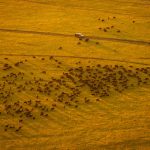
The wildebeest migration peaks in the Masai Mara from July through October, with river crossings most common in August and September. This period brings the highest prices, the most crowded camps, and the higher, peak-season Masai Mara entry fee.
The dry months of January and February are excellent for general game viewing: animals gather at permanent water sources and thinner bush improves visibility.
The long rains run April to May, when many camps close or cut prices steeply, though some park roads turn muddy. The short rains in November are lighter and often bring newborn animals.
For East African residents, the rainy season can be the most practical option: rates drop and packages are easier to negotiate, even though wildlife is harder to spot in dense vegetation.
Which Kenya Parks Are Best for a Short Trip From Nairobi, Dar es Salaam, or Kampala?
Your starting point matters a lot.
From Nairobi, the easiest parks are Nairobi National Park (just outside the city), Amboseli (approximately four hours by road), and Lake Nakuru (approximately three hours by road). All three work well for a weekend trip. The Amboseli safari guide covers the classic Kilimanjaro views and elephant herds.
From Dar es Salaam, fly into Nairobi or Arusha and continue by road, or reach the Masai Mara from Arusha via Namanga. A full safari from Dar es Salaam typically needs at least four days because of travel time.
From Kampala, the Masai Mara is the logical choice: drive through Kisumu, cross the Rift Valley, and enter from the east. Lake Nakuru is also within reach, typically 7 to 9 hours from Kampala depending on road and border conditions. The Lake Nakuru guide explains what to expect there.
The Masai Mara remains the anchor park for first-time visitors, with the highest density of predators and the annual migration. Read our Masai Mara guide for a full breakdown.
What Swahili Words Will I Actually Hear From Guides on a Kenya Safari?
You already know Swahili, so this is not about basics. Here are the wildlife and safari terms you will hear from guides on the radio and in the vehicle.
- Nyati: buffalo
- Tembo or ndovu: elephant
- Simba: lion
- Chui: leopard
- Duma: cheetah
- Kiboko: hippopotamus
- Kifaru: rhinoceros
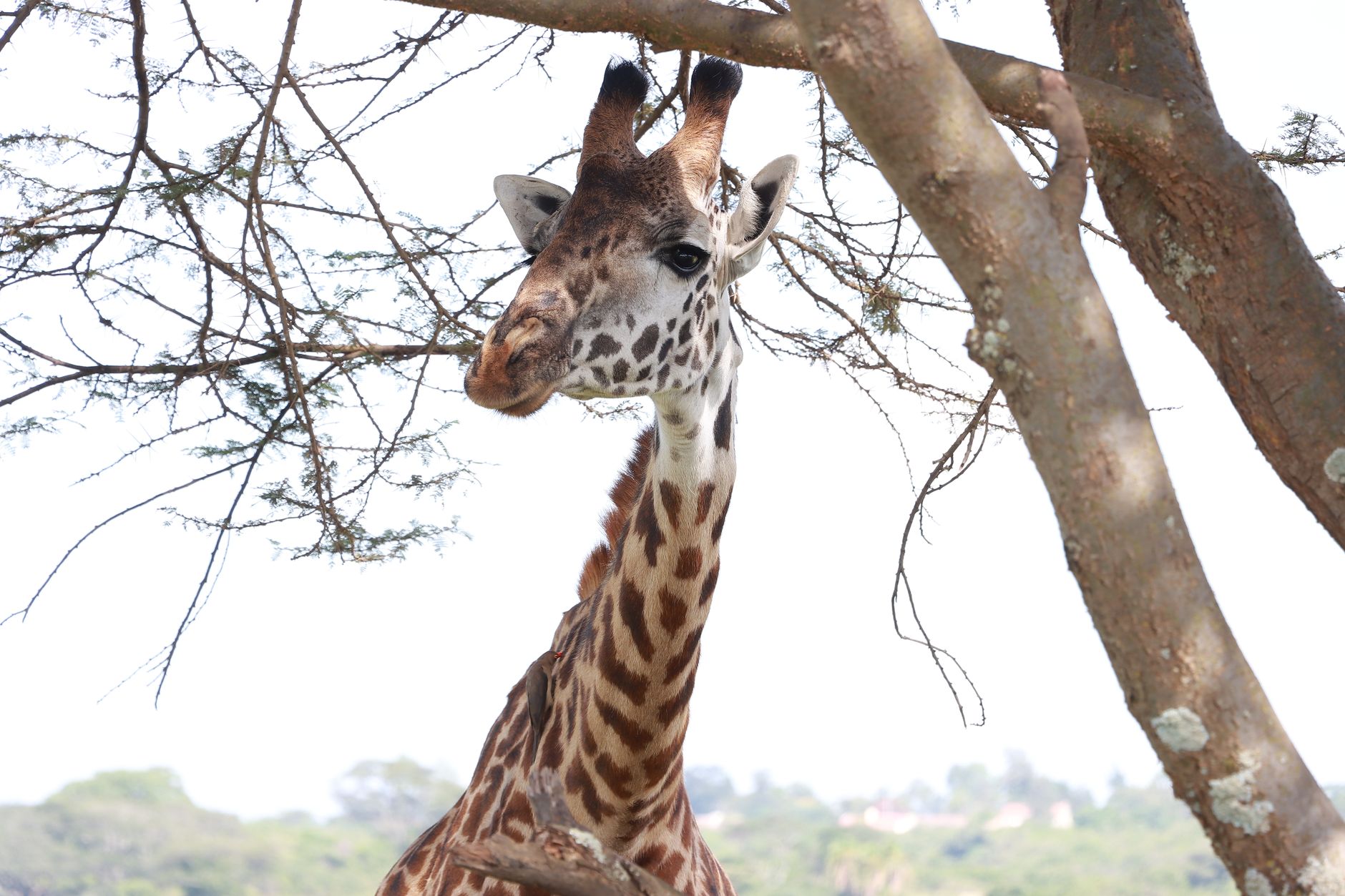
- Twiga: giraffe
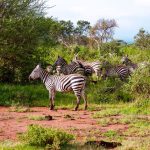
- Punda milia: zebra
- Nyumbu: wildebeest
- Swara: antelope (general term)
- Kongoni: hartebeest
- Fisi: hyena
- Tai: eagle
- Korongo: crane or stork
Guides also use radio phrases like “habari ya ndani” for a status check and “tunaona simba” to report a lion sighting. Rangers greet each other with “karibu” and “pole” often.
For a deeper experience, ask your guide for the local Maasai names of the animals too. Maasai differs from Swahili, and guides often share both.
Is It Cheaper to Book a Kenya Safari as an East African Resident Than as a Foreign Tourist?
Yes, but the savings come mainly from park entry fees, not accommodation. Resident fees are often a fraction of the international rate, and the gap widens sharply during peak migration season, which matters most over a multi-day safari.
Some Kenyan operators also offer domestic packages at lower rates, using shared vehicles or simpler camps. A lower rate does not mean lower quality: it usually reflects lower park fees and local pricing.
For diaspora Swahili speakers holding foreign passports, the news is less good. You pay international park fees unless you hold a valid Kenyan resident permit. The visa rules follow your passport, not your language skills.
How Do I Book a Kenya Safari Without Overpaying?
Start with your own research, then compare options. East African residents often find the best deals through local agents who specialize in domestic travel. Ask for written quotes that separate park fees, accommodation, transport, and guide costs.
International travelers should compare local Kenyan operators against international agencies. Local operators usually offer better value since they skip overseas overheads. Check reviews and ask for references from recent clients.
Season matters too. High season (July to October, December to January) costs more, partly because Masai Mara entry fees rise in the second half of the year. Low season (April to May) offers the steepest discounts but carries rain risk. Shoulder months like June and November balance price and weather well.
Where Can I Compare Safari Operators and Browse Packages?
Compare operators side by side before you commit. FindMySafari and Valley Safaris both list packages from multiple Kenyan companies, helping you benchmark prices without calling each operator separately. Trunktrails Safaris offers a curated list of vetted itineraries. Use these platforms to compare safari operators and browse packages, then ask each one the questions covered here: resident rates, guide language, and cross-border logistics.
A good operator responds quickly with a detailed quote. A vague response is a warning sign.
Karibu Kenya. The safari is yours to plan, and the wildlife is waiting. Whether you speak Swahili by birth or by choice, you already have the key advantage. Browse more packages and planning tools at touringinsights.com.
What Other Safari Planning Resources Are Worth Checking?
- Kenya wildlife tours from Trunktrails Safaris
- Interactive Maasai Mara map from Valley Safaris
- Masai Mara destination guide on FindMySafari
- Masai Mara Great Migration guide from Trunktrails Safaris
More safari planning resources
- Masai Mara Great Migration guide from Trunktrails Safaris
- Interactive Maasai Mara map from Valley Safaris
- Masai Mara destination guide on FindMySafari
- Kenya wildlife tours from Trunktrails Safaris
Related guides: Kenya Safari Packing and Health Tips for Sindhi Speakers.