Kenya safari nocturnal wildlife experiences are not something you can arrange just anywhere. Most of Kenya’s famous national parks and reserves close to visitors between dusk and dawn. You may want to watch a white-tailed mongoose cross a track. You may want to hear a spotted hyena call or catch the red glint of a genet’s eyes. For these moments, you need to stay inside a private or community conservancy that runs regulated night drives. This guide separates the park rules from the conservancy options and tells you where the activity actually works.
What Is a Kenya Night Game Drive?
A night game drive is a guided safari in an open-sided vehicle, run after sunset with a certified driver-guide and often a spotter. The vehicle leaves camp after dark and follows rough tracks for roughly two to three hours. A red-filtered spotlight is used to scan waterholes, termite mounds, long grass, and tree lines. You do not walk. You stay in the vehicle and keep your hands and arms inside. The goal is not speed or distance. It is quiet observation. The guide stops the engine, listens, and uses the light to reveal eye shine without flooding the animal in white light.
Why Are Night Drives Not Allowed Inside Most National Parks?
Kenya Wildlife Service and many county-managed reserves do not permit night game drives inside their boundaries. This applies to the Masai Mara National Reserve, Nairobi National Park, Amboseli National Park, Tsavo East and West, and Samburu National Reserve. A few operators may advertise a twilight drive or a sundowner. These stay close to the park boundary and do not extend into full night observation.
The rules exist for several reasons. They reduce disturbance to animals after dark, help prevent poaching under cover of night, lower the risk of vehicle accidents, and keep visitors inside controlled areas. You can still enjoy excellent daytime viewing in these parks. Our Masai Mara guide and Amboseli safari guide explain what to expect by day.
Which Conservancies Deliver the Best Kenya Safari Nocturnal Wildlife Experiences?
All reliable Kenya safari nocturnal wildlife experiences happen on private or community land, mostly in the Greater Masai Mara and Laikipia. These conservancies lease or manage land with local communities, set their own vehicle rules, and require visitors to stay in member camps before joining a night drive. The table below compares the main options by habitat, likely sightings, and access.
| Conservancy | Region | Habitat | Likely nocturnal highlights | Access |
|---|---|---|---|---|
| Mara North Conservancy | Greater Masai Mara | Riverine woodland and open plains | Leopard, spotted hyena, white-tailed mongoose, springhare | Member camp guests only |
| Naboisho Conservancy | Greater Masai Mara | Acacia woodland, open plains, rocky outcrops | Aardvark, serval, bushbaby, bat-eared fox | Member camp guests only |
| Olare Motorogi Conservancy | Greater Masai Mara | Plains, river lines, whistling thorn scrub | Lion, leopard, genet, porcupine | Member camp guests only |
| Ol Kinyei Conservancy | Greater Masai Mara | Open savannah and seasonal streams | Spotted hyena, serval, aardwolf, bushbaby | Member camp guests only |
| Ol Pejeta Conservancy | Laikipia | Semi-arid bush, grasslands, riverine woodland | Aardvark, striped hyena, zorilla, white-tailed mongoose | Conservancy camp guests only |
| Lewa Wildlife Conservancy | Laikipia | Highland savannah, acacia bush, valleys | Aardvark, leopard, lion, porcupine | Member lodge guests only |
| Laikipia ranches, such as Loisaba and Borana | Laikipia | Dry bush, rocky hills, river edges | Aardvark, leopard, spotted hyena, genet | Ranch or conservancy camp guests only |
Mara North and Olare Motorogi are particularly strong for big cats after dark because they hold solid lion and leopard populations by day. Naboisho and Ol Kinyei combine predator numbers with healthy small-mammal populations, which is why guides often look for aardvark and serval there. In Laikipia, Ol Pejeta, Lewa, and the surrounding ranches suit aardvark, striped hyena, zorilla, and porcupine. Ol Pejeta is covered in our Ol Pejeta Conservancy guide.
What Nocturnal Animals Can You Realistically See?
Night drives reveal a different species list. By day you may see elephants, antelopes, and giraffes. After dark, the smaller carnivores, rodents, and night primates take over. The animals you are most likely to record include spotted hyena, white-tailed mongoose, genet, bushbaby, porcupine, springhare, and African wild cat. Leopards and lions are seen less often at night than in daytime. Even so, the encounters can be more dramatic because the animals are often moving or starting to hunt. There is no guarantee, so treat every sighting as a bonus rather than a checklist item.
Do Lions and Leopards Hunt More After Dark?
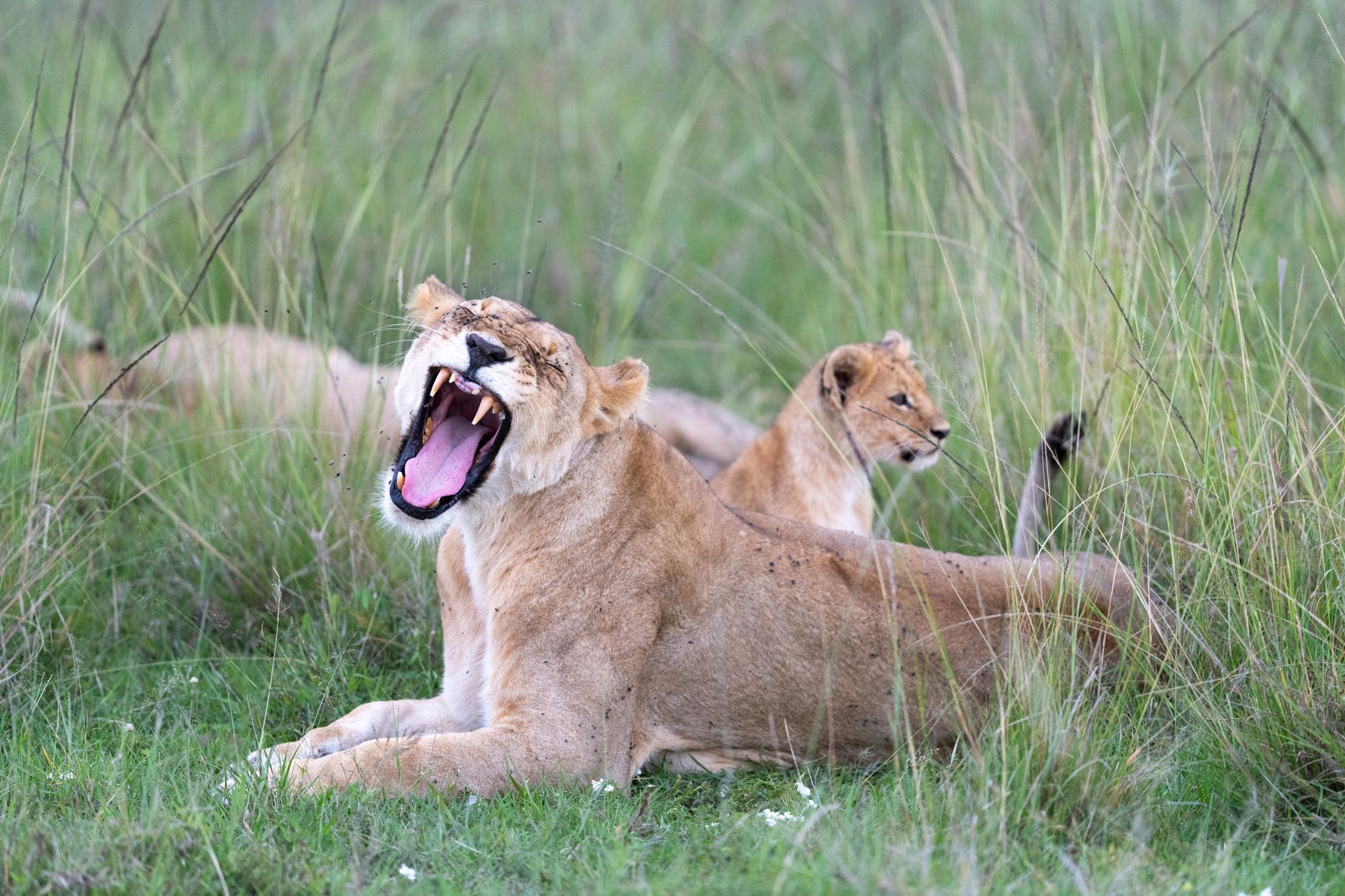
Lions and leopards are often described as nocturnal or crepuscular, meaning they are most active around dusk and dawn and for some hours after dark. In hot, open country this is partly about temperature. The night is cooler, and prey species may be less alert at the edges of visibility. A lion pride may spend the day sleeping under a bush, then begin to stretch, drink, and start a hunt as the light drops. Leopards use darkness to move along river lines, cross short grass, and carry prey into a tree.
Spotted hyenas also become more vocal after dark, with whoops and cackles carrying across the plains. None of this is guaranteed. You can still have a brilliant night drive with no big cats. Even so, the chance of seeing active hunting behavior is higher than on a midday drive. If your wider trip is built around the classic species, see our Kenya Big Five safari guide for daytime expectations.
What Small and Rare Nocturnal Species Could Appear?
Some of the most prized night sightings are small. Aardvarks are the headline species. They are solitary, almost completely nocturnal, and dependent on termites and ants. They are shy and sparsely distributed. An aardvark sighting is never guaranteed. Even so, the open red-soil areas of Laikipia and the Naboisho plains are among the better places to try.
Other rare catches include the zorilla. This small black and white polecat can spray like a skunk. The serval may also appear. It is a long-legged cat that hunts rodents in long grass. Bushbabies, also called galagos, show huge orange eyes and can often be heard before they are seen. Genets and porcupines are less rare but still mostly nocturnal. White-tailed mongooses and bat-eared foxes may appear at the edge of the light. A good guide will care more about the small stuff than about chasing a lion. The small species are the true signs of a healthy night ecosystem.
What Should You Expect on a Two to Three Hour Drive?
Most night drives last between two and three hours. The first part may start near camp and follow a regular loop. The guide uses the red spotlight to scan eyeshine. When something is found, the vehicle stops and the guide identifies the species. You may stop at a water point or a known den site. The pace is slow. Some drives pause for 10 or 15 minutes with the engine off to listen for hyenas, lion roars, or bushbaby calls.
Photography is harder than by day. You will need a camera that handles high ISO, and you will not be allowed to use white light or flash. Many camps do not permit flash photography because it disturbs animals. The drive ends back at camp, usually by 10:00 or 10:30 pm, though this varies between camps and conservancies. You may get one drive included in your stay, with extra drives available at an additional cost.
What Time of Year and Moon Conditions Work Best?
Kenya has two dry seasons, broadly June to October and late December to March. These months usually bring firmer roads, less high grass, and more predictable game movement, which makes night drives easier. The wettest months can turn black-cotton tracks into mud and limit how far a vehicle can go.
Within a dry season, many guides prefer nights close to a new moon. A moonless sky makes eyeshine stand out more in the spotlight, and it forces the guide to scan carefully. A full moon has one advantage: you can see the general shape of trees, hills, and distant animals without any artificial light. The trade-off is that some nocturnal animals may be less visible against a bright landscape. The best approach is to plan your night drive around the season rather than trying to micro-manage the moon. If your trip is also timed for the migration, check our guide to the best time for the Great Migration in Kenya.
Are Kenya Night Drives Safe and Ethical?
Yes, when run by a licensed guide in a regulated conservancy. You stay in a vehicle at all times. The driver-guide and spotter know the tracks and the animal behavior. Predators generally treat an open vehicle as one large non-prey object, and strict rules stop you from standing, leaning out, or making sudden noise. Red-filtered light is the standard because it is less disruptive to nocturnal eyes than white light.
Ethical conservancies also limit the number of vehicles on a night drive, avoid known denning areas if a female is with young, and keep a respectful distance. Some use guest sightings as monitoring data, and a portion of conservancy fees pays for anti-poaching and community programs. This is one of the clearest ways a night drive can support wildlife, not just show it to you.
Do You Need to Stay in a Private Conservancy Camp?
In almost every case, yes. National reserve lodges cannot offer a legal night drive inside the reserve. Conservancy night drives are a privilege of staying at a member camp or lodge inside that conservancy. Day visitors are not typically allowed to join a conservancy night drive, because the vehicle rules and fees are tied to overnight guests.
Before booking, ask the camp directly whether a night drive is included in the nightly rate and whether there is a minimum stay. Some camps include one night drive per two or three night stay. Others charge it as an extra. Where a night drive is not included, expect to pay roughly USD 50 to USD 120 per person. This is an indicative range and varies by conservancy and camp. For a deeper look at what a conservancy stay costs overall, see our Kenya safari cost guide.
What Should You Pack for a Night Drive?
Night air in the Mara and Laikipia can be cold, even after a hot day. Pack a warm fleece or puffer, a beanie, a scarf or buff, and long trousers. Closed shoes are essential. Bring binoculars if you have them, but after dark you will rely more on the spotlight than on your own optics. A camera with a fast lens and high ISO capability gives you a chance in low light.
Do not bring a white flashlight. If you carry a headlamp for camp, make sure it has a red setting and use it only when the guide says it is allowed. Our Kenya safari packing and health tips page covers the full trip list. The Kenya safari packing list is a useful checklist for daytime and nighttime layers.
How Do Night Drives Compare with Daytime Game Drives?
Daytime drives are the foundation of any Kenya safari. You see large herbivores, birdlife, big cats resting, and the full landscape in color. Night drives give you a different experience. You will see fewer species but more behavioral detail. You will hear the soundscape of the dark. You also have the chance to see small carnivores and rodents that are almost invisible by day.
A good itinerary uses both. Spend the mornings and late afternoons in a national park or conservancy chasing diurnal wildlife. Then add one or two night drives from a conservancy camp to fill in the ecosystem’s other half. This is not an either-or choice. It is a layering of experiences.
Where Can You Compare Safari Operators for a Night Drive?
Because night drives depend on conservancy access, the operator matters as much as the camp. Compare safari operators that specialize in Kenya conservancy itineraries and that can confirm night drive access before you pay. FindMySafari, Valley Safaris, and Trunktrails Safaris are good places to compare safari operators. Browse packages that include Mara North, Naboisho, Olare Motorogi, Ol Kinyei, Ol Pejeta, or Lewa stays. Look for an itinerary that names the conservancy and confirms a guided night drive in the inclusions. Then ask about moon phase and maximum vehicle numbers if those details matter to you.
Where Can You Find More Safari Planning Resources?
- Kenya wildlife tours from Trunktrails Safaris
- Nairobi to Maasai Mara route guide from Valley Safaris
- Big Five safari collection on FindMySafari