Choosing a Kenya safari honeymoon tented camp is less about thread count and more about privacy, pace, and how close you want to be to the wildlife outside your tent flap. A good Masai Mara honeymoon safari can mean a wide, busy reserve with dozens of vehicles at a leopard sighting, or a quiet private conservancy where you might not see another car all afternoon. Both are valid. The difference matters for a honeymoon, when most couples want fewer crowds and more moments that feel like their own. This guide compares seven named camps, explains what conservancy rules actually change about your trip, and lays out honest costs and seasonal trade-offs so you can choose with clear eyes rather than just a glossy brochure.
What Is the Best Kenya Safari Honeymoon Tented Camp?
The best Kenya safari honeymoon tented camp depends on the experience you want. Mara Plains or Elephant Pepper suit couples after refined privacy, Cottar’s 1920s Camp adds historic romance, Sala’s Camp pairs a private plunge pool with migration access, and Lewa Safari Camp offers conservation focused wildlife on a different landscape. Choose the camp before you choose extras like a bush dinner.
These seven camps come up again and again in Mara honeymoon planning, and each has a distinct character.
| Camp | Area | Camp Size | Honeymoon Highlight | Indicative Price Tier* |
|---|---|---|---|---|
| Mara Plains Camp | Mara North Conservancy | Very small | Refined interiors, dedicated guiding | $$$$ |
| Elephant Pepper Camp | Mara North Conservancy | Very small | Understated luxury, strong walking guides | $$$ |
| Cottar’s 1920s Camp | Cottar’s Conservancy | Small | Vintage safari style on a private conservancy | $$$$ |
| Sala’s Camp | Mara ecosystem | Small | Private plunge pool tents, migration access | $$$ |
| Lewa Safari Camp | Lewa Wildlife Conservancy | Small | Rhino conservation, Laikipia scenery | $$ |
| Naboisho Camp | Naboisho Conservancy | Small | Community conservation model | $$ |
| Rekero Camp | Mara ecosystem | Small | Front row access to river crossings in season | $$ |
*Price tiers are indicative only: $$ roughly suggests US$500 to US$800 per person a night, $$$ roughly US$800 to US$1,100, and $$$$ roughly US$1,100 and up. Rates shift by season and change year to year, so confirm current pricing before booking, and see the checks before booking a Kenya safari if you are weighing a direct booking against an agent.
Lewa sits well outside the Mara ecosystem in Laikipia, which is worth noting if you want rhino tracking and a change of scenery rather than a second Mara style trip. It pairs naturally with a stop at the Ol Pejeta Conservancy guide if you are curious about whether Ol Pejeta is worth visiting as a rhino sanctuary alongside Lewa.
Which Masai Mara Conservancy Camps Suit Honeymooners?
Private conservancies around the Masai Mara usually offer a quieter honeymoon than the main reserve, with fewer vehicles, guided walks, night drives, and more flexible time in the bush. Mara North, Olare Motorogi, and the conservancy surrounding Cottar’s are strong choices, but reserve access, conservancy fees, and seasonal wildlife distribution should be checked before booking.
A Mara conservancy typically caps the number of camps and vehicles allowed inside its boundaries, which is the real reason conservancy stays feel more private than reserve stays. It is not just marketing language. Off road driving, night drives, and guided walks are usually permitted in conservancies and restricted or banned inside the main Masai Mara guide reserve itself. If a walk at dawn or a sundowner away from other vehicles matters to your idea of romance, that single rule can matter more than any tent upgrade. Conservancy fees are usually charged per person per night in addition to camp rates, so ask your camp to confirm the total before you compare prices across properties.
What Does a Honeymoon Tented Camp Include?
A honeymoon tented camp normally includes an en suite canvas tent, meals, scheduled game drives, camp staff, and transfers from the nearest airstrip, though inclusions vary by property. Private vehicles, reserve or conservancy fees, drinks, laundry, bush meals, spa treatments, and balloon flights may cost extra, so request a written inclusions list rather than relying on the word luxury.
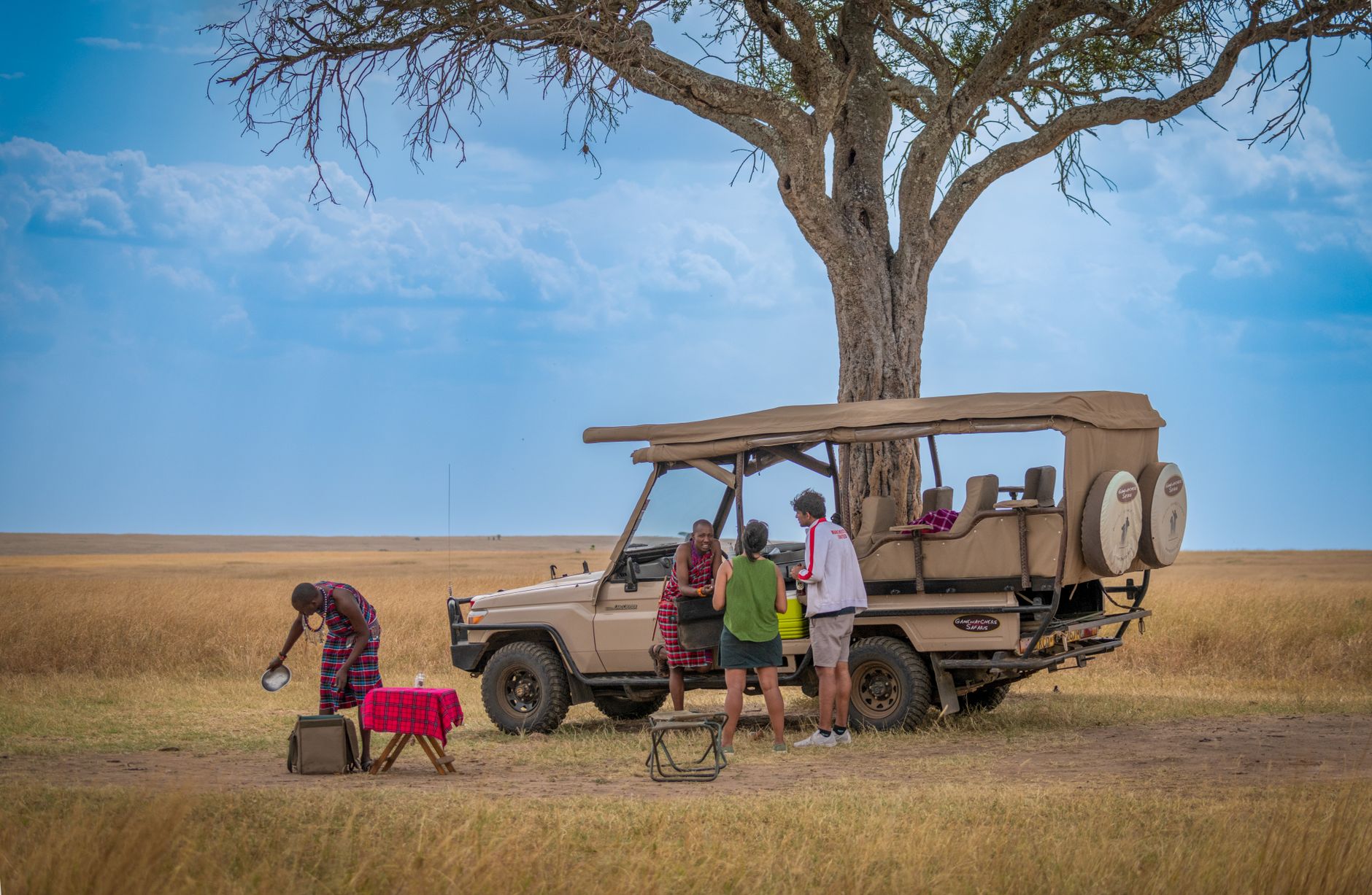
Ask specifically what “private” means at each camp. Some properties include a private vehicle and guide in the nightly rate for honeymooners, others charge separately, and a few only offer it as a paid upgrade on request. The same goes for a bush breakfast or candlelit dinner away from the main dining tent, which is often the single most photographed honeymoon moment but is rarely automatic. It is also worth checking practical details before you pack, including how to charge cameras on safari and what to bring using a proper Kenya safari packing list, since tented camps run on generator or solar power on a schedule rather than round the clock mains electricity.
What Is the Best Time for a Kenya Honeymoon Safari?
The best time for a Kenya safari honeymoon is usually a dry period, roughly June to October or January to February, when roads are easier and animals gather near reliable water. July to October can bring migration excitement but higher prices and more vehicles. The green seasons offer lower rates, dramatic scenery, and strong resident wildlife with occasional rain.
Outside the July to October migration window, the Mara conservancies still hold healthy resident populations of lion, elephant, and plains game, since much of that wildlife never leaves the ecosystem. What changes is the concentration and the drama, not the presence of animals altogether. Couples chasing the best time to visit Masai Mara for river crossings should expect the busiest, priciest weeks of the year, while a November or April honeymoon can mean private sightings, lush green backdrops for photos, and noticeably lower camp rates, with the trade off of shorter, more frequent rain showers.
How Much Does a Kenya Honeymoon Safari Cost?
Published luxury honeymoon estimates range from about US$7,500 per person for a twelve day low season trip to US$12,000 or more in high season, while individual tented camp rates vary by location and inclusions. Your final price depends on camp category, number of nights, domestic flights, private vehicles, park fees, season, and whether beach time or special experiences are added.
Those figures cover a full itinerary, not a single camp’s nightly rate, which is why the price tiers in the table above matter when you are comparing specific properties. A realistic honeymoon safari budget should separate four costs: camp accommodation, domestic flights between airstrips, park or conservancy fees, and any add on experiences like a hot air balloon flight or private vehicle upgrade. For a fuller breakdown of what each of these typically costs, our Kenya safari cost guide walks through current fee ranges by park and by travel style, which is useful groundwork before you request quotes from specific camps.
Tented Camp or Lodge: Which Suits a Kenya Honeymoon?
Choose a tented camp for a closer to nature honeymoon, with canvas walls, small guest numbers, verandas, and wilderness sounds at night. Choose a lodge for more permanent architecture and often broader facilities. The distinction is not simply about comfort. A high end tented camp can be more luxurious than a lodge, while a mobile camp may trade amenities for location and flexibility.
Lodges tend to sit in fixed locations with solid walls, larger dining areas, and sometimes a pool and spa built into the main building. Tented camps range from fixed luxury properties with permanent platforms and en suite bathrooms to true mobile camps that relocate with the wildlife, particularly during the migration. For honeymooners weighing atmosphere against amenities, it helps to remember that canvas does not mean basic. Several of the camps in the table above charge more per night than many lodges, because the experience they sell is intimacy and access, not square footage.
How Do You Choose a Private, Romantic Safari Camp?
Prioritize camp size, tent spacing, vehicle arrangements, location, and activities before selecting romantic extras. A small camp with private dining, a dedicated vehicle, walking access, and a quiet conservancy setting may feel more intimate than a larger property advertising a honeymoon suite. Confirm whether privacy is guaranteed, shared, or only available at an additional charge.
A private safari vehicle is worth asking about directly, since sharing a game drive vehicle with other guests changes the pace of your morning and limits how long you can linger at a sighting. The right Kenya safari honeymoon tented camp for you is the one where the things you actually care about, whether that is a plunge pool, a walking guide, or proximity to the migration, are included rather than upsold. Cross check camp size, conservancy fees, and vehicle policy directly with the camp or your booking source rather than assuming from a website’s photography alone.
Frequently Asked Questions
What is the best tented camp in Kenya for a honeymoon?
There is no single best camp for every couple. Mara Plains and Elephant Pepper suit couples seeking refined, intimate accommodation, Cottar’s 1920s Camp adds historic character, and Lewa Safari Camp is better for couples who value conservation and a different wildlife setting.
How much does a Kenya safari honeymoon cost?
Published luxury honeymoon estimates range from about US$7,500 per person for a twelve day low season trip to US$12,000 or more in high season. A shorter or mid range itinerary can cost less, while private vehicles, premium camps, domestic flights, park fees, and beach extensions increase the total.
What is the best time of year for a Kenya honeymoon safari?
June to October and January to February are popular because dry conditions generally improve road access and wildlife viewing. July to October may offer migration sightings but usually brings higher prices and more demand, while green season travel can provide lower rates and lush scenery.
Are tented camps in Kenya safe?
Established tented camps use trained staff, controlled camp routines, guides, and escorted movement after dark. Guests should follow instructions, avoid walking alone at night, and ask how the camp handles wildlife near tents. Canvas accommodation is built for safari conditions, but that is no reason to skip camp safety rules.
What is the difference between a safari lodge and a tented camp?
A lodge is generally built from permanent materials, while a tented camp uses canvas accommodation that creates a more direct connection with the surrounding wilderness. Both can offer en suite rooms, excellent food, private decks, and luxury. The practical difference is usually atmosphere, camp size, location, and activities rather than comfort alone.
Where Can You Compare Kenya Honeymoon Safari Packages?
You can compare current camps, packages, and pricing through FindMySafari, Valley Safaris, or Trunktrails Safaris once you know which camps and conservancies suit your honeymoon. Browse packages and compare safari operators side by side, and use touringinsights.com to keep researching parks, seasons, and planning details before you commit to dates.
Where Can You Find More Kenya Safari Planning Resources?
- Kenya national parks map from SafariPure
- Kenya wildlife tours from Trunktrails Safaris
- Best time to visit Kenya month-by-month map from Valley Safaris
- Honeymoon safari collection on FindMySafari