What Are the 7 Key Steps in This Kenya Safari Guide for Polish Speakers?
This kenya safari guide for polish speakers breaks a first Kenya trip into seven steps: entry requirements, flight routing, language support, timing, budget in PLN, trip length, and park selection. Working through them in order avoids the two most common planning mistakes, a late eTA application and a safari that does not match what the traveler actually wants to see.
Poland has no direct flight to Nairobi. The zloty is not something Kenyan lodges accept. English stays the working safari language even where Polish-speaking guiding can be arranged. This guide walks through the entry rules, the flight routes, and honest cost ranges in PLN. It also covers which parks fit your goals, so you can plan from facts rather than forum guesswork.
What Should a Kenya Safari Guide for Polish Speakers Cover?
A useful planning guide for Polish travelers needs seven things in order. These are entry requirements, flight routing, language support, timing, budget in PLN, trip length, and park selection. Skip any one of these and the plan usually falls apart somewhere between booking and boarding.
Most Polish-language travel sites cover the paperwork well but go thin on what actually happens once you land. They rarely explain how conservancies differ from national parks, or when the “best” season is really just the busiest one. This guide leans into those gaps. It sits alongside a broader step-by-step Kenya safari planning guide that covers the same ground for other European travelers. That guide holds up regardless of which language you book in.
Do Polish Travelers Need a Visa or eTA for Kenya?
Polish passport holders need Kenya’s electronic Travel Authorisation, or eTA, rather than a traditional visa. Apply online through the official Kenyan system at least two weeks before travel. Use a passport valid for at least six months, and confirm current fees and document requirements before you submit.
The Kenya eTA for Polish citizens replaced the old visa-on-arrival system. It is tied to your passport rather than a sticker or stamp. Apply directly through the official government portal only. Third-party sites that charge extra “processing fees” are common and not worth the risk. Print a copy of your approval and keep it with your travel documents. Border staff sometimes ask to see it alongside your passport.
How Do You Fly From Poland to Kenya?
There is generally no direct Warsaw-Nairobi flight, so plan for one connection through a hub such as Doha, Dubai, or Istanbul. Total travel commonly runs about 11 to 14 hours including the layover, though this varies by carrier and schedule.
A Kenya safari from Warsaw usually means an evening departure and an early morning arrival into Nairobi’s Jomo Kenyatta International Airport. Compare arrival times closely. Some connections land you in Nairobi late at night. That makes an overnight stay near the airport the sensible option, before an early flight or road transfer to your first camp the next day. Trying to fly straight into the bush on the same day you land in Kenya usually means missing your first afternoon game drive. It can even mean missing a connecting light aircraft entirely.
Can You Book a Polish-Speaking Safari Guide in Kenya?
Polish-speaking guides exist but are far less common than English-speaking ones, so availability has to be confirmed rather than assumed. Ask the operator whether a named Polish-speaking guide is booked for your specific dates. Also ask what the backup plan is if that guide becomes unavailable, and whether they know your chosen parks well.
A Polish-speaking safari guide in Kenya is typically a freelance specialist attached to a handful of operators. It is not a standard feature of every camp. If Polish-language guiding matters to you, raise it early in the booking process, not as an afterthought once dates are locked. Most camps run comfortably in English. Many Polish travelers find that a good English-speaking guide with strong local knowledge matters more than shared language. This is especially true for reading animal behavior in real time.
When Is the Best Time for Polish Travelers to Go on Safari?
July through October suits first-time visitors who want dry conditions and a real chance of Great Migration sightings in the Masai Mara. It is also the busiest and most expensive stretch of the year. January and February offer strong wildlife viewing with noticeably fewer vehicles, while the rainy seasons bring greener scenery and lower rates.
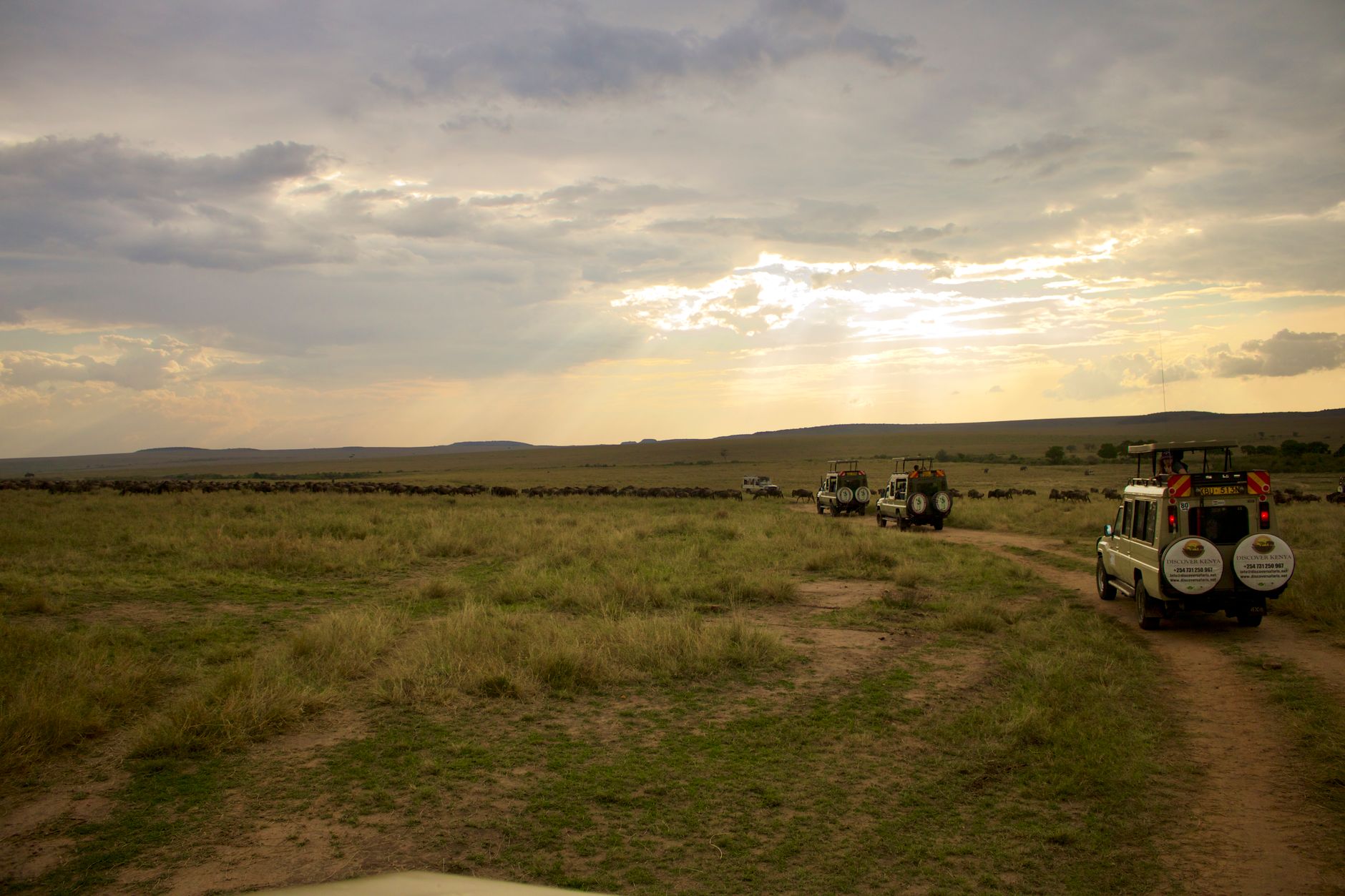
Deciding on the best time for a Kenya safari means weighing crowds against cost. During peak migration months, popular river crossing points in the Mara can draw a cluster of vehicles at once. Some travelers find this distracting. The quieter shoulder months trade a lower chance of a dramatic river crossing for calmer game drives and easier access to conservancy areas. If you want the fuller picture on this trade-off, the dedicated guide to the best time to visit the Masai Mara is worth reading. It breaks down each month in more detail.
How Much Does a Kenya Safari Cost in PLN?
A mid-range Kenya safari commonly runs about 1,200 to 2,000 PLN per person per night before international flights. The exact figure depends on accommodation, park fees, transport, and season. A seven to eight day trip can land somewhere around 8,000 to 14,000 PLN per person for mid-range arrangements. Private conservancy stays and luxury camps cost noticeably more.
These figures are indicative ranges, not fixed prices, since park fees, exchange rates, and camp rates shift throughout the year. The table below gives a rough sense of how tiers compare. For a fuller Kenya safari cost breakdown with more detail on what drives the price up or down, read it before you request quotes from an operator.
| Tier | PLN per person, per night (indicative) | USD per person, per night (indicative) | What it typically includes |
|---|---|---|---|
| Budget | 400 to 800 | 100 to 200 | Shared camps, group game drives, simple tented rooms |
| Mid-range | 1,200 to 2,000 | 300 to 500 | Ensuite tented camps, most meals, scheduled game drives |
| Luxury or private conservancy | 2,800 to 5,000+ | 700 to 1,200+ | Private conservancies, private vehicle, premium lodges |
International flights, tips, and travel insurance sit outside these ranges. Always confirm current rates directly with an operator before budgeting in detail.
How Many Days Do You Need for a Kenya Safari?
Plan on at least seven days on the ground for a balanced first safari. That gives you time for Nairobi, two wildlife areas, and several full game-drive days without feeling rushed. A classic Masai Mara and Amboseli itinerary pairs three nights in the Mara with two nights in Amboseli. Eight to ten days allows a slower pace or room to add another park.
Shorter trips of four or five days are possible but often mean one park only. That leaves less flexibility if weather or wildlife movement does not cooperate on a given drive. If you are torn between the two headline parks, the comparison of Masai Mara versus Amboseli lays out what each one does better. It covers everything from predator density to elephant herds against a mountain backdrop.
Which Kenya Parks and Conservancies Should You Choose?
Choose the Masai Mara for big cats and, in season, migration herds. Amboseli suits elephants and Kilimanjaro views. Lake Nakuru is a compact Rift Valley stop, and Tsavo offers wider landscapes and red-dust elephants. For quieter drives near the Mara, Naboisho and Mara North conservancies are worth considering. Visitor numbers there are capped, and vehicle rules are usually built into camp rates.
The full Masai Mara guide and the Amboseli safari guide both go deeper on logistics and wildlife patterns in each park. Conservancies work differently from national parks in ways that matter for planning. This includes how fees are structured and how many vehicles are allowed at a sighting. It is worth reading how Kenya safari conservancies work before you commit to a conservancy-based itinerary. The trade-offs between cost, crowding, and access are not always obvious from a brochure.
For travelers who want a broader overview before narrowing down a park, the guide to the Big Five in Kenya is a useful starting point.
What Health, Money, Power, and Packing Details Should You Know?
Talk to a travel-health professional about malaria prevention and yellow fever requirements for your specific route. Also carry travel insurance that covers medical evacuation. Kenya runs on 240V power with Type G sockets, so bring the right adapter. Polish zloty is rarely accepted, so carry some US dollars for tips and small purchases, and use cards where reliable.
Pack light, neutral-colored clothing, sun protection, a rain layer, and binoculars if you have them. Bush flights and light charter aircraft often enforce strict luggage limits, so soft-sided bags travel better than hard suitcases. A detailed Kenya safari packing list covers this in more depth. It includes what actually gets used on a typical week in the field, versus what tends to stay zipped in the bag.
Frequently Asked Questions
Do Polish citizens need a visa for Kenya?
Polish citizens need an electronic Travel Authorisation, or eTA, before entering Kenya. Apply online through the official Kenyan system before departure, ideally at least two weeks ahead. Make sure your passport is valid for at least six months.
Is there a direct flight from Warsaw to Nairobi?
Direct Warsaw-Nairobi flights are generally unavailable, so most travelers make one connection through Doha, Dubai, or Istanbul. The journey commonly takes around 11 to 14 hours including the layover, depending on the itinerary.
Can I find a Polish-speaking safari guide in Kenya?
Yes, but Polish-speaking guides are less widely available than English-speaking guides. Confirm that a specific Polish-speaking guide is assigned to your dates. Also ask about the operator’s backup plan if that guide becomes unavailable closer to travel.
What is the best month for a Kenya safari?
July through October is best for dry weather and a possible Great Migration sighting in the Masai Mara. Prices and visitor numbers rise with it. January and February give strong wildlife viewing with fewer crowds, while the rainy seasons bring lower prices and greener scenery.
How much does a Kenya safari cost from Poland?
A mid-range safari typically costs about 1,200 to 2,000 PLN per person per night before international flights. A seven to eight day trip may land around 8,000 to 14,000 PLN per person, while luxury camps and private conservancies cost considerably more.
Where Can You Compare Kenya Safari Operators?
Once the eTA, flights, and rough budget are settled, the next step is comparing actual itineraries. Look at prices from real operators rather than guessing at averages. Sites like FindMySafari, Valley Safaris, and Trunktrails Safaris let you browse packages side by side. That includes Masai Mara and Amboseli combinations built around the timing that suits your dates. Compare a few operators before deciding, since prices and inclusions can vary more than the PLN ranges above might suggest.
Where Can You Find More Safari Planning Resources?
- Kenya safari packages from SafariPure
- Kenya wildlife tours from Trunktrails Safaris
- Best time to visit Kenya month-by-month map from Valley Safaris
- Compare Kenya safari packages on FindMySafari