Planning a first Kenya safari from Finland is mostly about clearing up small uncertainties: language, entry rules, arrival day, and what fits in a week. This Kenya safari guide for Finnish speakers starts with a practical seven-day route and explains where your money goes.
Can you book a Finnish-speaking safari guide in Kenya?
Dedicated native Finnish-speaking driver-guides are uncommon in Kenya. Most Finnish travelers choose an English-speaking Kenyan driver-guide, sometimes with a Finnish tour leader who handles translation and logistics but does not track wildlife or drive. A private safari can offer stronger guiding and flexibility than paying a large surcharge for Finnish-language support.
If Finnish matters at every meal and transfer, ask whether a Finnish tour leader travels with the group. If your priority is finding leopard or following a cheetah, the driver-guide’s experience matters more. Most professional Kenyan guides speak clear English and have completed national guiding courses. Ask for a written note about who actually drives your vehicle and who translates.
Do Finnish citizens need a visa for Kenya?
Finnish citizens need an approved Kenyan eTA before travel. Apply through the official eTA portal well before departure, with a passport valid for at least six months and accommodation and flight details ready. The basic fee is usually about USD 30 to 35, but confirm the current amount before applying.
The old visa-on-arrival system no longer applies for most tourists. The eTA is checked before you board, so a confirmation email alone is not enough. You also need proof of onward travel. If your route includes countries with yellow fever risk, your travel clinic can advise on vaccination requirements. For a similar practical checklist, see our Kenya safari planning and eTA advice.
Are there direct flights from Helsinki to Nairobi?
There are generally no direct Helsinki to Nairobi flights. Plan for one connection through Amsterdam, Paris, Frankfurt, Doha, or Istanbul. Flying time is usually around 10 to 14 hours before the layover, while the total door to door journey often takes 14 to 18 hours. Kenya is one hour ahead of Finland during Finnish winter time.
A late evening arrival in Nairobi is normal on many connections. That is why most safaris do not leave for the Masai Mara on the same day. Build in a hotel night near the airport or in the city, then start your first game drive the next morning.
What is the best time for a Kenya safari?
July through October is the most popular period for dry weather, concentrated wildlife, and migration-season opportunities in the Masai Mara. January and February can give good viewing with fewer visitors. March through May brings heavier rain, muddier roads, and some camp closures, but greener scenery and lower rates.
For Finnish holiday planners, the key trade-off is school schedules and Finnish winter. Many Finnish travelers choose July or August to make the most of summer leave, even though June, September, October, January, and February offer excellent viewing. You can read more in our best time to visit the Masai Mara guide.
How many days do you need for a Kenya safari?
Plan at least seven days for a first safari. Eight to ten days is better if you want two distinct ecosystems, and ten to fourteen days suits a slower route with Samburu, Laikipia, or the coast. Short transfers matter more than adding one more name to the route.
Kenya Safari Guide for Finnish Speakers: A Seven-Day Route
What follows is a sample 7-day Kenya safari itinerary, not a fixed contract. A comfortable pattern from Helsinki looks like this: arrive in Nairobi, spend one night, take three nights in the Masai Mara area, fly or drive to Amboseli for two nights, and return to Nairobi for the final departure day.
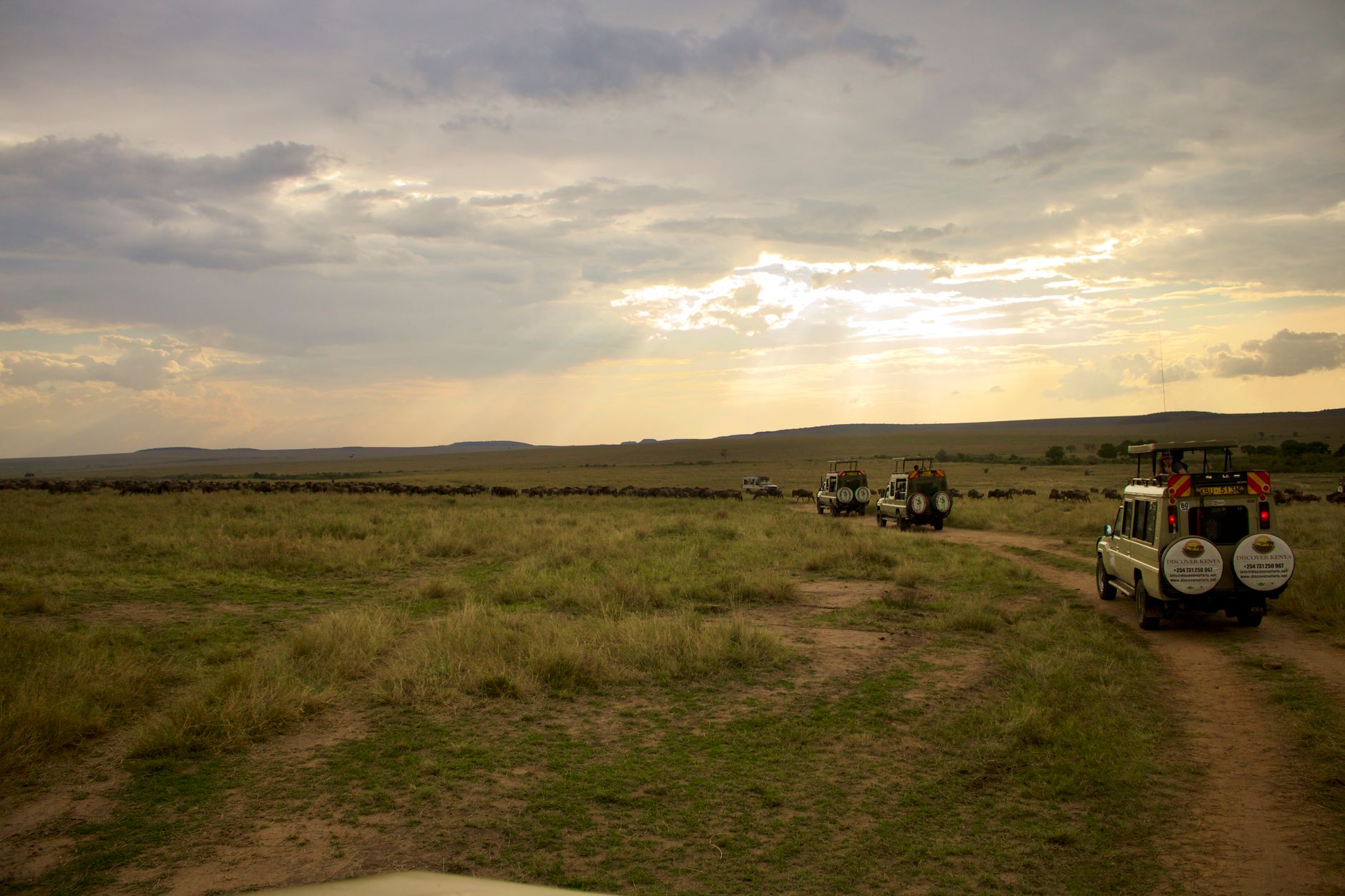
In the Mara, consider staying in Mara North or Naboisho Conservancy. Vehicle numbers are lower than in the main reserve, guided night drives are sometimes allowed, and conservancy fees directly support community landowners. In Amboseli, large elephant herds gather around the seasonal marsh and, on clear mornings, Mount Kilimanjaro dominates the view. Our Masai Mara vs Amboseli comparison explains which destination matches different travel styles.
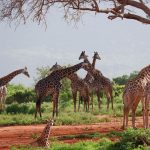
If you want rhino, add Lake Nakuru or Ol Pejeta. If the arid landscapes of the north appeal to you, Samburu is best added to a longer trip because the drive from the central highlands makes a one-night stop impractical. Along the way, our guide to Kenya’s three giraffe species helps you tell the Masai, reticulated, and Rothschild’s giraffes apart.
How much does a Kenya safari cost from Finland?
A realistic seven-day mid-range Kenya safari costs around EUR 2,500 to 4,000 per person, excluding international flights. Return flights from Helsinki commonly add about EUR 1,400 to 1,800. Camping safaris cost less, luxury camps cost much more, and government park fees may increase with little notice. The total also changes with season, vehicle type, conservancy fees, and whether you take a short domestic flight.
When you compare quotes from Finland, ask for the eTA amount and the park fee amount in writing. A quote that only says “safari fee” can hide a large entry charge. Our Kenya safari costs explained page gives a fuller breakdown of the main price categories.
What should you pack for a Kenya safari?
Pack lightweight, neutral clothing, a warm layer for early game drives, sun protection, insect repellent, sturdy shoes, binoculars, and a camera with spare batteries. Talk to a travel health clinic about malaria prevention and recommended vaccines because risk changes with route. Carry medicines in hand luggage and drink bottled or treated water.
You do not need full safari gear. Avoid bright colors and camouflage, since animals notice movement and camps often ask guests to wear muted colors for evening walks. Most camps provide drinking water, but that varies by lodge class. See our Kenya safari packing list for a complete checklist.
The bigger Kenya question
Maybe the real question is not what Finnish speakers should pack, but what landscape will pull you back. A seven-day route only scratches the surface. Travelers who fall for the Mara often return for Samburu’s dry hills, Ol Pejeta’s rhino sanctuary, or a few slow days on the coast. Each of those trips changes the budget and the season.
When you are ready to compare prices across different styles, browse packages from several operators at FindMySafari, Valley Safaris, or Trunktrails Safaris. The right safari often comes down to one small moment: a lioness lifting her head in the grass, a herd moving across a river, or a cold dawn when the savanna is silent. That moment is easier to find when the plan leaves a little room for chance.
More safari planning resources
- Kenya safari packages from SafariPure
- Kenya wildlife tours from Trunktrails Safaris
- Best time to visit Kenya month-by-month map from Valley Safaris
- Compare Kenya safari packages on FindMySafari