A Kenya safari sits within a single flight’s reach of the Gulf. It is closer than most first-time travelers from the region expect. Dubai to Nairobi is a direct flight of roughly 3,600 km, about 4 hours 45 minutes in the air. Doha to Nairobi runs about 3,400 km, close to 5 hours 30 minutes nonstop. Neither route crosses more than one or two time zones, so jet lag is rarely a factor.
This guide covers what actually changes the planning for an Arabic-speaking traveler. That means the visa process, flight routing, and halal food you can expect at camps. It also covers prayer facilities and cultural habits worth knowing before you land. A packing list rounds it out, matched to Kenya’s dry-season dust and cool early mornings. Touring Insights put together the numbers so you can plan with real figures instead of guesswork.
Do Arabic-Speaking Travelers Need a Visa for Kenya?
Yes, in almost every case. Kenya requires an Electronic Travel Authorization (eTA) for nearly all visitors. That includes travelers from the UAE, Saudi Arabia, Qatar, Kuwait, Egypt, and the rest of the Arab League. The country dropped visa-on-arrival and standard e-visas in 2024 in favor of this single online system.
The eTA costs around USD 30 per applicant and is generally processed within a few days. Apply at least a week before departure, per government guidance. Fill in the form with your passport exactly as printed. Keep a printed copy alongside a digital one. Immigration staff at Jomo Kenyatta International Airport (JKIA) may ask to see it next to your passport.
Flights From the Gulf and Middle East to Kenya
Dubai and Doha are the two strongest direct links to Nairobi. Emirates and Kenya Airways both fly nonstop from Dubai, while Qatar Airways flies nonstop from Doha. Travelers from Saudi Arabia, Kuwait, and other Arab League states usually connect through Dubai, Doha, or Cairo. Routing through Cairo on EgyptAir adds 2-5 hours to total travel time.
Book your Nairobi arrival with at least a 3-hour buffer before any onward domestic flight to a safari airstrip. Immigration queues at JKIA can run long even with an approved eTA. Camps schedule airstrip transfers tightly around specific flight windows.
| Route | Approx. Distance | Typical Flight Time | Common Carriers |
|---|---|---|---|
| Dubai to Nairobi (direct) | 3,600 km | 4h 45m | Emirates, Kenya Airways |
| Doha to Nairobi (direct) | 3,400 km | 5h 30m | Qatar Airways |
| Cairo to Nairobi (direct) | 3,550 km | 4h 30m | EgyptAir, Kenya Airways |
| Nairobi (Wilson Airport) to Masai Mara | 250 km | 45 minutes by air | Safarilink, AirKenya |
| Nairobi to Amboseli | 240 km | 35-40 minutes by air | Safarilink, AirKenya |
Best Time for a Gulf Traveler to Visit Kenya on Safari
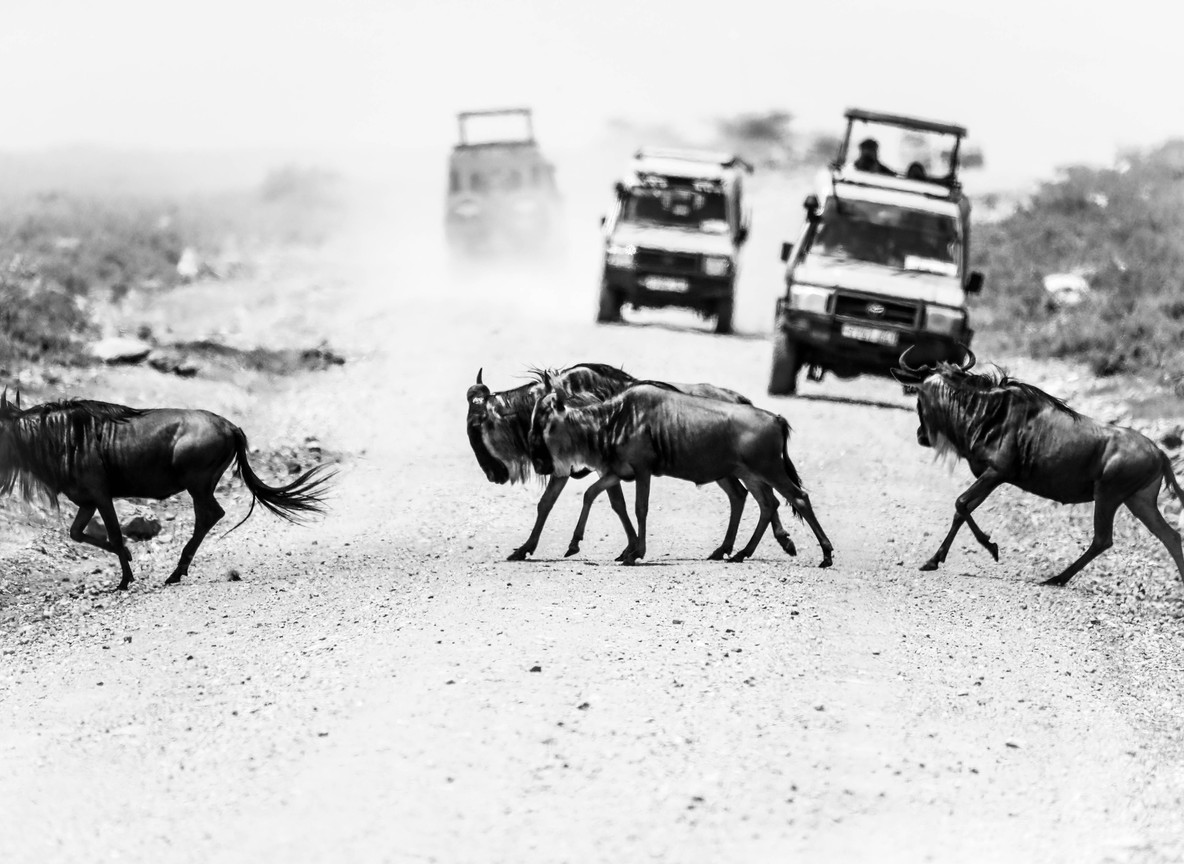
June through September brings Kenya’s long dry season to the Masai Mara and Amboseli. The wildebeest migration‘s river crossings run roughly July through September within that window. Days are hot in the Gulf during this window too, so it is a natural escape month. Camps book out early during this period and rates rise. December through February is Kenya’s short dry season, warm and reliably sunny, and pairs well with Gulf winter travel.
If your trip falls during Ramadan, plan around it rather than assuming camps will adjust automatically. Some lodges can arrange a pre-dawn suhoor and an evening iftar meal outside the standard dining schedule. This needs confirming with the camp in advance, not on arrival. April and May bring Kenya’s long rains, when prices drop but roads get muddier and some conservancy camps close briefly.
What a Kenya Safari Costs
Safari pricing is quoted in US dollars industry-wide. That is a useful reference point, since the UAE dirham and Saudi riyal are both dollar-pegged. A mid-range safari with quality tented camps typically runs USD 350-550 per person per night. That rate is all-inclusive of meals, game drives, and park fees. Budget camps start around USD 150-250 per night, while luxury lodges can run USD 700 and above.
Park entry fees are a separate line item first-time planners often miss. The Masai Mara National Reserve charges non-resident adults USD 100 per day from January through June. Rates rise to USD 200 per day from July through December. Tickets are valid for a single 12-hour day, not a full 24 hours. Amboseli National Park charges USD 90 per day. Tsavo East and Tsavo West charge USD 80 per day for non-residents.
Halal Food on Safari: What to Expect
Halal availability varies by camp, and it is worth confirming before you book rather than after you arrive. Most mid-range and luxury camps in the Masai Mara, Amboseli, and Tsavo can prepare halal meals on request. Safari kitchens are used to accommodating dietary requirements for a mixed international guest list. Confirm in writing when you book, and repeat the request at check-in. Camp staff can rotate between your booking and your stay.
Mombasa and the Kenyan coast are the easiest places to eat without asking twice. The coast has a large, long-established Muslim community. Halal restaurants and butchers are common in Mombasa’s Old Town and along the Malindi road. Inland safari lodges are more variable. Pack a few dates or snacks for the first day at a new camp. Keep them handy until the kitchen confirms your request. Bottled and filtered water is standard at every camp. Water itself is never a concern once you are on safari.
Prayer Times and Religious Practice While on Safari
Nairobi and Mombasa both have well-established mosques, including Jamia Mosque in downtown Nairobi. It’s a short taxi ride from most city hotels. Safari camps in the Masai Mara, Amboseli, and Tsavo are remote by design, so there is no mosque on site. Most staff are used to guests praying in their tent or room. They will point out the qibla direction on request.
A compact travel prayer mat packs easily alongside safari gear and takes up little space in a duffel bag. Game drives run on a fixed morning and afternoon schedule at most camps. It is worth telling your guide about prayer times when you arrive. Guides can usually build a short stop into the drive route without disrupting the group.
Culture and Etiquette Worth Knowing Before You Land
Kenyans are warm and direct in conversation, and greetings matter before any request. That habit will feel familiar to travelers used to Gulf hospitality norms. Take the extra ten seconds to say hello and ask how someone is doing before moving to a question. This applies even with hotel staff or a driver. Skipping the greeting can come across as abrupt.
Modest dress is easy to maintain on safari. Long sleeves and light trousers are already the practical choice against sun and insects. Photographing Maasai people or their villages without asking first is considered intrusive. Most camps near Maasai communities arrange a village visit with a small fee that goes directly to the community. That is the respectful way to experience it, rather than photographing from a vehicle window.
Tipping is expected, not optional, in the safari industry. A common guideline is USD 15-20 per guest per day for a guide. Camp staff typically get a smaller amount, usually through a shared tip box at most lodges. Carry small USD bills, since exact change is not always available at remote camps.
What to Pack for a Kenya Safari
Kenya’s equatorial location means warm days and genuinely cold early mornings on game drives. That combination catches many first-time visitors off guard. Layers matter more than any single heavy item.
| Item | Why It Matters |
|---|---|
| Fleece or light jacket | Dawn game drives in open vehicles run 12-18°C even in the dry season |
| Neutral-colored clothing (khaki, olive, tan) | Bright colors and pure white attract insects and stand out to wildlife |
| Travel prayer mat | Camps have no on-site mosque; a compact mat fits easily in a duffel |
| Broken-in walking shoes | Camps and airstrips involve walking on dust and gravel, not paved paths |
| Malaria prophylaxis | Most safari regions, including the Masai Mara, carry malaria risk |
| Universal power adapter | Kenya uses UK-style Type G sockets |
Explorer Notes
A few details that make a real difference once you land. Confirm your halal meal request with the camp in writing at least a week before arrival. Repeat it again at check-in. Do not assume the first confirmation carries through automatically. Carry a printed copy of your eTA and yellow fever certificate when connecting through a yellow-fever-risk country. Not every camp desk has reliable internet to pull up a digital copy.
Safaricom sells tourist SIM cards at the airport with data bundles that work in most conservancies. Arrange this before you leave Nairobi, since signal at remote camps can be patchy. If traveling as a family group, ask your operator about interconnecting rooms or family tents when booking. Availability is limited at smaller camps and fills first for peak-season dates.
What to Read Next
- Need the exact visa steps before you book flights? Read our Kenya eTA and eVisa guide for safari travelers.
- Still deciding when to go? See our best time to visit Kenya guide.
- Want a packing list you can check off item by item? Check our Kenya safari packing list.
FAQ
Do travelers from the UAE, Saudi Arabia, or Qatar need a visa for a Kenya safari? Yes. Kenya requires an Electronic Travel Authorization (eTA) for nearly all visitors, including Gulf and Middle East passport holders, applied for online before travel.
Is there a direct flight from the Gulf to Kenya? Yes. Emirates and Kenya Airways fly nonstop from Dubai to Nairobi in about 4 hours 45 minutes, and Qatar Airways flies nonstop from Doha in about 5 hours 30 minutes.
Can safari camps in Kenya prepare halal food? Most mid-range and luxury camps can prepare halal meals on request if you confirm when booking and again at check-in. The Kenyan coast, particularly Mombasa, has the widest range of halal restaurants outside the camps.
Will I have access to prayer facilities on safari? Nairobi and Mombasa have established mosques, but remote safari camps do not. Staff can point out the qibla direction, and a compact travel prayer mat is worth packing.
What is the best month for a Gulf traveler to visit Kenya on safari? June through September covers the wildebeest migration’s river crossings and matches Gulf summer heat, though it is peak season with higher rates. December through February offers warm, reliably dry weather at lower prices.
Ready to put dates on the calendar? Visit our Tour Packages page to compare itineraries by season and budget. Prefer to plan with an Arabic-speaking guide directly? Trunktrails Safaris runs a dedicated Arabic-speaking safari guide service.