Deciding between a Kenya safari by road or bush flight is not just about speed. It changes your budget, luggage allowance, comfort, and even which parts of the country you can reach in a short trip. A road transfer gives you hours of landscape and small-town life. A bush flight can have you in the Masai Mara by breakfast. This guide compares real routes to the Masai Mara, Amboseli, Samburu, and Laikipia. It covers airstrips such as Keekorok, Musiara, Ol Seki, and Naboisho.
What Does a Kenya Safari by Road or Bush Flight Actually Look Like?
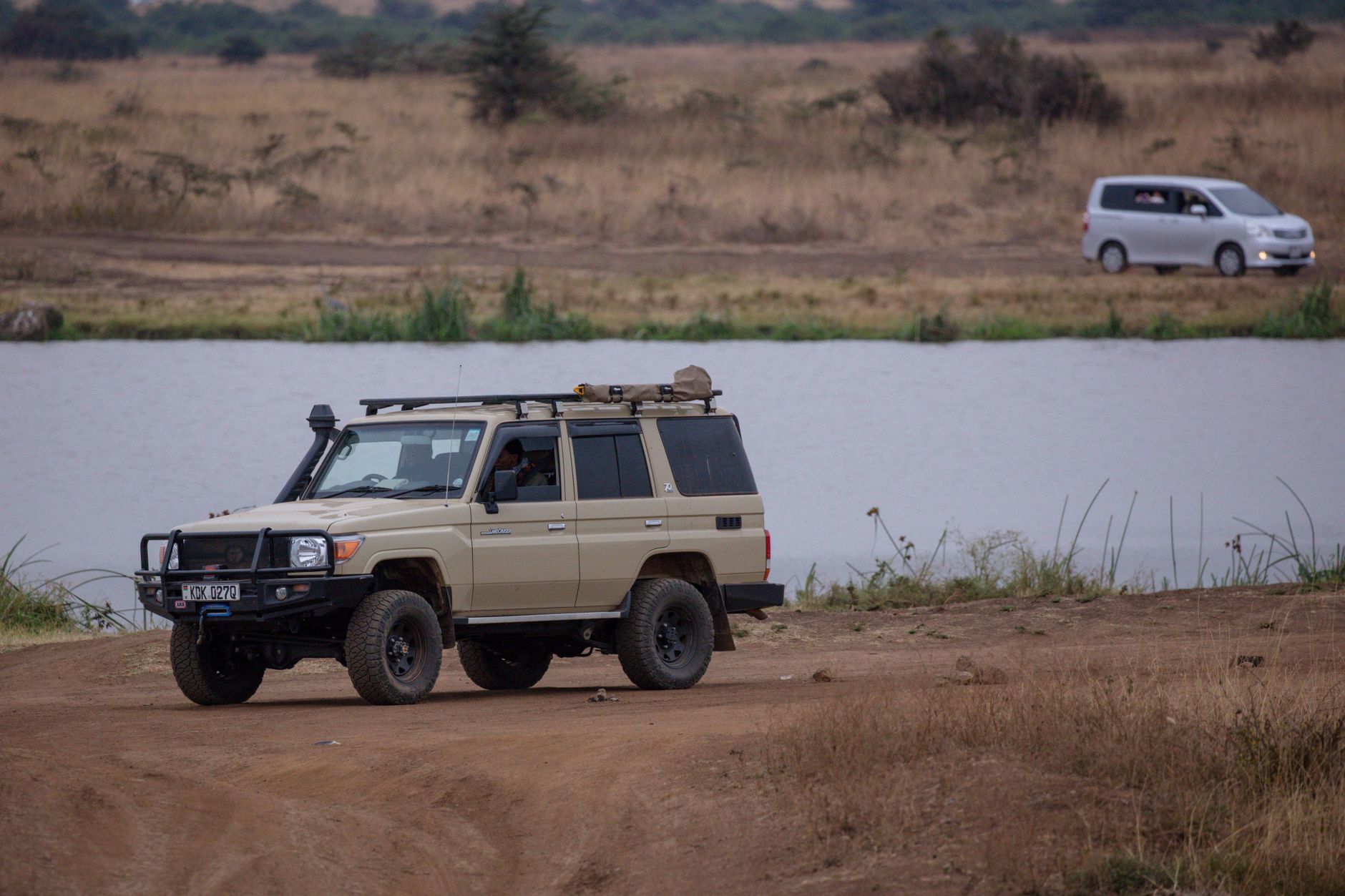
A road safari usually means a private 4×4 vehicle or a shared shuttle from Nairobi to a park gate. Then you continue in a game-viewing transfer to your camp. A bush flight means a small plane from Wilson Airport in Nairobi to an airstrip inside or near a reserve. The aircraft is often a Cessna Grand Caravan or similar turboprop.
One key difference is the last mile. In the Masai Mara National Reserve, road access goes through gates such as Sekenani and Talek. Then it continues on rough tracks to camps. In a private conservancy like Naboisho or Ol Kinyei, the airstrip is often closer to the camp. Flying into the Naboisho airstrip places you inside the conservancy with a short vehicle transfer. Driving from Nairobi can add several extra hours. For more on the reserve and surrounding areas, see our Masai Mara guide.
How Long Is the Drive from Nairobi to the Masai Mara?
The drive from Nairobi to the Masai Mara usually takes 5 to 6.5 hours. It depends on traffic and road conditions. The route covers roughly 270 km. Nairobi to Narok is mostly tarmac. The section from Narok to the Sekenani or Talek gate is often a mix of tarmac and unpaved, corrugated road.
Nairobi morning traffic can add an hour before you leave the city. During the rainy season, the final unpaved stretch can become muddy and slow. In dry periods, the same stretch is dusty and rough. If you plan to visit during the migration, check our guide. It shows how road conditions line up with the season. See best time to plan a Kenya safari around the Great Migration.
How Long Is the Flight from Nairobi to the Masai Mara and Which Airstrips Are Used?
A scheduled bush flight from Wilson Airport in Nairobi to the Masai Mara takes about 45 to 60 minutes. Flights land at several airstrips. Keekorok and Musiara serve the reserve and nearby camps. Ol Seki and Naboisho airstrips serve private conservancies. After landing, the drive to your camp is often 15 to 45 minutes. It depends on the airstrip and camp location.
Wilson Airport is the main departure point for safari flights in Kenya. Flights are short enough that you can leave Nairobi after breakfast and still join an afternoon game drive.
How Do Road and Flight Times Compare for Amboseli and Samburu?
| Route | Road time (indicative range) | Flight time (indicative range) | Notes |
|---|---|---|---|
| Nairobi to Masai Mara (Sekenani/Talek gate) | 5 to 6.5 hours | 45 to 60 minutes to Keekorok, Musiara, Ol Seki, or Naboisho | Final stretch on unpaved tracks |
| Nairobi to Amboseli | 4 to 5 hours via Emali | 45 to 60 minutes to Amboseli airstrip | Road crosses Masai towns and open plains |
| Nairobi to Samburu | 5.5 to 7 hours via Nanyuki or Isiolo | 70 to 90 minutes to Samburu airstrip | Road is mostly tarmac to Isiolo, then gravel |
| Nairobi to Laikipia (Nanyuki or Loisaba) | 4 to 5.5 hours to Nanyuki | 45 to 60 minutes to Nanyuki or Loisaba airstrip | Many private conservancy airstrips |
These are realistic ranges, not fixed schedules. Traffic, weather, and the specific camp location can move the numbers in either direction.
What Does a Kenya Safari by Road or Bush Flight Cost?
The following are indicative one-way cost ranges. They are not confirmed quotes. Prices change by season, operator, and aircraft size.
| Option | Indicative cost range per person | What you get |
|---|---|---|
| Shared road shuttle Nairobi to Masai Mara | USD 50 to 90 one way | Fixed schedule, shared vehicle, multiple camp drop-offs |
| Private 4×4 road transfer | USD 200 to 400 one way, depending on vehicle size | Flexible departure, private guide, road stops |
| Scheduled bush flight Nairobi to Masai Mara | USD 180 to 350 one way | Scheduled seat, about 45 to 60 minutes, soft bag limit |
| Private charter, 4 to 6 seats | USD 1,500 to 3,500 per flight | Full flexibility, multiple airstrips, luggage by arrangement |
Road transfers are priced per vehicle. A private vehicle becomes cheaper per person for a full group. Scheduled flights are priced per seat. Flying becomes more expensive as your group grows. For a broader breakdown of safari expenses, see the Kenya safari cost guide.
How Do Road Conditions, Motion Sickness, and Aircraft Comfort Compare?
Road conditions vary more by season than most people expect. In dry months, unpaved stretches are dusty and corrugated. In heavy rain, the same tracks turn to mud. Some seasonal roads become impassable. A 4×4 with an experienced driver helps. The ride can still be long and bumpy.
Small bush planes are not immune to comfort issues. They fly at lower altitude. Afternoon thermals can cause turbulence. The cabins are compact and noisy. Motion sickness is common. If you are prone to car sickness, you may also feel it on a small aircraft. Roads give you the option to stop, stretch, and take air. Flights are over quickly, but there is no pause once you are in the air. Neither option is universally more comfortable. It depends on what bothers you more. You may prefer hours of rough road. Or you may choose a short, bumpy flight in a small plane.
What Luggage Can You Take on a Kenya Bush Flight?
Scheduled bush flights are strict about luggage. Most operators require soft-sided bags only. The total weight allowance is often around 15 kg per person. This includes hand luggage. Hard suitcases are usually not accepted. They do not fit in the small cargo holds. The exact allowance can vary by airline. Confirm before you pack.
On a road transfer, luggage is far more flexible. A private vehicle can carry a reasonable amount of soft or hard luggage. It just needs to fit. This is one area where road travel wins clearly. Before you pack, review our Kenya safari packing and health tips. It has a full list of what to bring.
Is Driving Through Kenya Scenic or Just a Long Transfer?
Driving from Nairobi to the Masai Mara or Amboseli is not a blank highway. You pass the Rift Valley escarpment, small farms, Masai towns, and roadside markets. Many drivers stop at viewpoints over the Great Rift Valley. You may see Maasai herders with cattle. You may see children walking to school. Small trading centers line the route. These stops are a real part of the experience for some travelers.
The trade-off is the final unpaved hour or two. It can be dusty, rough, and less scenic when you are tired. Flying gives a brief aerial view of the Rift Valley. On clear days, you get a glimpse of wildlife near the airstrips. But it is over in under an hour. If you want to see the countryside closely, road travel has value. It just requires a long day.
Does Flying Actually Give You More Wildlife Viewing Time?
Yes, in most cases. A flight saves 4 to 6 hours each way compared with driving. That time can become an extra game drive. It can also mean an arrival before lunch. For example, a 7 am flight from Wilson Airport can have you in the Masai Mara by 8:30 am. A morning game drive is still possible. A road transfer that starts at 7 am usually arrives in the early afternoon. The best morning wildlife activity has already passed.
This matters most on short itineraries. If you only have 2 or 3 nights, flying preserves the wildlife time you paid for. On a 7 night trip, the saved hours matter less. You have enough game drives to recover from a slow travel day.
Which Option Suits Families, Couples, Older Travelers, and Short Itineraries?
Families with young children often find a very long road transfer demanding. A bush flight removes the rough final stretch. The cost multiplies per seat. For families, a hybrid option can work well. A private road vehicle with frequent stops is another good choice.
Couples without kids often choose by budget and time. A private 4×4 road transfer gives flexibility. You also get a dedicated guide. A fly-in option gives more time at the camp. It also means fewer travel hours.
Older travelers or anyone with back, hip, or mobility concerns should weigh two different risks. A long bumpy road can be tiring. A small plane has high steps and a cramped cabin. This can be hard for limited mobility. If mobility is a priority, a road transfer can be gentler. You control the stops.
For short itineraries of 2 or 3 nights, flying usually makes the most sense. It protects the limited wildlife-viewing time you have.
When Does a Hybrid Road and Flight Itinerary Work Best?
A hybrid trip often gives the best balance. You can drive one way for scenery and cost control. Then you fly the other way to save time. One common approach is to drive from Nairobi to the Masai Mara. Stay 3 nights. Then fly back to Nairobi. Another is to fly into the Naboisho Conservancy. Experience a private conservancy. Then drive out through the reserve and back to Nairobi.
Connecting the Masai Mara and Amboseli by scheduled flight is not always direct. Many smaller routes connect through Nairobi. A road transfer between the two parks can be more practical. This is true unless you charter a plane. For route ideas that combine these parks, see sample Kenya safari itineraries.
Is a Kenya Safari by Road or Bush Flight Better for Conservation?
This is a real trade-off. Bush flights concentrate visitors at airstrips and private conservancies. The conservancy fees help fund land leases and wildlife protection. The benefits stay in fewer places. Road transfers spread spending across towns, markets, mechanics, and small eateries. This supports local economies far beyond the parks.
Road traffic also creates dust and pressure on unpaved tracks. This happens especially in dry months. Flights produce carbon emissions. Short safari hops are relatively small. There is no simple answer. Your choice does influence where tourism money lands. A hybrid trip spreads some benefit across both models.
Which Hybrid Route Should You Choose for a 7 Night Kenya Safari?
For a budget-conscious traveler, drive from Nairobi to the Masai Mara. Spend 3 nights. Drive to Amboseli for 2 nights. Then return to Nairobi by road. You lose travel hours but keep costs lower.
For a balanced trip, fly from Nairobi to the Naboisho airstrip. Spend 3 nights in a private conservancy. Then drive to the Masai Mara National Reserve for 2 nights. Fly back to Nairobi from Keekorok or Musiara. This gives you private conservancy privacy and reserve action.
For a time-short, comfort-focused trip, fly Nairobi to the Masai Mara. Spend 2 nights. Fly to Amboseli for 2 nights. Then fly back to Nairobi. You maximize game drive hours. You also avoid all long road transfers.
For landscape variety, drive Nairobi to Samburu for 2 nights. Then fly from Samburu to the Masai Mara for 3 nights. Fly back to Nairobi. Samburu offers arid northern species. The Mara adds the big plains wildlife.
Where Can You Compare Kenya Safari Operators for Road and Fly-In Trips?
Road and fly-in itineraries vary widely by operator, season, and camp. Before you commit, compare safari operators at FindMySafari or Valley Safaris. These partner sites let you browse packages. You can compare inclusions for road transfers, scheduled flights, and private charters without a hard sell.
Where Can You Find More Safari Planning Resources?
For more planning help, see these partner guides: