Ask most tour operators for an Amboseli price and you get a tidy number. It starts with “from” and ends with “per person sharing.” What that number hides is everything: park fees, transport, tent vs lodge, dry season vs green season. This guide answers how much does a safari to Amboseli really cost by showing you where the money goes. No packages are sold here, just the math and the seasonal reality so you can compare operators on fair terms.
What Are the Amboseli National Park Fees?
Park fees are the one line item nobody can negotiate. Kenya Wildlife Service sets them, and they apply to every visitor who crosses the gate. For non-residents, the current daily rate for adults is USD 90 per person per day, effective from October 2025. Children aged 3 to 12 pay roughly USD 40 per day as an indicative figure, and under 3 years entry is typically free. Confirm both figures on the KWS website before you travel, since rates change with little notice.
Residents of Kenya pay a much lower rate, roughly KSh 1,000 per adult per day as an indicative figure. They must show proof of residence, such as a work permit, a Kenyan passport, or a national ID.
Camping inside the park costs extra, roughly USD 20 to USD 40 per night for a non-resident adult, an indicative figure worth confirming with your operator. It covers simple plots with basic pit latrines and no fences. Vehicle fees add roughly USD 30 to USD 40 per vehicle per day. A typical 3-day trip for two people in one vehicle pays about USD 540 in park entry alone.
Your operator should always include park fees in the quoted price. Some budget operators quote a low base price then add fees at the end, which is not a scam but a poor way to compare packages.
How Much Does a Budget Amboseli Safari Cost Per Person?
A budget safari means camping, group travel, and basic meals. You eat cooked over a fire, sleep in a dome tent with a mattress, and share a minivan with up to six other guests. This still gets you the core Amboseli experience.
For a 3-day budget safari, expect to pay between USD 350 and USD 500 per person. That covers park fees, camping fees, transport from Nairobi, meals, a driver-guide, and drinking water. Solo travelers pay a supplement because they take a full seat in the van.
At the very low end, say under USD 300, something is missing. It could be park fees, a 12-seater van with no pop-up roof, or a camp outside the gates with a long drive each morning. Read the inclusions list carefully before booking.
How Much Does a Mid-Range Amboseli Safari Cost?
Mid-range means a lodge or permanent tented camp inside or just outside the park, with an en-suite bathroom, a proper bed, hot showers, and a dining room. Game drives are usually in a private or small-group vehicle with a pop-up roof.
For a 3-day mid-range safari, budget USD 650 to USD 950 per person, including park fees, full-board accommodation, transport, and guided game drives. Older lodges near the gate cost less; newer camps with Kilimanjaro views cost more. A 5-day mid-range safari lands around USD 1,100 to USD 1,500 per person, since the extra days repeat mostly lodging and park fees.
One honest warning: the term “mid-range” is loose, and some operators call a basic lodge mid-range when it is really budget with walls. Use the camp name as your anchor, then cross-check reviews independently.
What Does a Luxury Amboseli Safari Cost Per Night?
Luxury in Amboseli means private conservancies, sundowners, and premium dining. Rooms are large tents with king beds, en-suite bathtubs, and private verandas facing Kilimanjaro.
Per night, a luxury Amboseli safari costs USD 700 to USD 1,500 per person. A 3-night stay runs USD 2,100 to USD 4,500 per person before park fees. Some top-end camps quote closer to USD 1,800 per night in peak season. Almost all luxury rates include everything except park fees and tips, on a minimum 2-night stay.
The value is not about seeing more elephants; all visitors see elephants. It is in fewer vehicles around you, better guiding, and a softer bed. If you mainly want to see the park, mid-range delivers most of the same experience for a fraction of the cost.
Is It Cheaper to Drive or Fly to Amboseli?
Driving is cheaper. A return road transfer from Nairobi on a shared basis costs about USD 60 to USD 100 per person. The drive takes 4 to 5 hours each way, mostly on tarmac with a rough dirt section before the gate. A private hire vehicle costs more, roughly USD 150 to USD 250 per car one way, but gives you flexibility.
Flying saves time, not money. A scheduled flight from Wilson Airport to Amboseli airstrip takes about 45 minutes and costs roughly USD 220 to USD 350 per person one way. The airstrip is inside the park, so you also pay a park fee for the day you fly.
For most travelers, driving is the smart choice. The flight saves half a day but adds cost and a 15-kilogram baggage limit on small planes.
To see how that compares with road options in other parks, read our kenya-safari-cost guide.
What Is the Best Time to Visit Amboseli on a Budget?
The best budget window is the green season, roughly November through May, excluding the Christmas holidays. From December to March, the park is lush and accommodation rates drop by 15 to 30 percent. The downside is that elephants spread out across the ecosystem because water is everywhere. You see them, but not the dense herds of dry season.
The dry season, June through October, concentrates wildlife around the permanent swamps. It is also peak season, when lodges charge their highest rates, often USD 100 to USD 200 more per person for the same mid-range package.
If your goal is fewer crowds and lower cost, go in November or May. You may get afternoon rain, but the morning light and empty roads are worth it.
How Much Does a Safari to Amboseli Really Cost Per Person in Total?
Here is a sample budget for a 3-day, 2-night safari for one person, based on two people sharing a vehicle and room. This is an indicative range, not a fixed quote.
| Item | Budget | Mid-Range | Luxury |
|---|---|---|---|
| Park fees (2 days entry) | USD 180 | USD 180 | USD 180 |
| Accommodation and food | USD 120 to USD 200 | USD 300 to USD 500 | USD 800 to USD 1,500 |
| Transport (shared, return) | USD 70 | USD 80 | Included or premium |
| Driver-guide (included) | USD 0 | USD 0 | USD 0 |
| Camping vs lodge fees | USD 20 to USD 40 | Included | Included |
| Total per person | USD 390 to USD 490 | USD 560 to USD 760 | USD 980 to USD 1,680 |
Luxury rates often include a community or conservancy fee that is not in the park entry, which goes toward local land protection. For a detailed day-by-day look at the park and its routes, see our amboseli-safari-guide.
How Much Should You Tip a Safari Guide in Kenya?
Tipping is not mandatory but it is expected, and guides and drivers rely on it as a meaningful part of their income. A general rule is USD 10 to USD 15 per guest per day for the guide, and USD 5 to USD 8 per guest per day for the driver if separate. Camp staff often share a tip box, and USD 10 per room per night is a fair baseline.
Small US dollar notes work best for cash tips. Some camps add a service charge to your bill; if they do, ask whether it goes to staff before tipping on top.
Is Amboseli Cheaper Than the Masai Mara?
On paper, Amboseli is slightly cheaper. Non-resident park fees run USD 90 per person per day. In the Mara, Narok County sets its own rate, not KWS: USD 100 per person per day from January through June, and USD 200 per person per day from July through December during peak migration season. The Mara also has higher conservancy fees and longer driving distances from Nairobi.
A 3-day mid-range Mara safari typically costs USD 750 to USD 1,100 per person, versus USD 650 to USD 950 for Amboseli. Much of that gap comes from the higher Mara park fees, plus transport and conservancy charges.
But cheaper is not better value. The Mara has the wildebeest migration and greater predator density; Amboseli has the elephants, the swamps, and that Kilimanjaro backdrop. The decision is about wildlife interest, not price. Read how Amboseli compares to a Masai Mara safari in our dedicated analysis.
What Is the Cheapest Way to See Amboseli?
The cheapest legitimate way is a self-drive with your own camping gear: park fees, campsite fees, fuel, and a rooftop tent rental. Two people could manage this for roughly USD 200 per person for 3 days, not counting vehicle rental, and it suits experienced campers on rough tracks.
The next cheapest option is a group budget camping tour, which costs more than self-drive but removes the logistics. A third option is staying outside the park, in towns like Emali or Kimana, and driving in each day. This cuts accommodation costs but adds drive time, since you still pay full entry each crossing.
Is a Safari to Amboseli Worth the Cost?
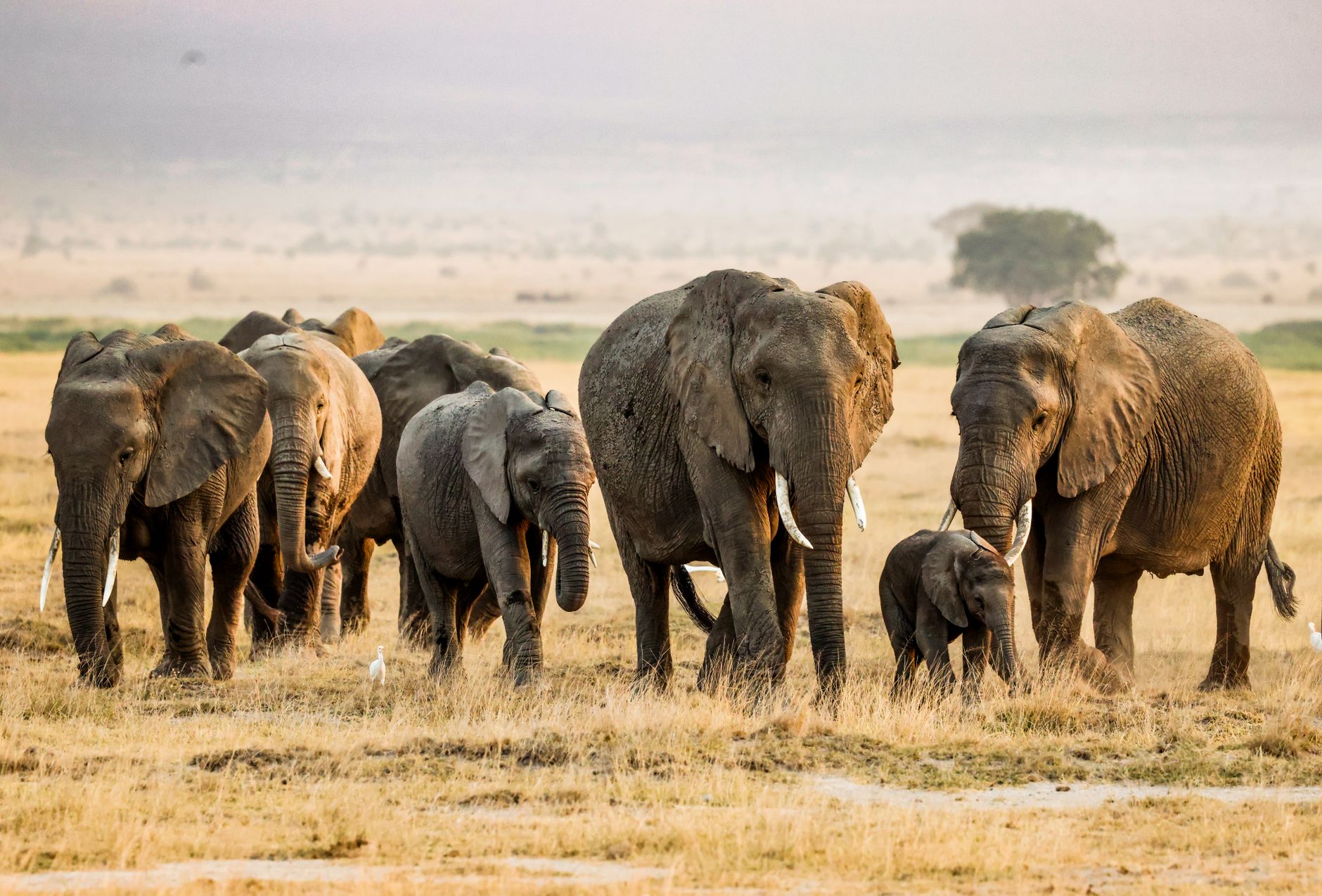
For most travelers, yes. The elephants here are among the most relaxed in Kenya, since the herds have been studied for decades and are habituated to vehicles. You can sit for an hour watching a family cross the marsh with Kilimanjaro behind them.
The honest caveat is the crowds. Amboseli is a small park, roughly 390 square kilometers, and vehicles cluster at swamp viewpoints in peak season. For solitude, book the first game drive of the day or consider a private conservancy like Kimana Sanctuary or Selenkay. Conservancy access is additional to standard entry, roughly USD 60 to USD 100 per person per day, and supports local Maasai landowners directly.
The cost question comes down to travel style. A 3-day budget trip around USD 400 is one of the best wildlife values in East Africa. A 4-day luxury stay around USD 4,000 is a different experience, but the core sight is still elephants in a swamp.
For packing and practical logistics before you go, our kenya-safari-packing-list covers what to bring and what to leave behind.
Should I Book a Safari Through a Tour Operator?
You can book directly with a lodge or camp, but driving, guiding, and park logistics are easier through a local operator. A good operator bundles everything into one price and handles the details. A bad operator hides fees and leaves you with a driver who knows less than you do.
Ask for a full breakdown before you pay: park fees by name, the exact camp or lodge, the vehicle type, and the driver-guide’s experience, in writing. Any operator who hesitates is not worth your money.
How Do You Compare Safari Operators to Find Your Best Fit?
TouringInsights does not sell tours. Our job is to give you honest information so you can choose well. To compare safari operators and browse packages from vetted local providers, visit FindMySafari, Valley Safaris, or Trunktrails Safaris. Their sites let you filter by price, season, and comfort level, so you can ask hard questions and pick the one that feels right.
What Other Safari Planning Resources Can Help?
- Amboseli National Park guide, Trunktrails Safaris
- Map of Amboseli, Valley Safaris
- Compare Kenya safari packages, FindMySafari
- Amboseli destination guide, FindMySafari