How many days do you need in Lake Nakuru? Ask any safari planner and you get a fast answer: one day, maybe two if you like birds. That advice is not wrong, but it skips details that matter, like what you want to see and where you are headed next.
Lake Nakuru National Park is small and compact, and the main loop can be driven in a few hours. But the quality of your visit changes with the time of day, the season, and how much patience you have. The honest answer is one full day for most travelers, two if you want the best light and a slower pace, and three only if you are using Nakuru as a base for a longer stay. Here is what changes between those options, and our Lake Nakuru guide covers the rest of the visit.
What Will You Actually See in Lake Nakuru in One Day?
The park’s big draw is rhinos. Black rhinos and southern white rhinos both live here, and the population is one of the most reliable in Kenya, especially near the escarpment and Baboon Cliff.
You will also see Rothschild’s giraffes, easy to spot by the white socks on their legs. Lions are present but not guaranteed, often hiding in the fever tree forest. Leopards are harder still, moving mostly at dawn and dusk.
Buffaloes, zebras, and warthogs are common, and the lake draws large numbers of waterbirds, from pelicans to flamingos.
Starting at the main gate around 7 a.m., you can drive the southern shore, stop at Baboon Cliff, loop through the forest section, and reach the lake viewpoint before lunch. By early afternoon you have seen the core species, which is genuinely enough on a tight schedule.
Is One Day Enough for Lake Nakuru?
Yes, if your priority is rhinos and the major mammals. The park covers roughly 188 square kilometers, a fraction of the Maasai Mara’s more than 1,500 square kilometers, so you can drive the main routes in about four hours without rushing.
There is a catch, though. Most visitors arrive from Nairobi, a drive of about 2.5 to 3 hours each way. A day trip means waking at 5 a.m., reaching the gate around 8 a.m., and leaving by 3 p.m. to beat traffic, which cuts your actual safari time to maybe six hours.
If you want flamingos in good light or lions in the evening, a single day feels rushed, since photography is best in early morning or late afternoon.
If Nakuru is a stop on the way to a bigger Mara trip, one day is enough. You will see rhinos, likely see lions, and get a taste of the lake without feeling shortchanged.
Should You Stay Overnight at Lake Nakuru or Do a Day Trip from Nairobi?
The answer depends on your energy and your budget.
A day trip from Nairobi saves a night of accommodation and keeps things simple, but the same-day drive is long and you miss the best animal activity windows.
Staying one night changes the experience. You enter in the late afternoon when rhinos are often active and the light is golden, sleep at a lodge near the gate, then enter early the next morning when predators are most likely moving.
Nakuru sits roughly halfway between Nairobi and the Mara, so an overnight stop does not really cost a full extra day, it just rearranges your driving.
How Many Days Do You Need in Lake Nakuru for the Best Experience?
Two days is the sweet spot for most travelers.
On day one, arrive mid-morning, do a relaxed loop past the rhinos, giraffes, and lake viewpoints, then have lunch at a picnic site. In the late afternoon, run a shorter drive toward the acacia woodland for lions.
On day two, enter at dawn, when the first two hours after sunrise are best for predators. Drive the forest edges and northern section, where leopards are more likely, then leave by late morning.
Two days also buys weather insurance, since a rainstorm can spoil one half day but still leave a clear block. You also see the lake from more angles and watch the light change over the escarpment.
What About Three Days in Lake Nakuru?
Three days is more than the park itself needs, since a third day usually means repeating loops unless you are on a specialized birding trip.
Three days makes more sense if you combine Nakuru with nearby attractions: a hike at Menengai Crater, Nakuru town’s market, or a side trip to Lake Naivasha or Hell’s Gate. Those are separate destinations, not the park itself.
If you have three days in this region, consider spending one at Nakuru and two elsewhere, in the Mara or at Samburu, for more variety and better odds on the big cats.
Are Rhino Sightings Guaranteed in One Day?
No safari sighting is fully guaranteed, but rhinos at Lake Nakuru come close, since the park is a fenced sanctuary and rangers know where the animals tend to be. A normal game drive usually produces several sightings, grazing in open grassland or resting under acacia trees, with the southern plains near the escarpment the most reliable area.
If you only have half a day, your odds drop, since rhinos are most visible in early morning and late afternoon. A 10 a.m. to 2 p.m. window in the hot sun tends to mean fewer animals out.
Why Are There No Flamingos at Lake Nakuru Right Now?
You may have heard about the lack of flamingos, and it is true. The lake’s water level has risen significantly since the early 2010s, changing the lake’s chemistry, and the algae flamingos feed on has declined. Many flamingos have moved to lakes like Elementaita and Bogoria instead.
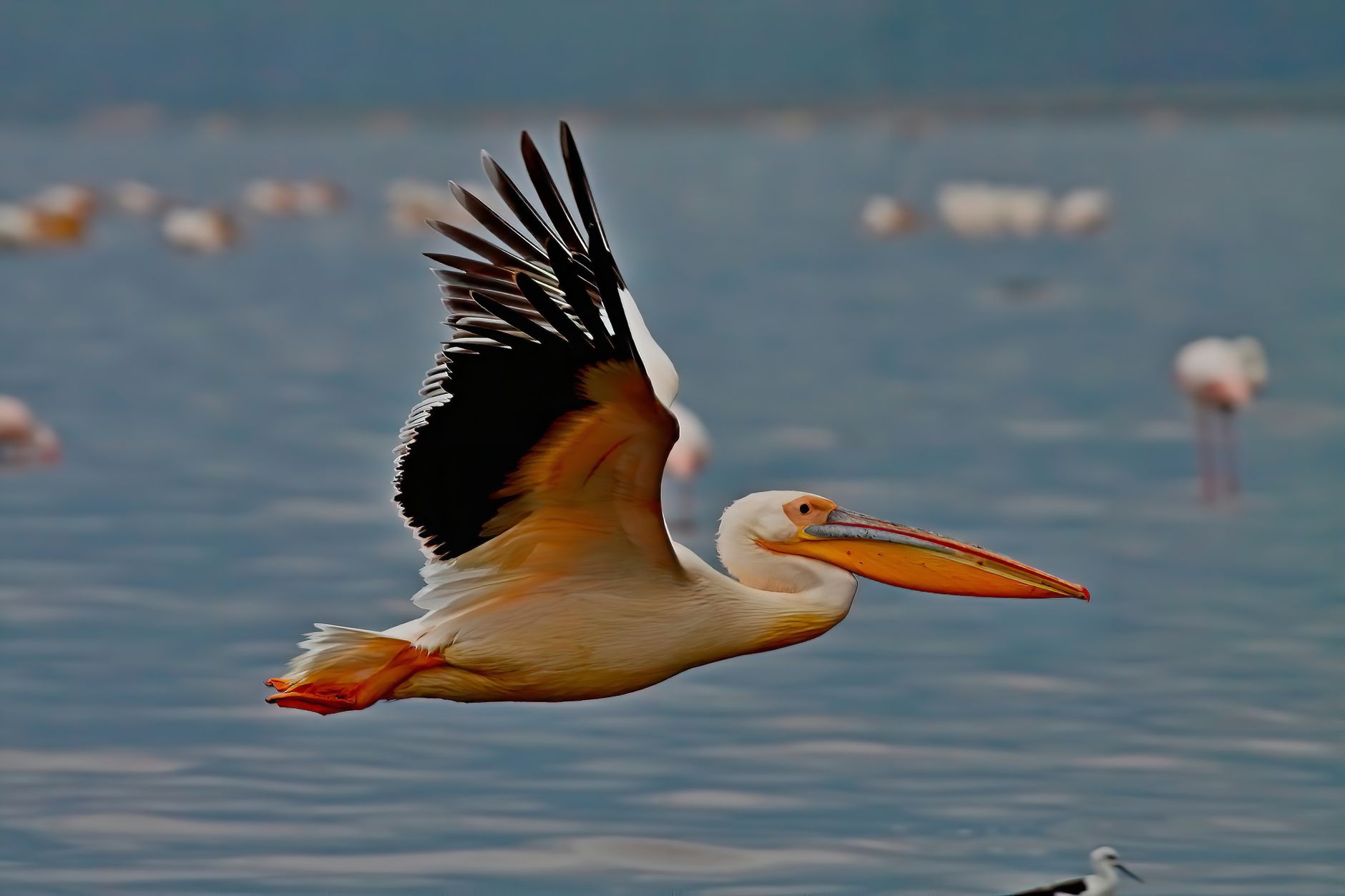
Do not plan your trip around flamingos. You might see some from a distance, but the vast pink clouds from old photos are not the current reality. You will find great white pelicans, yellow-billed storks, and other waterbirds instead, with rhinos the real reason to come now.
What Is the Best Time of Year to Visit Lake Nakuru?
The park is open year-round. The dry season, roughly June to October, is most reliable for wildlife viewing, since animals gather near water and roads are easier to drive. The Mara’s famous crossings also happen in this period, so many travelers combine both.
The wet season, November to May, brings greener scenery, fewer visitors, and newborn animals, though some roads get muddy. Nakuru does not have the Mara’s huge migrations, so the best time depends more on your broader Kenya itinerary than on the park itself.
How Should Lake Nakuru Fit into a Larger Kenya Safari?
Most first-time safari planners head to the Maasai Mara as the centerpiece, and Nakuru works well as an add-on, roughly a three hour drive from Nairobi and on the way to the Mara through the Rift Valley.
A common itinerary: fly into Nairobi, drive to Nakuru for an afternoon game drive on day one, stay overnight, then do an early drive on day two before continuing to the Mara. That saves a full driving day later in the trip.
With more time, consider pairing Nakuru with Ol Pejeta Conservancy for rhinos or Samburu for a different ecosystem. Our Masai Mara guide has itineraries that include Nakuru as a stop.
What Should You Pack for a Lake Nakuru Visit?
The park sits at moderate altitude, around 1,760 meters, so mornings are cool and afternoons warm. Pack layers: a light jacket for dawn drives and a hat for midday sun. Binoculars are worth carrying, since the birds on the lake are often far off even when rhinos are close, and a camera with a zoom lens helps. Our Kenya safari packing guide covers the full list, and the basics for Nakuru are the same as anywhere else.
Is Lake Nakuru Family-Friendly?
Yes. The roads and distances are easy, game viewing is frequent, and rhinos hold attention. Some lodges outside the park have family rooms and pools, and picnic sites are safe and clean. A normal 4×4 or safari van works fine, no special vehicle needed. The main caution is the long drive from Nairobi, so plan breaks.
How Much Does a Lake Nakuru Safari Cost?
Our Kenya safari cost guide covers this in more depth, but Nakuru is relatively affordable compared to the Mara. Park entry fees are set by the Kenya Wildlife Service, and the current non-resident adult rate is USD 90 per day. Resident rates are much lower, and child rates are typically discounted, though the exact amount varies, so check current KWS rates before you book.
Accommodation ranges from budget camps outside the gate to luxury lodges inside the park. A mid-range lodge runs roughly 100 to 200 USD per person per night including meals, with budget options around 50 to 80 USD. Prices change, so confirm current rates before booking. A guided day trip from Nairobi with transport and lunch typically costs 150 to 250 USD per person, including park fees but not tips.
| Trip length | Non-resident adult park fees (approx.) | Time actually in the park | Best for |
|---|---|---|---|
| 1 day | USD 90 | About 6 hours of driving | Tight schedules, Nairobi day trips |
| 2 days | USD 180 | Two drives, including one at dawn | Most first-time visitors |
| 3 days | USD 270 | Multiple loops plus nearby sites | Birders, regional base trips |
Should You Visit Lake Nakuru or the Masai Mara with Limited Days?
This is a false choice, since the two are not substitutes. The Mara is vast and full of predators, Nakuru is compact and reliable for rhinos. With only three days in Kenya, the Mara wins for spectacle. With five or more, add Nakuru for variety, since it delivers rhinos in a short amount of time.
What Are Some Practical Tips for Visiting Lake Nakuru?
Arrive early. Gates open at 6 a.m. in the dry season, and the first two hours are the best. Use a local guide if you are not experienced, since they know the rhino hotspots and will spot animals you would miss. Bring cash for park entry, since not all gates accept cards.
Roads are mostly graded earth, fine in the dry season but slippery after rain, so drive slowly. Carry sunscreen and a hat, since the sun is strong even at this altitude.
How Should You Decide Your Final Day Count?
Your decision comes down to three questions. Is Nakuru your only stop, or part of a longer itinerary? Do you care more about light and photography than ticking off species? How much driving fatigue can you handle in one day?
If efficiency matters most, book one day and treat it as a stop toward the Mara. If you want better light and more lion time, add a second night. Save a third day for birding specialists or for using Nakuru as a base for Menengai Crater or Lake Naivasha.
Where Can You Compare Lake Nakuru Safari Operators?
TouringInsights is an editorial guide. We do not sell tours, but we can point you to operators who cover Nakuru as part of a wider Kenya itinerary.
To compare safari operators, FindMySafari lists vetted packages for Lake Nakuru and the Mara. You can also browse packages from Valley Safaris or Trunktrails Safaris, both known for well-run Kenya itineraries that include Nakuru as a stop.
Where Can You Find More Safari Planning Resources?
- Lake Nakuru safari guide from Trunktrails Safaris
- Rift Valley lakes map from Valley Safaris
- Big Five safari collection on FindMySafari
- Nairobi to Maasai Mara route guide from Valley Safaris
Deciding your day count before you book is what shapes the rest of the trip.