What Happens If Gorilla Trek Rains? Your Plan
Rain is common inside Bwindi Impenetrable National Park and Volcanoes National Park. If this is your first gorilla trek, the practical question is what happens if gorilla trek rains. The honest answer is that the trek usually continues. Rain means mud, slower walking, wet gear and a longer day. It does not mean an automatic cancellation or a refund.
This is a year-round activity in Uganda and Rwanda. Your job is to prepare for wet conditions, not to treat every shower as a reason to stay behind.
What Happens If Gorilla Trek Rains? A Rain-Ready Checklist
Yes, gorilla trekking normally continues in rain. Operators do not routinely cancel because of showers. Rangers may slow the group, adjust the route or briefly delay departure after especially heavy rainfall. A permit generally does not become refundable simply because the weather is wet, so travellers should plan to trek in changing conditions.
- Expect the trek to go ahead. Rain alone is not enough for an operator to cancel. Rangers assess trail safety, not just the sky.
- Confirm the briefing point each morning. In heavy downpours, rangers sometimes wait before leading the group into the forest.
- Know that the Bwindi sector changes the challenge. Bwindi trek difficulty by sector explains why Buhoma, Ruhija, Rushaga and Nkuringo feel different underfoot.
- Ask about severe weather clauses before you pay. Rain itself does not make a permit refundable. An official route closure is a different situation, and your operator should explain the rules.
- Allow extra time after overnight rain. A wet trail before you arrive can set the pace for the whole morning.
How Does Rain Change the Trail and Difficulty?
Rain makes forest trails muddier, more slippery and slower, especially on steep sections and volcanic or clay-rich ground. The extra difficulty usually comes from wet footing rather than nonstop rainfall. Expect shorter steps, more careful climbing, possible delays and greater fatigue; trekking poles, lug-soled boots and a porter can make a meaningful difference.
- Muddy gorilla trekking trails form quickly on paths that see many boots each day. On steep ground, mud is the main hazard.
- A climb that feels easy on a dry day can take noticeably longer after rain. The trail does not become impassable, but it becomes more demanding.
- Volcanoes National Park has steep slopes with volcanic soil. Rain pools on worn paths, so every step needs care.
- Within Bwindi, the sector matters. Low-lying areas can stay soft and wet, while higher sectors add uphill and downhill work. Your guide chooses the safest route on the day.
What Do Gorillas Do When It Rains?
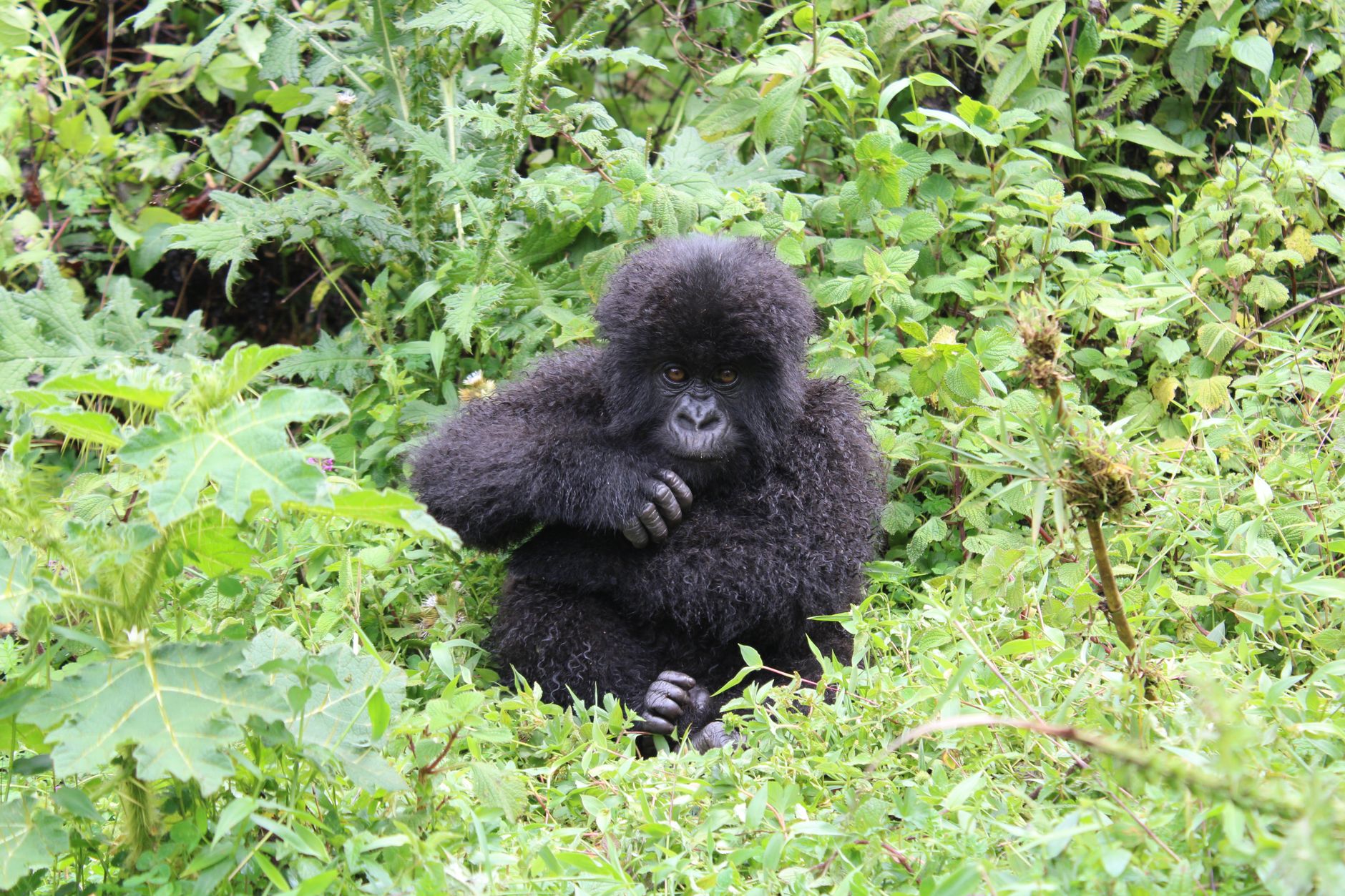
Mountain gorillas usually remain within their home range, but may cluster beneath dense foliage, pause activity or shelter during heavier rain. That can make individuals harder to see through wet vegetation, although the group is not expected to disappear or leave the area. Rangers and trackers continue locating the assigned family while respecting its distance and behaviour.
- Gorillas live in this forest. Rain does not send them out of their usual block.
- A wet group often sits closer together. You may see less movement, but you can still get clear views when the vegetation opens.
- Follow the guide’s hand signals. A silverback may be visible but cautious, and the group spacing rules still apply.
- For photography, rain cuts light and can coat lenses. Keep a dry lens cloth and one spare battery protected inside a dry bag. Wet-weather images are softer and dimmer, but a sighting in rain is not automatically a poor sighting.
What Should You Wear and Pack for a Rainy Gorilla Trek?
Wear waterproof hiking boots with strong tread, quick-drying trousers, gaiters and layered clothing beneath a waterproof jacket. Pack waterproof gloves, a backpack cover, dry bags and protection for camera batteries and phones. Avoid cotton and ordinary trainers. A porter can carry wet layers and equipment while helping steady bags on slippery ground.
- Waterproof boots with deep tread are the most important piece of gorilla trek rain gear.
- Gaiters keep mud and water out of your socks. They are worth the extra weight.
- Choose quick-drying trousers over jeans. Cotton stays wet and cold for hours.
- Bring a waterproof jacket or poncho with a hood. It should fit over a light layer, not replace it.
- Put your phone, passport and spare batteries in dry bags before the trek starts.
- If you are unsure about carrying gear on steep wet ground, read whether a Bwindi trek porter is worth it before you decide.
Does Heavy Rain Change the Trek Schedule?
Light rain usually changes the pace rather than the itinerary, while intense morning rain can cause a short briefing-point delay as rangers assess trail safety. Guides may choose a safer route or wait for conditions to ease, but travellers should not expect a guaranteed cancellation or replacement activity. Build spare time into transfers after the trek.
- Rangers update the group at the briefing point. If water is pouring, they may wait for conditions to settle before setting off.
- A route that crosses a swollen stream can be changed. That change may add distance or climbing.
- Wet trails can slow your transfer after the trek. If you have an afternoon flight, give yourself a buffer.
Wet Season or Dry Season: Which Works for a First Safari?
The rainy season trades easier footing for greener scenery, fewer visitors and, in some periods, better permit availability. The main costs are mud, humidity, slower hiking, wet equipment and less predictable photography. It is a sensible choice for flexible travellers who prioritise value and atmosphere, but less suitable for anyone needing the easiest possible trail conditions.
- Wet-month bookings often come with more choice and lower crowds. Demand, not rain, drives permit availability in many periods.
- Dry-season trails are generally easier on the body, but dry season does not guarantee clear skies. Highlands weather can change in a single afternoon.
- Before choosing dates, Bwindi gorilla trekking in the rainy season gives a closer look at the trade-offs.
A longer East Africa trip can also help you manage expectations. After a gorilla trek, many travellers fly to Nairobi and continue to Kenya’s Mara ecosystem. In conservancies such as Mara North or Naboisho, game drives give you space and flexibility that a steep forest trail does not. The Masai Mara safari guide helps you time that part of the route.
Your Next Step: Plan Around Rain, Not Away From It
Use this checklist when you talk to an operator. Ask how the trek runs after heavy rain, what happens if a forest route officially closes and whether a porter is included. Then build a route with extra time around the trek.
Compare safari operators on FindMySafari, or browse gorilla and Kenya safari packages on Valley Safaris. Check Trunktrails Safaris for itineraries that combine Bwindi or Volcanoes with the Mara. You cannot control the rain, but you can control how much room you leave for it.
More safari planning resources
- Best time to visit Kenya map from SafariPure
- Best time to visit Kenya from Trunktrails Safaris
- Best time to visit Kenya month-by-month map from Valley Safaris
- Camera advice for your first safari, on FindMySafari