East Africa safari private vehicle value is about what you buy with a daily rate, not just how the number looks on a quote. For a solo luxury traveler, that daily rate usually lands between US$200 and US$400. The challenge is deciding which days are worth paying it.
A private 4×4 with a professional guide gives you flexibility. It does not give you an animal sighting on demand. That is the balance this comparison explains, with examples from Kenya and a few honest words about Tanzania.
How Do You Evaluate East Africa Safari Private Vehicle Value?
East Africa safari private vehicle value is high when the car makes you more efficient in the field. It is low when the car only makes you more comfortable at the same sightings. Compare the time gained, not just the price paid. The vehicle should change how your day works.
Many online guides quote a daily rate and stop there. For a solo traveler, that rate is only half of the comparison. You also need to know if your camp already has a vehicle policy that makes a private car redundant. Some high end camps in Kenya include game drives in the nightly rate, often with a vehicle assigned to your group. In that case, paying a private vehicle supplement on top of the package can become double payment.
Ask the operator one direct question: is the daily rate a supplement or the full vehicle cost? The answer changes how you compare quotes.
How Much Does a Private Safari Vehicle Cost in East Africa?
A private safari vehicle in East Africa typically costs about US$200 to US$400 per vehicle per day, usually including a 4×4, professional driver-guide, and fuel. Kenya often falls near US$200 to US$350, while Tanzania commonly reaches US$250 to US$350. Park fees, accommodation, meals, flights, conservancy charges, and some transfers may remain separate.
Package structures in East Africa show a wide range for one simple reason: a private vehicle carries the same operating cost whether it has one guest or several. For a solo traveler, the whole daily rate sits on your shoulders, which is why a private Land Cruiser can look expensive next to a per person seat in a shared vehicle.
Kenya quotes often land in the lower half of that range outside high season on a compact route. Tanzania quotes can go higher because routes are longer and protected area fees add up. Before comparing rates, read the Kenya and Tanzania safari park fees summary to separate the car cost from the destination cost.
What Does the Private Vehicle Rate Include and Exclude?
Most private-vehicle quotes cover the dedicated 4×4, driver-guide, and fuel for scheduled safari days. They commonly exclude park or conservancy fees, accommodation, meals, domestic flights, airport transfers, and special activities. Ask whether the quote is a daily supplement or the full vehicle cost before comparing operators, because package structures differ.
Do not assume a full board camp rate includes your car. Many camps quote accommodation and meals separately from transport, then bill the vehicle per day or add it as a supplement.
For a solo traveler, an itemized quote matters even more. You want a line that separates the car, the guiding, the camp, and the park fees.
Is a Private Safari Vehicle Worth It for One Person?
For one luxury traveler, a private vehicle is worth the premium when flexible departures, quiet photography, personal guiding, and control over the day matter more than minimizing cost. It is poor value if used only to guarantee sightings. A solo traveler pays the entire daily rate, so privacy is most valuable on priority wildlife days.
A first luxury solo safari often comes down to this: share a car with strangers, or pay more to keep the experience personal. A private vehicle gives you room for camera gear, permission to stop for small sightings, and the ability to sit in silence while a leopard rests.
They matter most on days you have a photography target, a special interest like birds, or a shortened itinerary. If you simply want comfort, a high quality shared vehicle works well too.
The same debate appears on the Tanzania side. Travelers planning a Serengeti crossing should read about private vehicle trade-offs in the Serengeti before extending the premium across the border.
Is Kenya or Tanzania Better for Private Safari Vehicle Value?
Kenya often offers slightly lower private-vehicle rates, commonly around US$200 to US$350 per day. Tanzania frequently runs around US$250 to US$350 or more, depending on route and season. The final value depends less on country alone than on park fees and concession access, driving distances, vehicle availability, and whether the camp already includes game drives.
| Comparison | Kenya | Tanzania |
|---|---|---|
| Typical private vehicle rate, guide and fuel | About US$200 to US$350 per day | About US$250 to US$350 or more per day |
| Main wildlife focus | Maasai Mara, Amboseli, Tsavo, Samburu | Serengeti, Ngorongoro, Tarangire, Manyara |
| Extra costs to check | Conservancy fees in Mara North, Naboisho | Concession fees, crater rules, longer route costs |
| Best role for private vehicle | Flexible migration days, conservancy access | Following river crossings, crater timing |
Kenya edges ahead for many solo travelers because the distances are shorter. You can combine Amboseli and the Maasai Mara with easy flights, so your vehicle is used mainly for game drives, not for covering miles. Tanzania offers the scale of the Serengeti and the drama of Ngorongoro Crater. That scale can consume vehicle days, so the country with the lower daily rate is not always the better value.
The Maasai Mara remains the centerpiece for most Kenya private vehicle itineraries. Our Masai Mara guide explains the conservancies and where flexible timing helps most.
When Does a Private Safari Vehicle Improve Wildlife Viewing?
A private vehicle improves wildlife viewing by letting you leave earlier, stay longer, change locations quickly, pause for photography, and avoid following a group schedule. It can help when predators are active at dawn or dusk and when an animal’s behavior changes quickly. It cannot create sightings, override park rules, or guarantee a closer encounter.
Most camps run two game drives per day, but with an exclusive vehicle, the timing is yours. In the Maasai Mara, a leopard active at 7 a.m. may be hidden by 9 a.m., and a shared group may have already moved on. A private car lets you stay.
Private conservancies such as Naboisho and Mara North add another layer. Vehicle limits mean fewer cars around a sighting, and camps often have more flexibility on off-road driving. This controlled setting is where privacy creates value, especially if you want to photograph lions from an angle rather than from the back of a queue.
Amboseli is another example, where elephant families come down to the swamps at irregular times. A private guide can read the morning light, wait near a favored crossing, and adjust when the herd moves. For more detail on park layout, see our Amboseli safari guide.
How Can You Reduce the Cost Without Giving Up Privacy?
The best saving is to reserve a private vehicle only for the days when control matters most, then use included camp drives or shared transfers on lower-priority days. A solo traveler can also choose a camp with vehicles included, shorten long road-transfer days, and compare the total package rather than a headline daily supplement.
Solo luxury travelers who want privacy often book private for the entire safari, which is coherent but rarely necessary. Decide first which wildlife events matter most: river crossings, big cat behavior, elephants at Amboseli, or the concentrated game of the Mara.
Then reserve a private vehicle for those days and let a good camp vehicle handle the rest. This turns a high daily cost into a targeted investment.
A shared safari vehicle works well on transfer legs and in parks where vehicle rules keep everyone on the same roads anyway. Your private vehicle can react, but only if reacting is allowed. Before setting a budget, look at the wider structure in our Kenya safari cost guide.
How Do Season and Location Change Private Vehicle Value?
Season and location change private-vehicle value because wildlife concentration, road conditions, demand, and access rules vary. In the Maasai Mara, a private vehicle is especially useful during busy migration periods and for flexible positioning. In private conservancies such as Naboisho and Mara North, exclusivity and off-road access may deliver more value than privacy alone, depending on camp rules.
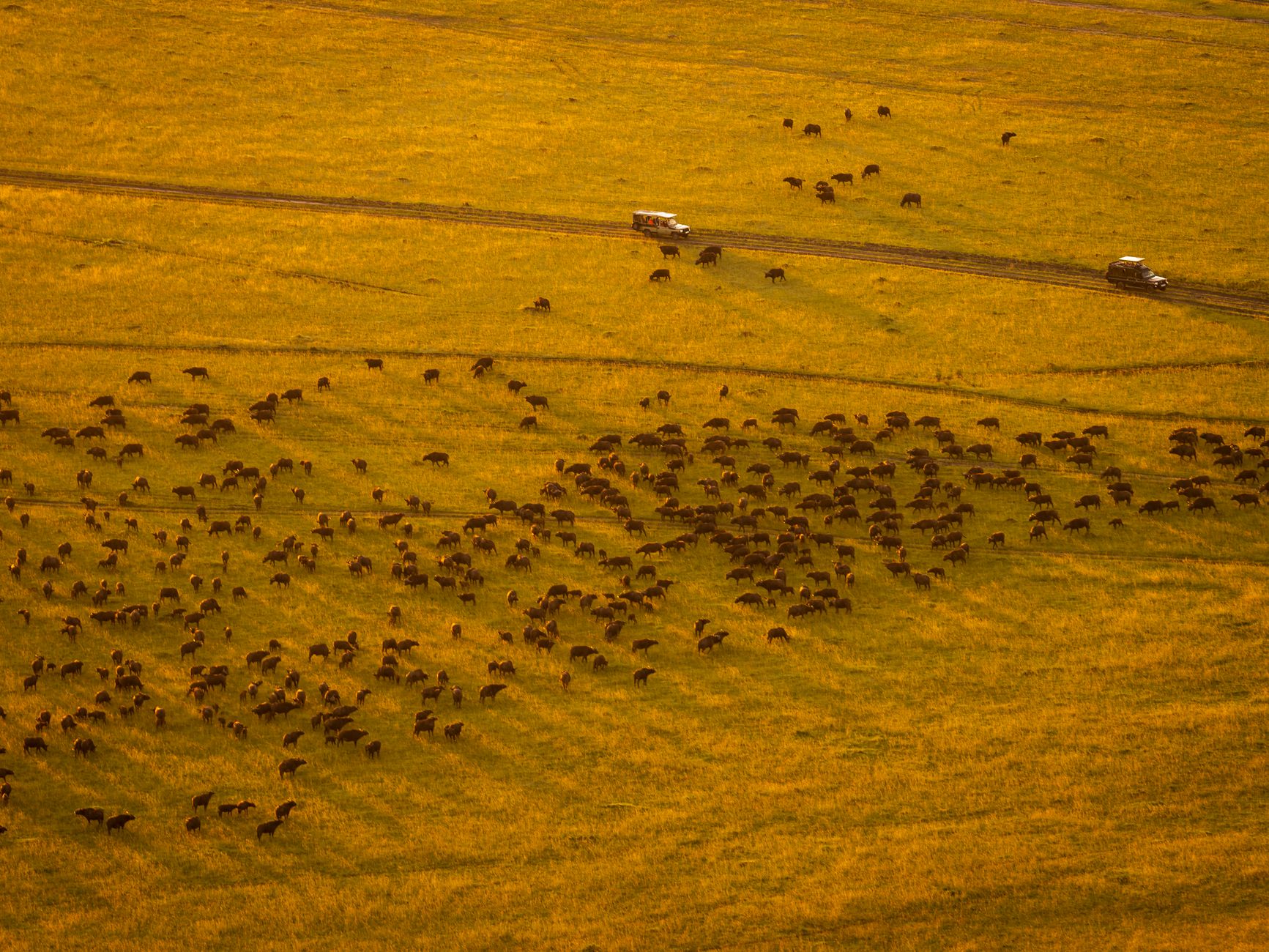
In low season, camps and vehicles are thin, so a private car may be less necessary because you already have space. In the peak months around the Mara, usually July through October, pressure at sightings rises. That is when private transport, an early start, and a guide who can choose his own route matter most. Your dollar buys a position in a queue of one instead of a queue of many.
Rules also differ by park. Off-road driving is accepted in parts of the Mara ecosystem but restricted in many Tanzanian areas. A private vehicle cannot beat a regulation. It can only make the best of the conditions.
For month by month expectations, read our best time to visit the Maasai Mara.
Which Safari Style Should a Solo Traveler Choose?
For a solo luxury traveler, the highest east africa safari private vehicle value comes from targeted booking: private on priority game days, included camp drives on the rest, and no private vehicle on transfer days. If you want a completely private trip and have the budget, pay for it. If not, combine the two.
Choose a small camp in the Maasai Mara or a private conservancy with a high guiding standard, ask for a quote that separates the vehicle rate from the park fees, then book the private days that matter.
To compare pricing structures across operators, browse packages and compare safari operators at FindMySafari, Valley Safaris, or Trunktrails Safaris.
Where Can You Find More Safari Planning Resources?
- Maasai Mara interactive map from SafariPure
- Masai Mara Great Migration guide from Trunktrails Safaris
- Interactive Maasai Mara map from Valley Safaris
- Compare Kenya safari packages on FindMySafari