Tsavo is Kenya’s largest protected landscape, and most of its edges are not patrolled by national park rangers alone. Local men and women trained as community scouts cover the group ranches and conservancy land bordering Tsavo East and Tsavo West. They track elephants, respond to human-wildlife conflict, and feed intelligence to Kenya Wildlife Service teams before trouble reaches the park boundary. Touring Insights looks at how this training works, who runs it, and why it matters if you are planning a Tsavo safari.
What Is a Community Scout, and How Is It Different from a Ranger?
A KWS ranger is a uniformed, armed government officer. A community scout is usually a local resident recruited from villages or group ranches bordering the parks, trained by a conservation partner, and deployed to patrol community and conservancy land rather than gazetted park territory.
Community scouts fill a gap KWS cannot cover alone. Tsavo’s protected core is huge, but wildlife does not stop at the park fence. Elephants raid farms outside Tsavo East. Lions kill livestock near Rombo and Taita group ranches. Scouts drawn from these same communities know the terrain, speak the local language, and can respond within minutes instead of hours.
Programs run by Tsavo Trust, Wildlife Works, and Kenya Wildlife Trust (KWT) all recruit this way. Each partners formally with KWS, so scouts pass information up the chain rather than acting as an independent security force.
Who Trains Tsavo’s Community Scouts
Several organizations run scout training inside the Tsavo landscape, each with its own focus.
Tsavo Trust operates from a base near Ndara Ranch on the eastern side of Tsavo East. It pairs aerial surveillance with ground scouts under its Big Tusker Project, which tracks and protects Tsavo’s remaining big-tusker elephants, a group most estimates put at under 25 individuals.
Wildlife Works runs the Kasigau Corridor REDD+ project from Rukinga Sanctuary, between Tsavo East and Tsavo West. It has reported employing more than 300 local residents across its ranger and scout teams, drawn mainly from Kasigau and Taita communities, patrolling roughly 200,000 hectares (about 500,000 acres) of dryland forest and bush.
Kenya Wildlife Trust supports community scout units and anti-poaching patrols across the Tsavo Conservation Area, often coordinating directly with KWS security teams and funding equipment and field gear.
KWS Manyani Law Enforcement Academy, sited near Manyani Gate on the Nairobi-Mombasa highway inside Tsavo West, is the national training ground for certified rangers. It does not typically train community scouts directly, but its instructors and curriculum shape the standards that partner-run scout courses aim to match.
What the Training Actually Covers
Community scout courses run shorter than full KWS ranger certification, often a few weeks rather than months, and focus on skills scouts use daily rather than the full law-enforcement curriculum.
Core modules usually include tracking and sign-reading, snare detection and removal, GPS and basic data recording for patrol reports, first aid, radio communication, and de-escalation techniques for human-wildlife conflict. Firearms training is limited or absent for community scouts, since most operate as unarmed observers and first responders rather than armed enforcement officers.
Refresher sessions repeat every year or two. Skills like tracking and conflict de-escalation fade without practice, so partner organizations schedule scouts back through short courses on a rolling basis rather than training once and moving on.
Community Scouts vs KWS Rangers: How the Two Roles Fit Together
| Feature | Community Scout | KWS Ranger |
|---|---|---|
| Recruitment | Local residents from group ranches and villages bordering Tsavo | National recruitment, KWS employment |
| Training length | Typically 2-4 weeks, with periodic refreshers | Several months at Manyani or another KWS academy |
| Armed status | Usually unarmed, first-responder role | Armed, full law enforcement authority |
| Patrol area | Community and conservancy land bordering the parks | Gazetted national park and reserve land |
| Who runs training | Tsavo Trust, Wildlife Works, Kenya Wildlife Trust, other NGOs | Kenya Wildlife Service |
| Core focus | Conflict response, tracking, snare removal, intelligence | Full anti-poaching enforcement and arrest powers |
The Tsavo Landscape at a Glance
| Place or feature | Size / distance | Notes |
|---|---|---|
| Tsavo East National Park | 13,747 km2 | East of the Nairobi-Mombasa highway; Voi Gate is the main entry |
| Tsavo West National Park | 9,065 km2 | West of the highway; includes Mzima Springs and Lake Jipe |
| Chyulu Hills National Park | 741 km2 | Adjoins Tsavo West to the northwest |
| South Kitui National Reserve | approx. 1,833 km2 | Borders Tsavo East, part of the wider conservation area |
| Combined Tsavo Conservation Area | approx. 42,000 km2 | Kenya’s largest protected area network |
| Kasigau Corridor project area (Wildlife Works) | approx. 200,000 hectares (approx. 500,000 acres) | Community and conservancy land between Tsavo East and West |
| Nairobi to Voi | approx. 330 km, 4.5-5 hours by road | Main gateway town for Tsavo East |
| Mombasa to Voi | approx. 160 km, 2-2.5 hours by road | Coastal approach to Tsavo |
| Manyani Gate to Voi Gate | approx. 45 km along the highway corridor | KWS Manyani academy sits near this stretch |
These are working estimates. Park boundaries, project areas, and travel times shift slightly as roads and conservancy leases change, so confirm current figures with KWS or a local operator before locking in an itinerary.
Explorer Notes
Guides working the Voi and Taita Hills area say the clearest sign of a well-trained scout unit is how fast a human-wildlife conflict call gets answered, not how many patrols happen on a quiet week. Camps near Rukinga, Kasigau, and the Taita Hills sometimes have staff who came up through scout programs before moving into hospitality or guiding roles. Ask your guide directly if they trained as a scout. Many did, and they usually have sharper tracking instincts than a standard driver-guide course teaches. If you are self-driving between Voi and Mtito Andei, note that Manyani Gate marks the KWS training academy zone. It is not open to visitors, but the signage is a useful landmark for pacing a fuel or rest stop.
What This Means for Safari Travelers in Tsavo
None of this training happens where guests can watch it. Scout courses run on private conservancy or NGO land, not inside the parks tourists visit. What travelers experience instead is the outcome: fewer retaliatory killings after livestock loss, faster elephant-conflict response near farms bordering Tsavo East, and calmer game drives inside a park whose edges are actively watched.
| Access point | Indicative cost |
|---|---|
| Tsavo East / Tsavo West entry (non-resident, per adult, 24 hours) | indicative $52-60, confirm current KWS rate before travel |
| Tsavo East / Tsavo West entry (non-resident, per child, 24 hours) | indicative $25-30 |
| Community conservancy fee near Kasigau or Taita (per person, per night, camp-dependent) | indicative $20-40 |
Some camps working with Wildlife Works or Tsavo Trust can arrange a short talk with scout or community staff on request, though this is not a standard stop on a game drive itinerary. Ask ahead if a conservation-focused visit matters to your trip.
What to Read Next
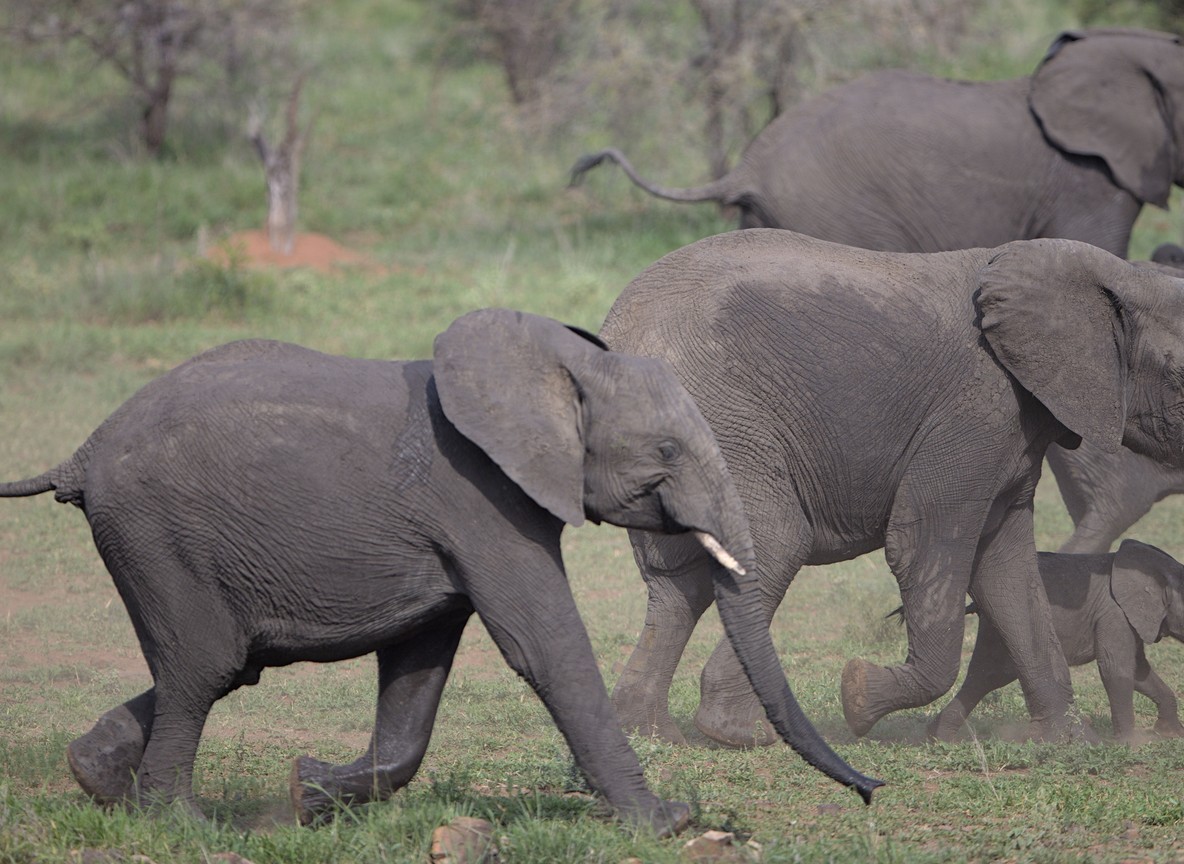
- Curious about the elephants these scouts protect? See our guide to Tsavo’s big tuskers.
- New to the region? Start with our Tsavo East and West national parks guide.
- Planning a broader Kenya trip? Check the best time to visit Tsavo.
FAQ
What is a community scout in Tsavo, Kenya? A community scout is a local resident trained by a conservation partner such as Tsavo Trust, Wildlife Works, or Kenya Wildlife Trust to patrol community and conservancy land bordering Tsavo National Park, mainly responding to human-wildlife conflict and gathering anti-poaching intelligence.
How is a community scout different from a KWS ranger? Community scouts are usually unarmed local recruits trained for a few weeks, focused on conflict response and tracking. KWS rangers are armed national officers who complete several months of law enforcement training, typically at the Manyani academy in Tsavo West.
Who runs community scout training in Tsavo? Tsavo Trust, Wildlife Works through its Kasigau Corridor project, and Kenya Wildlife Trust all run or support scout training, working in coordination with Kenya Wildlife Service.
Can tourists visit a community scout training site in Tsavo? No. Training happens on private conservancy or NGO land, not inside areas open to park visitors. Some camps can arrange a conversation with scout or community staff on request.
How big is the Tsavo Conservation Area these scouts help protect? The combined Tsavo Conservation Area, including Tsavo East, Tsavo West, Chyulu Hills, and South Kitui, covers approximately 42,000 km2, making it Kenya’s largest protected area network.
Community scouts are a big reason the edges of Tsavo stay quiet enough for a good game drive. If a scout-supported conservancy stay near Kasigau or Taita interests you, visit our Tour Packages page to compare camps working closest with these programs, or ask a partner operator which properties support local scout teams directly.
Further reading
More safari planning resources
- Map of Tsavo from Valley Safaris
- Tsavo complete guide on Touring Insights
- Tsavo destination guide on FindMySafari
- Kenya national parks map from Valley Safaris
Related guides: 46 New Community Scouts Just Graduated in Tsavo: What They Actually Do.