Are you planning a flying safari through the Maasai Mara, Amboseli, or Laikipia? You will likely ask one question early. Can you use a suitcase on a Kenya bush flight? The honest answer is no for most scheduled and private charters. A soft-sided duffel bag is the standard. The total weight allowance is also small. This guide explains why the rules matter. It also covers how much you can bring. You will learn what to do with a suitcase before you fly.
TouringInsights is a safari operator. A clear luggage plan starts before you pack.
Can you use a suitcase on a Kenya bush flight?
No. A soft-sided duffel bag is the accepted luggage type instead. It must not have wheels. It must not have a rigid frame. It must not have a telescoping handle. The bag needs to flex. It must squeeze into small cargo holds. It also fits under seats. A standard wheeled suitcase is usually refused. This is true even for small carry-on sizes. Safari carriers care less about the brand. They care more about the shape.
Choose a duffel around 65 to 70 cm long. It should be 30 to 35 cm wide. A 60 to 75 liter bag works well for most trips. Pack it about three quarters full. This lets it compress. Canvas or nylon works well. Both materials bend and resist dust. If you bring a daypack or camera bag, it counts toward the same allowance.
What is the luggage weight limit on a Kenya safari flight?
Kenya bush flights use a total weight allowance. They do not use a separate checked and hand luggage system. On Safarilink and AirKenya, the standard is 15 kg per person. That figure includes every item you carry. This means clothes, shoes, toiletries, camera kit, binoculars, chargers, neck pillow, and daypack. There is no separate free cabin allowance on most scheduled routes.
| Operator | Standard total allowance | Soft bag rule | Good to know |
|---|---|---|---|
| Safarilink | 15 kg per person | Soft duffel, no wheels or hard frame | Covers hand luggage and camera bag |
| AirKenya | 15 kg per person | Soft bag strongly preferred | Staff weigh at Wilson Airport |
| Governors’ Aviation | 15 kg per person | Soft-sided only | Common on Mara and conservancy routes |
| Private charter | 15 to 25 kg depending on aircraft | Soft bag recommended | Ask the operator before booking |
Weights can change. These are the practical figures most travelers meet. Check your ticket. You can also ask your safari planner before departure.
Why do hard-shell suitcases not fit in light aircraft?
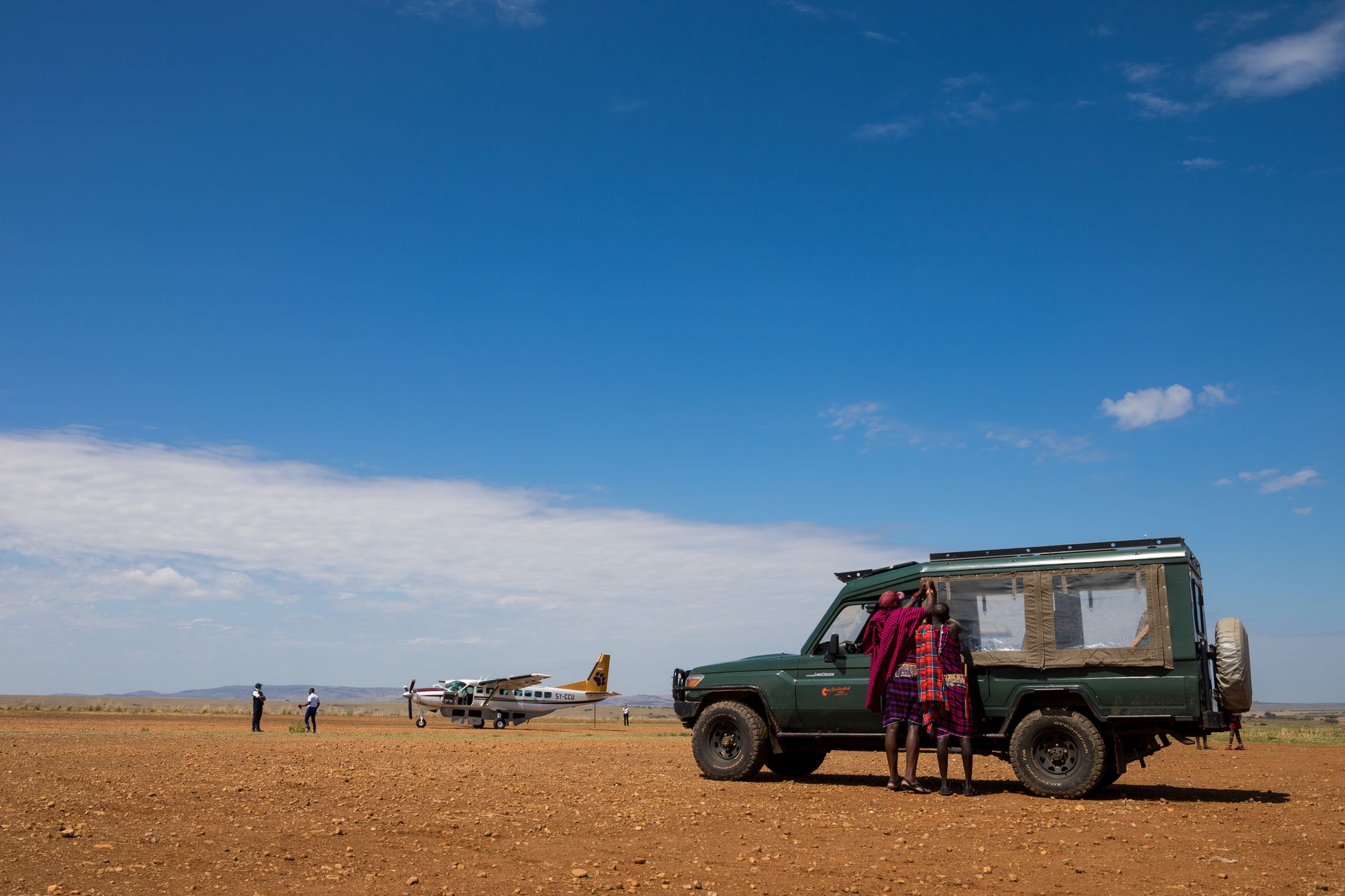
Safari planes are small. Many are Cessna Caravans or similar aircraft. They have narrow doors. They have small underbelly pods. They also have limited space behind the rear seats. A hard-shell suitcase cannot bend around a curved door frame. It cannot squeeze into an odd-shaped hold. Wheel housings catch on loading edges. Telescoping handles also catch. A rigid case can concentrate weight in one spot. This matters when pilots need balanced loads on unpaved strips. Pilots calculate weight for every takeoff. An uneven load can affect handling on a short runway.
Soft bags solve these problems. They compress. They mold to the space. They also weigh less when empty. Every kilogram you leave behind makes the aircraft safer. It also reduces fuel demand. Remote conservancy airstrips are often short. They are unpaved. They are surrounded by wildlife. Ol Pejeta and Olare Motorogi are two examples. Luggage rules exist because the plane and the airstrip are part of the safari. See the Ol Pejeta Conservancy guide for one example.
What are the Safarilink, AirKenya, and Governors’ Aviation luggage restrictions?
The three main scheduled operators follow similar rules. Safarilink allows 15 kg per person total. You must use a soft-sided bag with no wheels. Hand luggage counts toward the total. AirKenya also applies a 15 kg total. Staff weigh bags at Wilson Airport. They expect soft bags. Governors’ Aviation serves the Maasai Mara and nearby conservancies. It insists on soft duffel bags. None of them promise a separate hand luggage or camera allowance.
Always read your ticket carefully. Rules can change with aircraft swaps. If you show up at Wilson Airport with a hard case, staff may ask you to repack. You might have to leave the case behind. The same applies at smaller airstrips. At the Mara or Amboseli, there is no baggage office. There is no spare capacity. Repack before you reach the airport. For route context, see our Maasai Mara guide or Amboseli safari guide.
What counts toward the 15 kg allowance?
Everything counts. Your duffel, daypack, handbag, and camera bag all count. Your laptop sleeve, water bottle, and spare shoes also count. If you wear a heavy camera around your neck, the bag that held it still counts. If you stuff a jacket full of lenses, that counts too. Wear your heaviest shoes and jacket on the plane. This reduces bag weight without breaking rules. Weigh the full setup at home. Weigh it exactly as you plan to board. Do this before leaving home.
A small shoulder bag or waist pouch can help. It keeps passports and medication close. It is not a free extra. Pack to the total weight. Do not pack to a separate cabin limit. This is the number one mistake first-time safari travelers make.
How should you pack for a 15 kg safari allowance?
Start with the climate and the daily routine. Mornings in the Maasai Mara, Amboseli, and Laikipia can be cold. This is true before sunrise, especially from June to August. You will sit in an open vehicle for hours. Wind chill is real. Pack one warm fleece or light insulated layer. Add a long-sleeve shirt and a rain shell. Then add three or four lightweight shirts. Add two pairs of trousers or shorts. Bring socks, underwear, and closed shoes that handle mud. Neutral colors like khaki and olive work best. They hide dust and blend with the bush.
The wet seasons bring mud. Wildlife often gathers near water and fresh grass. Early morning and late afternoon drives are the most active. They are also the coldest and dustiest. A buff or scarf keeps dust off your face. Good binoculars earn their weight. Leave the heavy guidebook at camp. Most lodges and camps offer laundry. You can re-wear the same base layers. See the full Kenya safari packing list and Kenya safari packing and health tips for a deeper checklist. If your safari targets the river crossings, check the best time for the Great Migration in Kenya before choosing dates.
Can you pay for extra luggage on a Kenya bush flight?
Sometimes, but do not rely on it. Small aircraft have strict weight and balance limits. Paying an excess fee may not create space. The flight might be full. The airstrip might be short. Scheduled operators may carry an extra bag only if the flight has spare payload. They often charge per kilogram. They do not guarantee space. Excess fees vary by operator. Ask for the current rate when you book. A private charter can sometimes carry more. You must arrange this in advance. The bag still needs to be soft.
The safer plan is to leave your city suitcase in Nairobi. Fly with only the duffel. If you need more than 15 kg, ask your safari operator first. They can tell you whether the plane type and routing allow extra weight.
Where can you store a suitcase in Nairobi?
Most travelers repack at their Nairobi hotel. They do this the night before the bush flight. You can leave your international suitcase at the hotel. Leave dress shoes, city clothes, and non-safari electronics too. Collect them after you return. Many Nairobi hotels and safari operators offer left luggage storage. This is often at no cost or a small fee. Confirm this in writing before you arrive.
Some travelers store a bag at a Wilson Airport baggage facility. Space and reliability vary. The calmest option is to ask your first and last hotel to hold the suitcase. Hotels usually store bags in a locked room. Still, keep valuables with you. If your itinerary combines Maasai Mara and Diani Beach, you may not want heavy safari boots on the coast. For itinerary ideas that mix bush and beach, browse our sample Kenya safari itineraries.
Can you use a suitcase on a road-only Kenya safari?
Yes, with some caution. If your entire trip travels by road, a hard suitcase is less of a problem. Vehicle space is larger. There is no aircraft weight limit. However, shared vehicles still have limited room. A large suitcase for every passenger can crowd the luggage area.
A soft duffel is still more practical for road transfers. It slides into the back of a Land Cruiser more easily. But if you choose a road-only itinerary, a suitcase is generally acceptable. Road safaris also expose luggage to dust. A hard case can protect electronics better than a soft bag on bumpy roads. Ask whether you will share the vehicle. Pack no more than you can carry short distances over uneven ground. For route planning, see the Maasai Mara guide and Amboseli safari guide.
What size duffel bag should you take on safari?
A 60 to 75 liter soft duffel works for most flying safaris. It should be roughly 65 to 70 cm long. Avoid bags with wheels. Avoid rigid bases and built-in shelving. Duct tape or a luggage tag helps identify your bag. Packing cubes keep clothes organized inside a shape-shifting bag. Dark colors show less dust. A bright tag makes the bag easier to spot.
Do not buy a giant expedition duffel. The bigger the bag, the more you will pack. You will hit the 15 kg limit long before the bag is full. A slightly underfilled duffel is better. It can compress into a cargo pod. If you carry camera gear, choose a camera insert. It should fit inside the same duffel. Do not use a separate rigid case.
Are soft bags weighed at Wilson Airport?
Yes. Staff at Wilson Airport weigh loaded duffels. They weigh daypacks and sometimes even a small handbag. They also check for wheels and hard sides. Do not assume a soft bag will not be weighed because it looks small. The scale is the final word. Arrive early enough for a reweigh if staff question your bag. Security checks are quick but lines can form.
Weigh everything at home on a bathroom scale. Add the camera, chargers, water bottle, and the small bag you plan to carry onto the plane. If the combined weight is above 15 kg, remove the least useful item. Do not remove the rain layer.
What do first-time safari travelers get wrong about luggage?
They assume a hard-shell suitcase is fine if it weighs under 15 kg. Weight is not the only limit. Shape and flexibility matter. A hard case can fail before it ever reaches the scale. It may not fit through the door or into the hold. They also assume hand luggage is free. On a Kenya bush flight, it is not.
Another mistake is waiting until the airport to repack. Wilson Airport is small and busy. There is no spacious repacking area. Sort your luggage at the hotel. Use a small padlock. Do not use one that blocks the bag from being squeezed. Pack toiletries in zip-lock bags. A broken bottle at altitude can ruin clothes.
Finally, travelers sometimes ignore the return leg. The rules apply both directions. This includes from the Mara back to Nairobi. It also includes from Amboseli to the coast.
More safari planning resources
Planning a safari takes more than the right bag. These resources can help with routes, gear, and timing.
- Kenya safari packing list
- Masai Mara Great Migration guide from Trunktrails Safaris
- Map of Amboseli from Valley Safaris
- Camera advice for your first safari, on FindMySafari
Where can you compare safari operators and browse packages?
Baggage rules vary by operator and aircraft. Compare options before you commit. Ask about the plane type. Ask about the total allowance. Ask about the soft bag policy. Ask your safari planner before departure. Browse packages and compare safari operators on FindMySafari, Valley Safaris, or Trunktrails Safaris. A clear luggage plan makes the whole flying safari easier. It helps from the Nairobi hotel room to the first game drive. TouringInsights offers flying safari packages that follow these baggage rules.