Uganda Wildlife Authority confirmed five newly habituated gorilla families opened to trekkers in Bwindi Impenetrable National Park in 2026. The new groups are named Binyindo, Muyambi, Rwigi, Tindatine, and Posho. They bring Bwindi’s total habituated families to 24 and lift daily permit capacity to roughly 194. It is the biggest single jump the park has recorded in years. This guide covers where the new families live and what the expansion does for permit availability during peak booking months. It also compares the shift with Uganda’s separate 2026 permit price changes.
What Uganda Wildlife Authority Announced
Two of the five new families, Binyindo and Muyambi, range in the Buhoma sector. It is the park’s original trekking base in the north. Binyindo counts 9 members. Muyambi has 8 and split away from the long-established Mubare family back in 2019. It spent years building its own territory before UWA judged it ready for tourism. Posho joins the trekking roster in the Nkuringo sector in the south. UWA’s release did not spell out sector placement for Rwigi and Tindatine. Travelers booking a permit with either family should confirm the trailhead with their operator closer to their travel date.
Habituating a wild gorilla family for tourism is slow work. Rangers spend two to three years in daily contact with a group. Only then does it tolerate a full trekking party at close range. The five families opening now likely began that process years before this year’s announcement. Muyambi’s split from Mubare shows how a single well-known family can eventually produce more than one trekking group.
| New family | Sector | Group size | Note |
|---|---|---|---|
| Binyindo | Buhoma | 9 | Newly opened for trekking, 2026 |
| Muyambi | Buhoma | 8 | Split from the Mubare family, 2019 |
| Posho | Nkuringo | Not yet published | Newly opened for trekking, 2026 |
| Rwigi | Not yet specified by UWA | Not yet published | Newly opened for trekking, 2026 |
| Tindatine | Not yet specified by UWA | Not yet published | Newly opened for trekking, 2026 |
Bwindi’s Habituated Family Count, Before and After
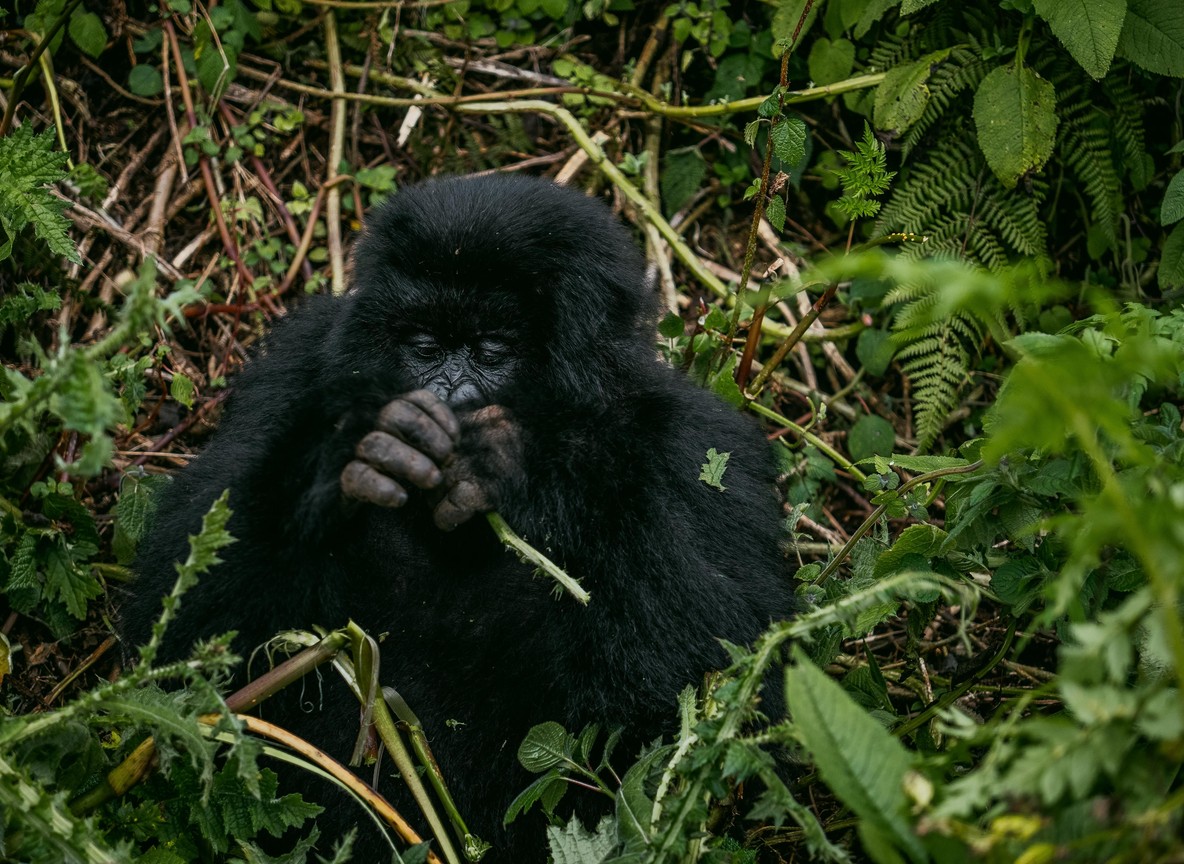
Before this round, Bwindi held 19 habituated families available to trekkers across its four sectors. The five additions raise that to 24, an increase of more than a quarter in a single announcement. Bwindi already carried roughly half the world’s mountain gorilla population before this expansion. Each newly opened family adds another option for travelers trying to book a permit during the park’s busiest months.
What More Families Means for Permit Supply
Uganda caps each habituated gorilla family at 8 trekking permits per day, one per visitor. The limit exists to reduce stress on the group. Twenty-four families and roughly 194 total daily permits work out to just over 8 per family on average. That matches the standard cap. In practical terms, the expansion adds close to 40 more permits per day system-wide compared with before. Prime-season dates, June through September and December through February, often sell out three to four months ahead. This added supply brings real relief.
Permit Prices: Standard Trekking Stays Put, Habituation Experience Rose
This expansion does not change what a permit costs. The standard gorilla trekking permit covers one hour with an already-habituated family. It remains an indicative USD 700-800 per person for foreign non-residents, capped at 8 visitors per group. That is the product covering all five new families, since each has already completed habituation.
Uganda’s other gorilla product, the Gorilla Habituation Experience, is a separate offering entirely. It puts a small group of up to 4 visitors with researchers and trackers for up to four hours. They follow a family still being acclimated to human contact, rather than one that already treks. UWA raised that fee from USD 1,500 to USD 1,800 per foreign non-resident, effective July 1, 2026. That is a 20 percent increase across all visitor tiers. The five newly opened families are not part of that product. They already use the standard $700-800 trekking permit like every other habituated group in the park.
| Permit type | Price (indicative, foreign non-resident) | What it covers |
|---|---|---|
| Uganda standard gorilla trekking | USD 700-800 | 1 hour with a habituated family, max 8 visitors |
| Uganda Gorilla Habituation Experience (since Jul 1, 2026) | USD 1,800 | Up to 4 hours with a semi-habituated family, max 4 visitors |
| Rwanda gorilla trekking, Volcanoes National Park | USD 1,500 | 1 hour with a habituated family, 96 permits/day across 12 families |
| DR Congo gorilla trekking, Virunga National Park | USD 400 | 1 hour with a habituated family |
Fees shown are indicative UWA conservation tariff figures and can change without notice. Confirm current rates with UWA or a registered operator before booking.
Comparing Bwindi’s Four Sectors After the Expansion
Travelers picking a sector now have more named families to weigh against terrain and drive time. Here is how the four sectors stack up with the new additions factored in.
| Sector | Location in park | Distance from Kisoro town | Terrain | Named families (including new) |
|---|---|---|---|---|
| Buhoma | Northern gate | approx. 105 km, 3-4 hr | Gentler, more forgiving trails | Mubare, Habinyanja, Rushegura, Binyindo, Muyambi |
| Ruhija | Eastern sector | approx. 55 km, 2-2.5 hr | Moderate, high-altitude forest | Bitukura, Oruzogo, Kyaguriro |
| Rushaga | Southern, near Rushaga gate | approx. 10 km, 25-35 min | Moderate to steep | Nshongi, Mishaya, Kahungye, Busingye |
| Nkuringo | Southwestern edge | approx. 14 km, 30-40 min | Steep, physically demanding | Nkuringo, Christmas, Posho |
Buhoma’s two new families give the park’s easiest sector more trekking options for first-time visitors. Nkuringo’s addition of Posho gives that steeper, quieter sector a third named group to choose from.
Getting to Bwindi: Routes and Airstrips
Most international travelers fly into Entebbe and connect onward by light aircraft or road. Kisoro Airstrip serves the Nkuringo and Rushaga sectors best, with scheduled flights from Entebbe running around 1 hour 15 minutes. Kihihi Airstrip is the usual choice for Buhoma and Ruhija. It’s roughly a 2 to 2.5 hour drive from the airstrip to the trailhead. Travelers driving the full distance from Kampala should plan for 8 to 10 hours on the road. Most break the trip into two days with an overnight stop near Mbarara or Kabale.
Travelers combining a Uganda gorilla trek with a Kenya or Rwanda leg can use the East Africa Tourist Visa. It is a single multiple-entry visa priced at USD 100 and valid for 90 days across Kenya, Uganda, and Rwanda. Tanzania, Burundi, and South Sudan aren’t included, so those still need a separate visa.
| Detail | Figure |
|---|---|
| Bwindi park size | approx. 331 km2 |
| Habituated gorilla families, Bwindi (after this expansion) | 24 |
| Daily gorilla trekking permits, Bwindi (after this expansion) | approx. 194 |
| Kisoro Airstrip to Nkuringo/Rushaga | approx. 30-40 min drive |
| Kihihi Airstrip to Buhoma/Ruhija | approx. 2-2.5 hr drive |
| Kampala to Bwindi by road | approx. 8-10 hr drive |
| East Africa Tourist Visa | USD 100, 90 days, Kenya/Uganda/Rwanda |
Explorer Notes
Newly habituated families tend to range further from the trailhead than groups that have tracked tourists for years. Treks with Binyindo, Muyambi, Rwigi, Tindatine, or Posho may run longer than the park’s one-to-two-hour average in the first season. Build extra time into the day rather than a tight onward connection.
UWA and IGCP health rules introduced this year also apply to every family, new and established. Stay 7 to 10 meters back at all times and wear a mask during the actual tracking portion. Skip the trek entirely if you feel unwell. Gorillas share close to 98 percent of human DNA and catch human respiratory illnesses easily. Book early: a permit announcement like this one tends to draw a wave of interest. Uganda’s 7-day advance reservation window has been suspended since March 2026. Operators are filling dates on a rolling basis instead of a fixed booking cycle.
What to Read Next
- Curious how Uganda’s other gorilla product is priced? Read the full 2026 gorilla permit price hike coverage.
- Weighing Uganda against Rwanda for a gorilla trip? The Rwanda vs Uganda gorilla permit comparison covers what the price gap actually buys you.
- Combining a Bwindi trek with stops in Kenya or Rwanda? See the East Africa Tourist Visa guide for the one-visa option.
FAQ
How many gorilla families does Bwindi have now? Bwindi Impenetrable National Park has 24 habituated gorilla families open to trekkers. Uganda Wildlife Authority added five new groups in 2026, up from 19 before this round.
What are the names of Bwindi’s 5 new gorilla families? The five newly habituated families are Binyindo and Muyambi, both in the Buhoma sector, and Posho in the Nkuringo sector. Rwigi and Tindatine round out the group, though UWA has not yet detailed their sector placement.
Does adding new gorilla families change the permit price? No. The standard gorilla trekking permit stays at an indicative USD 700-800 per person. Only Uganda’s separate Gorilla Habituation Experience rose, from USD 1,500 to USD 1,800, effective July 1, 2026.
How many gorilla trekking permits are available in Bwindi per day now? Daily capacity across Bwindi’s 24 habituated families is roughly 194 permits. That’s based on the standard cap of 8 visitors per family per day.
Which sector has the most named gorilla families to choose from? Rushaga has four established families (Nshongi, Mishaya, Kahungye, Busingye). Buhoma now matches closely with five after adding Binyindo and Muyambi alongside its three original families.
More habituated families mean more room on the trekking calendar, especially in a season that sells out early. Check the Tour Packages page for itineraries that build in a Bwindi gorilla trek. Alternatively, ask a partner operator to confirm which of the new families has permits open for your travel dates.
Further reading
More safari planning resources
- Kenya family safari from SafariPure
- Nairobi to Maasai Mara route guide from Valley Safaris
- Kenya eTA and eVisa guide on Touring Insights
- Family safari collection on FindMySafari
Related guides: Erebero Hills: Asilia’s New Uganda Lodge Opens Near Bwindi in 2026, Uganda’s New Gorilla-Trekking Health Rules: What They Mean for Your Bwindi or Mgahinga Trip.