The best time to visit Meru National Park is June to October. Dry conditions pull wildlife toward the park’s rivers and thin the grass enough to see them clearly. That said, the honest answer depends on what you actually want from the trip. A solo traveler chasing empty tracks and a genuine conservation story might do better in January. A quiet stretch of the short rains can also beat Meru’s busiest dry-season weeks. This guide breaks the year into real trade-offs, not just a single recommended window. That way you can match the season to what matters most to you.
What Is the Best Time to Visit Meru National Park?
The best overall time to visit Meru National Park is June to October, especially July to September. Dry conditions thin the vegetation and concentrate animals near rivers then. January and February form the best alternative window: hot, generally dry, quieter, and highly rewarding for wildlife viewing near permanent water.
Meru does not behave like the Mara or Amboseli, where huge herds move on a predictable migration clock. It is a low-altitude, river-fed park in central Kenya. Its dry season has less to do with drama and more to do with visibility. When the bush thins out, elephants, buffalo, and predators become easier to find. They gather along the Tana, Rojewero, and other permanent watercourses that keep flowing even when the rest of the landscape browns off. That permanence is part of what makes the Meru National Park dry season different from parks that rely on seasonal rivers and rain-fed pans.
What Is the Weather Like in Meru National Park?
Meru has two dry windows and two rainy periods. June to October is the main dry season. January to February is a shorter, second dry season. The long rains usually fall from March to May. The short rains arrive around November and December. April and November tend to be the wettest months, so expect greener scenery and harder-going roads then.
One detail that general Kenya safari guides often skip: Meru sits at a lower elevation than the Mara or Aberdare, and it runs hot. Even in the cooler months, daytime temperatures climb well into the high 20s or low 30s Celsius. The January-February dry window can feel more intense than the mid-year one, because there is less cloud cover to soften it. If you are used to the highland chill of somewhere like the best time to visit Aberdare National Park, Meru’s heat will surprise you. Pack accordingly, and treat afternoon siestas at camp as a practical strategy, not a luxury.
What Animals Can You See in Meru, and When Is Wildlife Viewing Best?
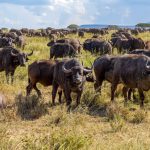
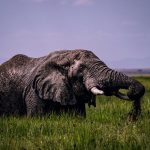
Choose July to September for the most dependable wildlife visibility. Sparse grass and limited surface water make elephants, buffalo, predators, hippos, and crocodiles easier to find along Meru’s rivers. January and February also produce excellent sightings, and because water is permanent, wildlife stays present even when rain scatters animals elsewhere.
Wildlife viewing in Meru National Park has a specific character. This is not classic open-plains game viewing. Much of it happens along riverine woodland and doum palm groves, where big cats stalk through cover rather than sit exposed on a plain. Meru is also home to a fenced rhino sanctuary protecting both black and white rhino. That sanctuary is a legacy of the park’s recovery from severe poaching in the 1980s and 1990s. For a luxury solo traveler who wants a real conservation story, not a marketing line, that recovery is a compelling reason to visit. The low vehicle density that still defines Meru today makes it a strong alternative to a more crowded reserve. If your itinerary is built around a full Big Five checklist, it is worth comparing notes with a park like Tsavo. Our piece on whether you can see the Big Five in Tsavo is a useful companion read. The big five in Kenya overview also puts Meru’s sightings in wider context.
Can You Visit Meru National Park in the Rainy Season?
Yes. The wet season can be worthwhile if lush scenery, solitude, lower rates, and flexible game drives matter more to you than the easiest possible sightings. The trade-off is taller vegetation, more dispersed wildlife, muddy roads, and heavier rain, particularly during the long rains from March to May.
Meru National Park’s rainy season is not a single flat experience. The long rains bring the heaviest downpours and the most difficult roads, and some camps scale back operations or close briefly during the wettest weeks. The short rains around November and December are lighter and more broken up by sunshine. That mix often brings green landscapes, dramatic skies, and productive game drives between showers. For travelers who have already done a classic dry-season safari, a short-rains visit to Meru is genuinely underrated. It suits anyone who wants something quieter and more atmospheric.
When Is Best for Birdwatching and Photography in Meru?
November to April is one of the best periods for birdwatching in Meru National Park. Migratory species and breeding activity add real variety to the park’s resident birdlife. June to September suits classic wildlife photography, with clearer light and better visibility. The wet months suit travelers who want saturated green landscapes, reflective water, and fewer vehicles in frame.
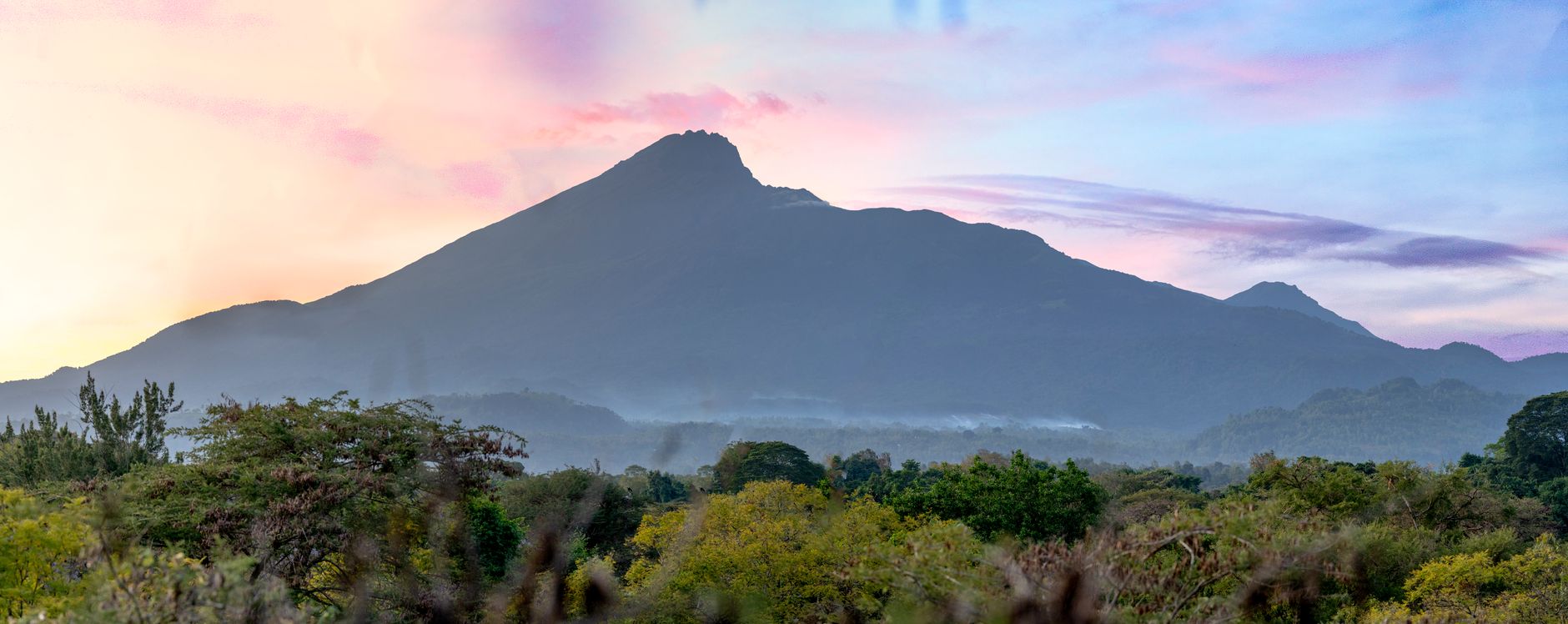
Photographers chasing dust and golden light will lean toward the dry months. Birders and anyone drawn to a more painterly, cinematic Kenya will find the wetter months hard to beat. Resident hornbills, weavers, and raptors are joined by seasonal migrants during this stretch. Meru’s river systems, doum palms, and open Nyambeni foothill views give photographers more textural variety than flatter savanna parks. That variety is part of why repeat visitors rate it highly even outside peak season.
How Busy and Expensive Is Meru National Park by Season?
Meru generally feels quieter than Kenya’s most famous parks, even during its preferred June-to-October season. January, February, November, and the rainy months can offer even greater privacy and possible value, though lodge availability varies by camp and year. For peak dry-season travel, aim to reserve a luxury camp roughly six to twelve months ahead.
That relative quiet is Meru’s real selling point for a solo traveler who has already done the Mara. It means fewer vehicles at a sighting, not more. Camp rates are not standardized across the park, so treat the figures below as an indicative range rather than a quote. Check current pricing before booking.
| Season | Months | Rainfall | Wildlife Viewing | Typical Camp Rates (indicative) |
|---|---|---|---|---|
| Peak dry season | July-September | Minimal | Excellent, animals concentrate at rivers | High season, roughly $500-900 per person, per night, all-inclusive |
| Short dry season | January-February | Low, hot | Very good, quieter than peak | Moderate, roughly $400-700 per person, per night |
| Long rains | March-May | Heavy | Fair, wildlife more dispersed, roads can be difficult | Low season, often discounted 20-30% off peak rates |
| Short rains | November-December | Moderate, broken by sun | Good, green and photogenic | Moderate, some camps offer shoulder-season rates |
These bands are a starting point for planning, not a fixed price list. Individual camps set their own rates and change them from year to year.
How Many Days Do You Need in Meru National Park?
Plan at least two full nights in Meru National Park. Three nights give a luxury solo traveler time for unhurried dawn and afternoon drives. That also allows a visit to the rhino sanctuary and time along the river habitats without feeling rushed.
Meru rewards a slower pace better than parks built for a single overnight stop. Because it sits away from the main southern circuit, it works well as a quieter northern or central Kenya extension. It is often paired with a park like Samburu for a broader sense of the region. Our Samburu safari guide is a useful next stop if you want to build a two-park northern itinerary. If a full Big Five circuit matters more than solitude, weigh Meru against a park like Amboseli or the Mara. Our Kenya safari cost breakdown can help before you decide how to split your nights. Whichever season you choose, sort out practicalities early. Our Kenya safari power adapter and voltage guide and Kenya safari packing list cover the basics so you are not solving them at camp.
Frequently Asked Questions
What is the best month to visit Meru National Park?
September is one of the best single months for Meru. It sits within the reliable June-to-October dry season, when vegetation is lower and wildlife is easier to spot. July and August offer similarly strong viewing. January and February provide a quieter alternative for anyone weighing crowd levels against sighting odds.
Can you visit Meru National Park in the rainy season?
Yes, Meru is open year-round and the rainy season can offer green scenery, bird activity, dramatic photography, and fewer visitors. The trade-off is taller vegetation, more dispersed wildlife, muddy roads, and heavier rainfall, particularly during the long rains from March to May.
Is January a good time to visit Meru National Park?
January is a good time to visit, especially for travelers who prefer quieter conditions than the main dry season brings. It falls within Meru’s shorter dry window, when wildlife visibility is generally strong. Temperatures can be high, though, because Meru sits at a relatively low, hot altitude.
What animals can you see in Meru National Park?
Meru supports elephants, buffalo, lions, leopards, hippos, crocodiles, and many antelope species, with river habitats especially productive during dry periods. The park is also known for its fenced rhino sanctuary, and birdwatching becomes particularly rewarding from November to April when migrants and breeding activity increase.
How many days do you need in Meru National Park?
Two full nights is the practical minimum for a worthwhile Meru safari. Three nights allow a more relaxed itinerary with several game drives and time for the rhino sanctuary. A longer stay suits photographers, birders, and travelers who prioritize solitude over a fast multi-park circuit.
Ready to Plan Your Meru Trip?
Once you have settled on a season, the next step is comparing what different camps and operators actually offer for those dates. Sites like FindMySafari, Valley Safaris, and Trunktrails Safaris let you compare safari operators and browse packages covering Meru and nearby northern Kenya circuits. That makes it easier to weigh availability, price, and camp style before you commit.
Where Can You Find More Safari Planning Resources?
- Best time to visit Kenya map from SafariPure
- Best time to visit Kenya from Trunktrails Safaris
- Best time to visit Kenya month-by-month map from Valley Safaris
- Big Five safari collection on FindMySafari