Aberdare National Park operates on its own climate logic. While much of Kenya follows a relatively straightforward dry-season-is-better-for-safaris principle, the Aberdares sit at high altitude — peaks reaching above 3,800 metres — where the standard safari calendar does not apply cleanly.
The park’s high moorlands and dense montane forest create a cool, mist-prone environment year-round. Temperatures at altitude rarely exceed 16 degrees Celsius, and nights can drop close to freezing even in what would conventionally be called dry season. The question of when to visit is therefore specific to what you want to do: wildlife viewing, waterfall walks, moorland trekking, or trout fishing all have different optimal windows.
This guide walks through the seasonal character of the Aberdares and matches each period to the activities and experiences it suits best.
The Aberdare Climate: Understanding Altitude and Rainfall
The Aberdares sit in Kenya’s Central Highlands, straddling the equator roughly 150 kilometres north of Nairobi. The park spans altitudinal zones from afromontane forest at lower elevations to open moorland and high peaks above the treeline.
The 6.5 degree rule applies throughout: temperatures drop by approximately 6.5 degrees Celsius for every 1,000 metres of ascent. At the park gate (around 2,000 metres), conditions are cooler than Nairobi but comfortable. On the moorlands (above 3,000 metres), daytime temperatures may be 10 degrees or less, with nights dropping to 2 to 4 degrees even in the dry months.
Rainfall is driven by the same patterns as the rest of Kenya — short rains (October to November) and long rains (March to May) — but at higher total volumes and with less predictability in timing than the lowlands. The Aberdare forest is classified as a mist-belt zone: cloud and mist are frequent regardless of whether the calendar says “dry season.”
Dry Season (June to September): Wildlife and Moorland Access
The dry season months from June through September represent the most straightforward time for Aberdare visits. Key characteristics:
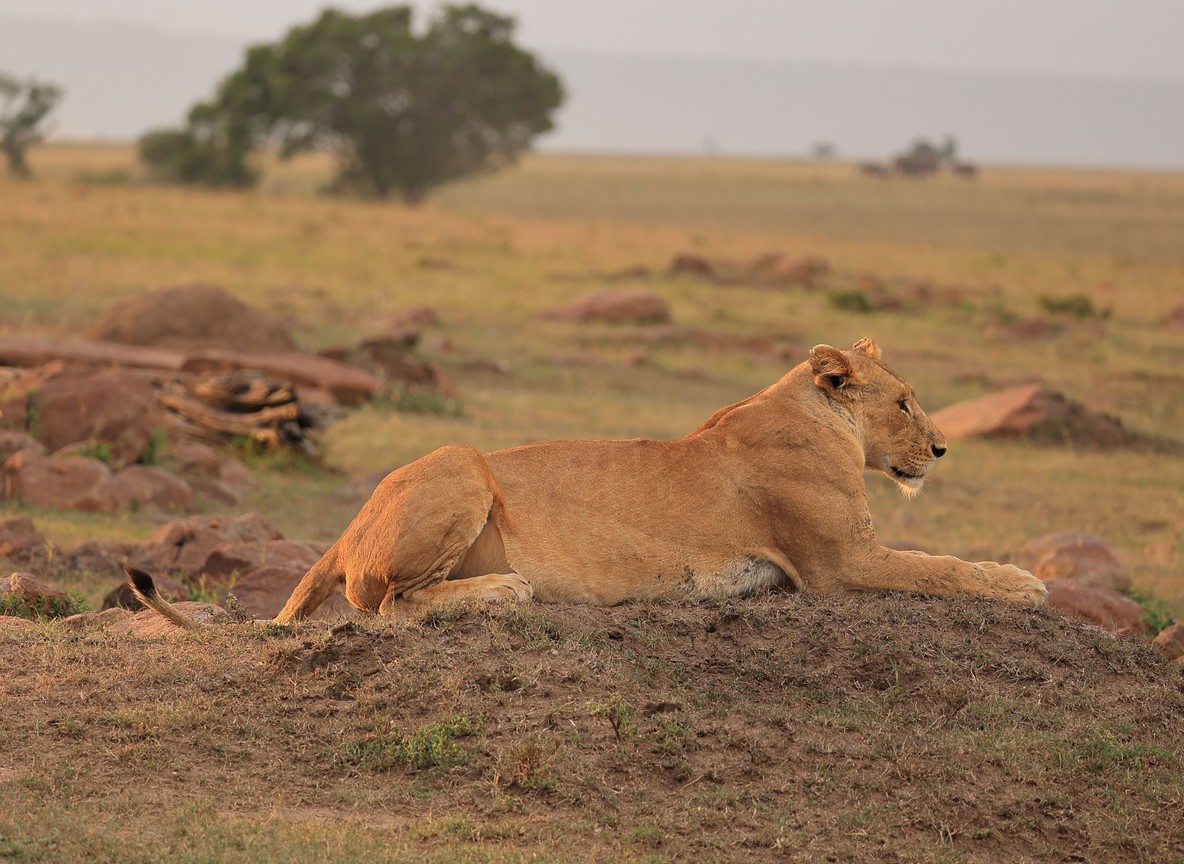
Wildlife viewing. Elephants and buffalos concentrate more predictably around permanent water holes as the surrounding terrain dries slightly. The park is home to notable rare species including the mountain bongo (one of Africa’s rarest mammals) and the melanistic (black) leopard — encounters with these animals are never guaranteed, but dry-season access to their preferred habitats is easier than in heavy rain.
Moorland access. The high moorland above the treeline is most accessible in the dry season. Clear, cold air provides visibility across the peaks and makes high-altitude trekking feasible without the constant rain risk of the wet months.
What to know: “Dry” is relative in the Aberdares. Even in June through September, mornings are frequently misty, afternoons can close over quickly, and temperatures at altitude require serious layering. This is not savannah safari weather — pack as you would for cold, wet highland conditions regardless of the season.
Trout fishing. The dry season is good for fishing the mountain streams, which run clear without the silt from heavy rain. December through February, the drier inter-rains period, is also excellent.
Wet Season (October to May): Waterfalls and Atmosphere
The wet months divide into the short rains (October to November) and the long rains (March to May), with a relatively drier December to February period between them.
Waterfall season. The Aberdares contain some of Kenya’s most spectacular waterfalls, including Karuru Falls (dropping in three stages over approximately 273 metres) and Chania Falls. These are at their most dramatic during and immediately after the long rains — April and May are typically peak waterfall months. The volume and power of the falls in the wet season significantly exceeds the trickle-and-pool character of dry-season visits.
For travellers whose primary interest is the park’s waterfall systems and dramatic landscape character, the wet season — particularly April and May — is actually the best time to visit, despite what conventional safari guidance might suggest.
Atmosphere and photography. The mist-belt character of the Aberdares intensifies in the wet months: clouds roll through the forest, streams run full, and the vegetation is at its most intense green. The park feels atmospheric in a way that has no equivalent in Kenya’s dry-season savannah parks. For landscape and atmospheric photography, these months offer images that the dry season cannot.
Practical considerations: 4WD vehicles are essential in the wet months. Some of the park’s internal tracks become significantly more challenging after heavy rain, and lower sections of the approach roads can be difficult without high-clearance vehicles. Confirm road conditions with your lodge or operator.
Activity-Specific Timing
| Activity | Best Months | Notes |
|---|---|---|
| Wildlife viewing | June-September | Drier conditions, animals at water holes |
| Moorland trekking | June-September | Best access, clearest views |
| Waterfall photography | March-May (peak) | Long rains bring maximum water volume |
| Trout fishing | December-February | Clear streams, good water oxygenation |
| Forest birding | October-April | Green season brings migrants and nesting activity |
| General atmosphere | Year-round | Mist-belt character always present |
The Aberdares vs Other Kenya Parks: A Different Kind of Safari
Choosing the best time to visit Aberdare National Park requires accepting that the park does not follow the same logic as the Masai Mara or Amboseli. In those parks, dry season is clearly optimal and wet season is a compromise. In the Aberdares, the wet season has genuine advantages that some of the park’s most distinctive experiences depend on.
The traveller who will enjoy the Aberdares most is someone who approaches it as a highland, forested, atmospheric destination rather than a standard game-park safari. The reward is wildlife encounters that feel genuinely wild and different from the open-landscape east African experience — but it requires being prepared for cold, mist, and mud rather than dust and heat.
Practical Notes for Any Visit
Clothing and gear: Pack as though you are heading into cold, wet highland conditions regardless of the time of year. A waterproof outer layer, warm mid-layer, and good waterproof boots are essential. Temperatures on the moorlands can drop to near-freezing at any time of year.
Vehicles: 4WD with high clearance is required. This is not negotiable in the wet months and strongly advisable even in the dry months for access to the moorland zones.
Accommodation: The park’s lodge accommodation options include tree lodges positioned at salt licks that allow night wildlife viewing — a distinctive feature not available in most Kenyan national parks, where night drives are prohibited.
Night viewing: Some lodges in the Aberdares offer salt-lick viewing at night, giving access to species like elephant, buffalo, and occasionally bongo that visit the licks after dark.
For more on Kenya’s highland and specialist destinations, see the birding in Kenya safari guide on Touring Insights.
Have questions about this itinerary or destination? Get answers from a safari specialist before you commit.
Inquire More