
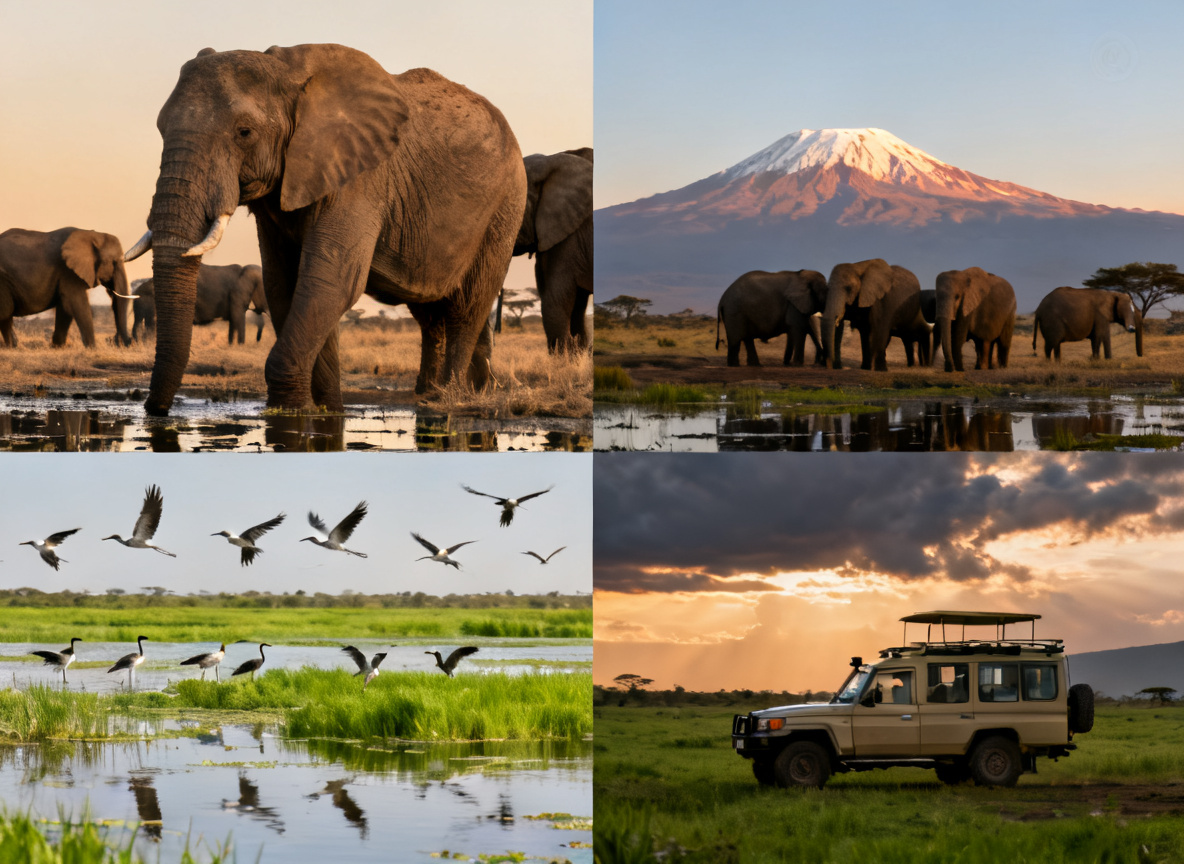
The best time to visit Amboseli depends on what you want the park to deliver. If you want the easiest elephant viewing and the strongest Kilimanjaro reliability, the answer leans dry season. If you want greener scenery, birding, softer light, and lower pressure, the answer shifts into the greener months. That is why there is no single honest one-line answer that fits every traveller.
The strongest seasonal guidance around Amboseli is broadly consistent. June to October is usually the best overall dry-season window. January and February are also very good. March to May is the long-rains period and demands more tolerance for weather variation. November and December bring the short rains and can still work well for travellers who value atmosphere and lower pressure more than pure certainty.
Trunktrails Safaris plans Amboseli around those priorities, not around a generic calendar. Here is the breakdown.
Best Overall Time: June to October
If you want the cleanest broad answer, June to October is the best overall time to visit Amboseli.
Why this period leads:
- dry sunny days
- easier road conditions
- better wildlife visibility
- more reliable early-morning Kilimanjaro views
- stronger first-time safari fit
This is the period when Amboseli feels most obviously like the park people imagine before they arrive. Elephant herds are easy to read. The plains are open. The mountain has a better chance of revealing itself at dawn.
Strong Alternative: January to February
January and February are also excellent months.
Why they stand out:
- they usually sit inside a drier window
- mountain-view potential remains strong
- scenery can still feel fresher and greener than the core dry season
- the park works well for both wildlife and photography
For some travellers, January or February is actually the smarter answer because it keeps much of the quality while avoiding the full emotional weight of peak-season demand.
Greener but More Variable: November to Early March
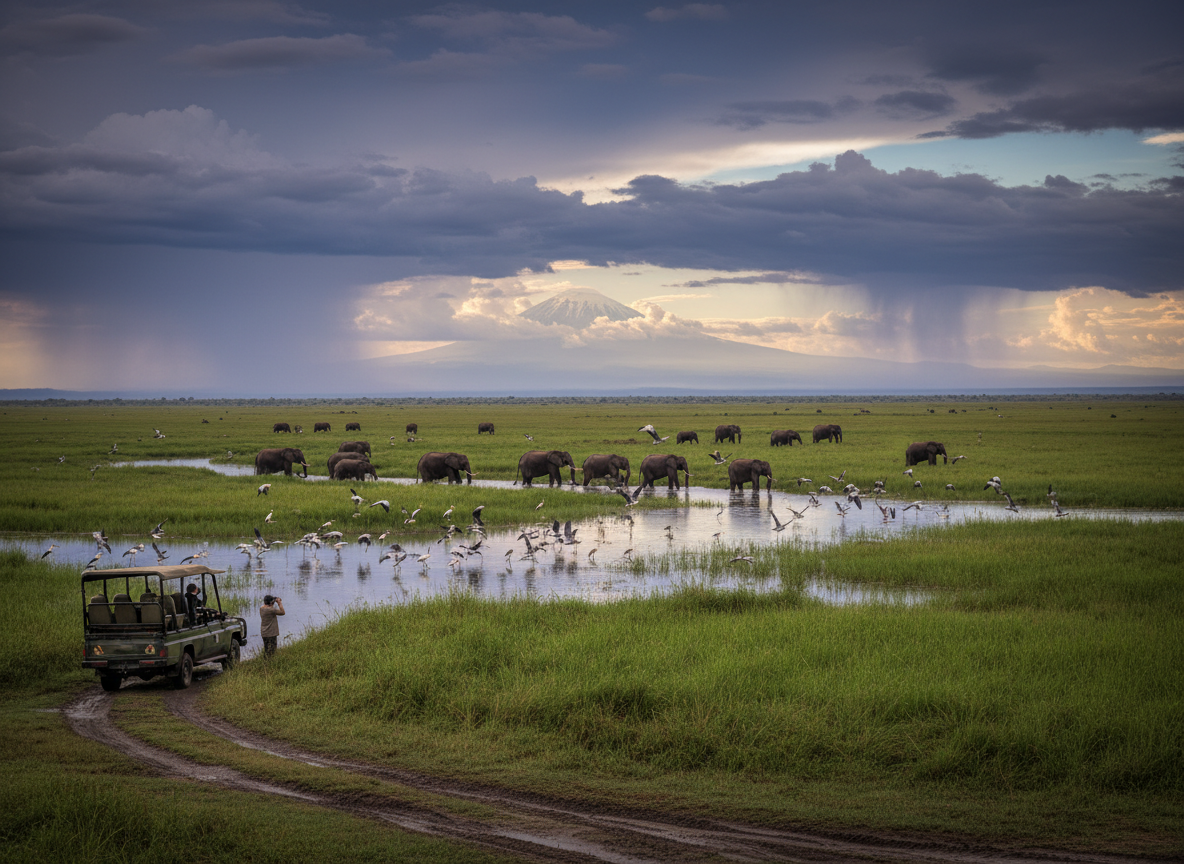
This period includes the short-rains logic and the warm green stretch before the long rains intensify.
Why consider it:
- softer landscapes
- stronger birding
- fewer travellers
- potentially better value
Tradeoffs:
- less reliable mountain visibility
- thicker vegetation
- more weather variation
This period is especially attractive to photographers, birders, and repeat safari travellers who do not need the park to feel at its driest and most predictable.
Most Challenging Window: April and May
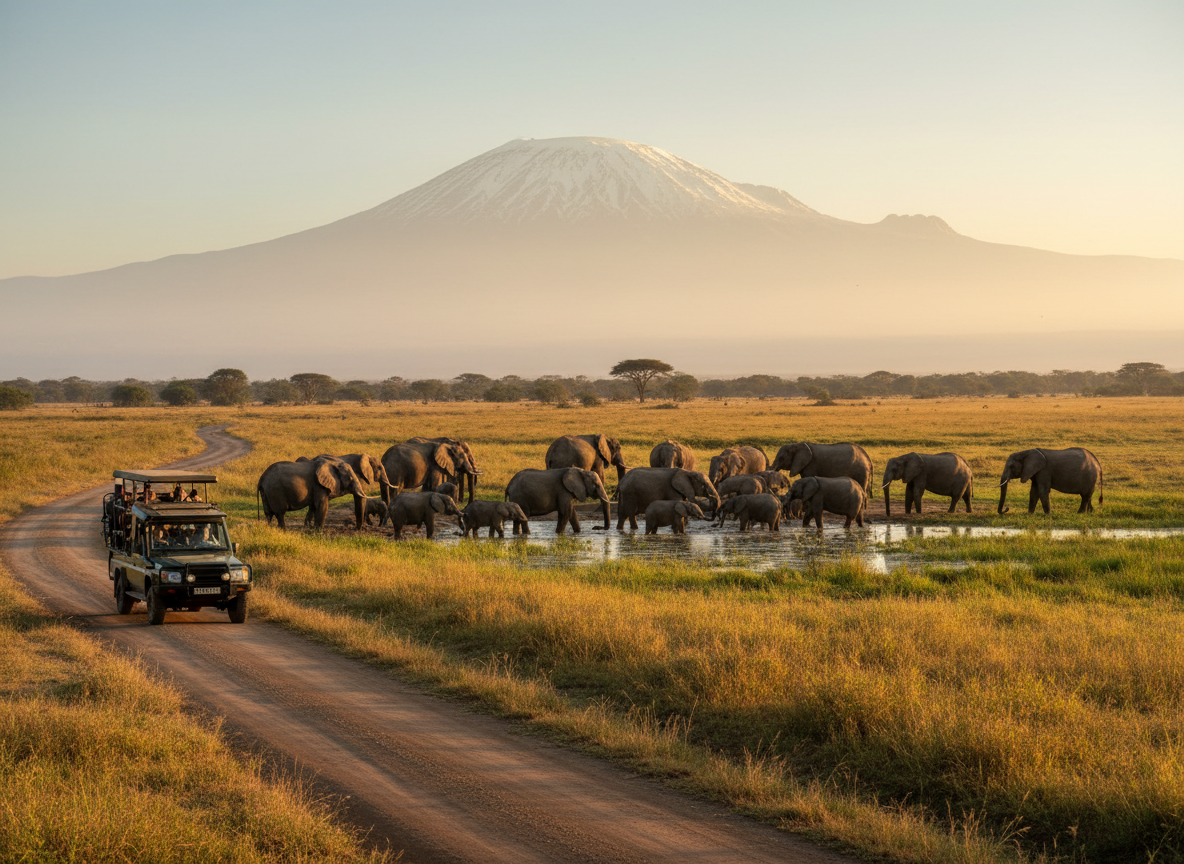
April and May usually represent the hardest time to sell as a first-time Amboseli safari.
Why:
- heavier rain
- softer and slower road conditions
- more cloud
- less clean Kilimanjaro reliability
This does not make April and May useless. It makes them specialist months. They work better for travellers who consciously want solitude, green drama, and a lower-pressure version of the park.
Best Time for Elephants
If elephants are your main reason for visiting Amboseli, the strongest answer is:
- June to October
- January to February
These periods make elephants easiest to see and easiest to photograph because the relationship between wildlife and water becomes clearer and the general visibility of the park improves.
Best Time for Kilimanjaro Views
If the mountain is the main priority, the strongest answer is:
- June to October
- January to February
And the most important tactical point is:
- go out early in the morning
Month matters, but dawn matters almost as much.
Best Time for Birding
If birding matters most, the greener periods become more attractive:
- November to April
Amboseli is recognized by KWS as an Important Bird Area with more than 400 bird species, so wetter and greener periods can bring real value for travellers who are not focused only on big mammals.
Best Time for First-Time Safari Travellers
For first-time visitors, the most useful months are usually:
- July
- August
- September
- January
- February
Why:
- easier logistics
- clearer wildlife viewing
- stronger confidence that the park will match expectation
Dry Season vs Green Season
Dry Season
Best for:
- easy wildlife viewing
- clearer mountain mornings
- smooth overland planning
- first-time safaris
Green Season
Best for:
- softer landscapes
- birds
- lower crowd pressure
- travellers who like mood and value
The correct choice depends on whether you want clarity or atmosphere.
Best Time for Short Trips
If you only have 2 nights in Amboseli, dry season becomes more important.
Why:
- less room for weather variation
- fewer game drives to work with
- a greater need for each morning to count
Short trips usually do best in:
- January
- February
- June
- July
- August
- September
Best Time for Better Value
If value matters more than peak conditions, consider:
- March
- November
- early December
- sometimes June
These are the months where Trunktrails Safaris often finds travellers getting a strong park experience without paying for the full emotional premium of the most famous dry-season weeks.
Quick Comparison: Best Time to Visit Amboseli
| Priority | Best Time |
| Elephants | June to October, January to February |
| Kilimanjaro views | June to October, January to February |
| Birding | November to April |
| First-time safari | July to September, January to February |
| Better value | March, June, November, early December |
| Lowest-pressure green-season feel | April, May, November |
The Trunktrails View
At Trunktrails Safaris, the shortest honest summary is:
- June to October if you want the strongest overall answer
- January to February if you want excellent conditions with a slightly greener feel
- November to early March if you want softer scenery, birding, and lower pressure
- April to May only if you are choosing the wet season on purpose
That is the difference between asking “When is the best time?” and asking the better question: “Best for what?”
Ready to Plan Your Kenya Safari? Talk to Trunktrails Safaris
Trunktrails Safaris designs tailor-made tours and safaris for every traveller and every budget. If you want the best month for elephants, Kilimanjaro, birding, value, or a first-time Amboseli safari, we will match the dates to the experience you actually want.